

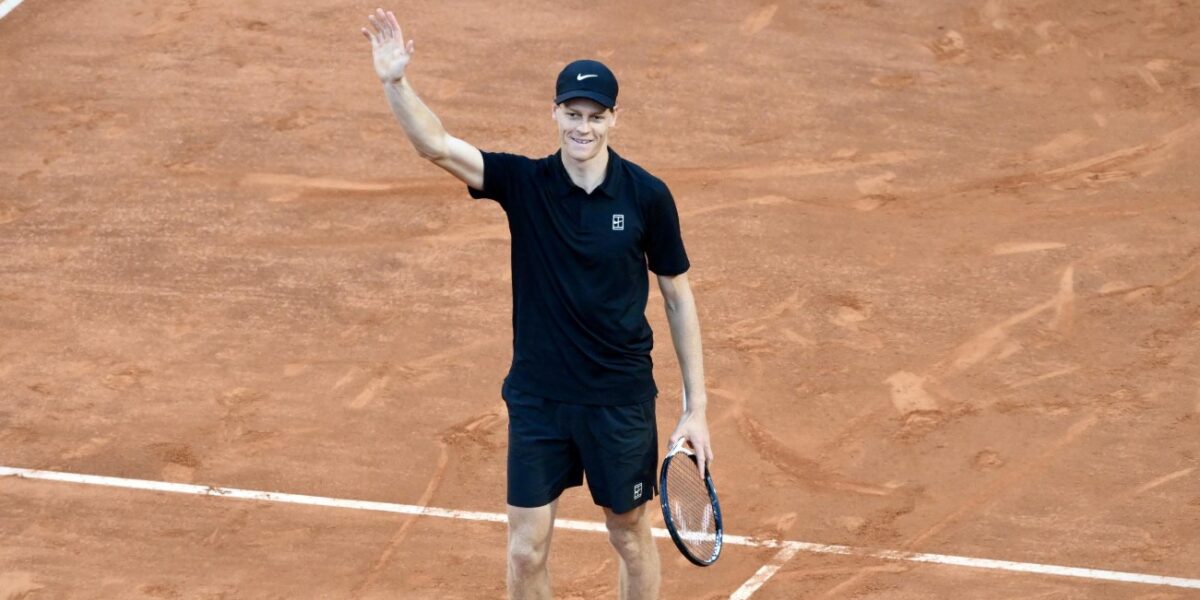
Four months at best, five according to the most realistic forecast. Jannik Sinner’s 2026 ends on crutches, a year that began triumphantly, with successes in five consecutive Masters 1000s. Surgery on the right knee is among the least invasive for the type of pathology, but will still require rather long recovery times.
Having certainly missed the Australian Open in January and the indoor hard court tournaments in February (such as Rotterdam and Doha), Sinner could return for the American Sunshine Double, in the Masters 1000 of Indian Wells (starting on March 3) or Miami (March 17). The most accredited scenario, however, extends until April 2027. The start of the European clay season would be the ideal time for a gradual return, with the Masters 1000 in Monte Carlo (from 4 April) in the sights. Then there is the prudential hypothesis (May-June 2027). If the recovery from an athletic point of view takes longer than expected, the return would be postponed to the central phase of the clay season in Europe (Madrid, Rome) or at Roland Garros.
What will happen to the Sinner ranking? In tennis the ranking is not frozen by injuries, but continues to scroll according to the 52-week system. Sinner ends 2026 in 2nd place in the world with 7,950 points, behind Alexander Zverev at 10,350 and with just 350 points ahead of Carlos Alcaraz, who rose to 7,600 thanks to his success in the ATP Finals. Sinner’s haul is the result of the extraordinary first half of the 2026 season, which is why the haemorrhage in the rankings will be inevitable. The points won on clay (3,000 between Monte Carlo, Madrid and Rome) and on the grass of Wimbledon (2,000) will act as a parachute at least until late spring, allowing him to start again among the leaders even if he returns in April.
Then there would be the protected ranking tool. By exceeding 26 consecutive weeks of stoppage (threshold that Sinner will reach on January 10, 2027), Sinner will gain the right to request it. It allows a player out due to injury to register for a maximum of 9 tournaments (in the first 9 months of returning) using the average of the positions occupied in the first three months following the last match played. However, it is very likely that he will not need it at all: the protected ranking only serves to guarantee direct access to the main draws, avoiding qualification, but does not ensure seeded status. If the Italian returns as expected by April 2027, his real ranking will already be largely sufficient to rightly access every tournament and enjoy favorable seeding.