

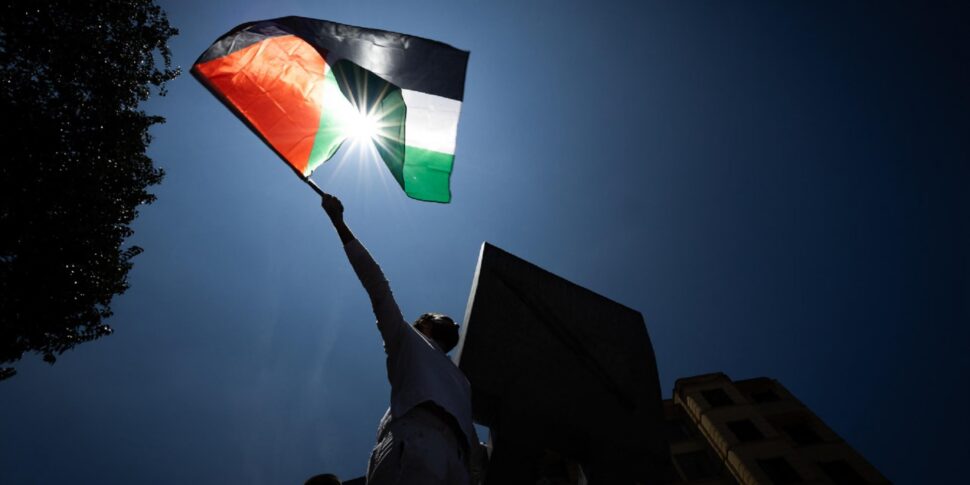
A diplomatic turning point of historical scope shakes the international scene. Canada, Australia and the United Kingdom have announced in the last few hours the official recognition of the Palestine state, marking a crucial passage in the path towards the two-states solution and opening new perspectives for the future of Israeli-Palestinian relationships.
The first to break the delay was Canada: “Canada recognizes the state of Palestine and offers its collaboration to build the promise of a peaceful future both for the state of Palestine and for the state of Israel,” said Prime Minister Mark Carney, as reported by Sky News. With this decision Ottawa becomes the first nation of the G7 to officially take a position in favor of recognition.
A few hours later the move of Australia arrived. Prime Minister Anthony Albanian confirmed that Canberra formally recognizes the state of Palestine, underlining that the choice is part of a “coordinated international effort” together with Canada and the United Kingdom.
The confirmation of a common line finally came from London. “Today, to revive the hope of peace between Palestinians and Israelis and a two -states solution, the United Kingdom formally recognizes the state of Palestine”, announced the British premier Keir Starmer with a message on X.
The joint recognition by three central countries in the international chessboard not only strengthens the diplomatic front that supports the right of the Palestinian people to self -determination, but also represents a strong political signal to Israel and the international community. The declared objective is to restore impulse to a peace process that has been blocked for years and reaffirm the perspective of the coexistence of two states as the only way that can be traveled for the stability of the region.
The words of Netanyahu
Israeli premier Benyamin Netanyahu said that “a Palestinian state would endanger the existence of Israel” and promised to “fight appeals to the creation of a Palestinian state in front of the UN”.
Over 150 countries that recognize Palestine
United Kingdom, France and Canada are the G7 countries to recognize the Palestinian state. And together with 7 other countries that have decided similarly on the occasion of the UN General Assembly in New York, lead to over 150 members of the United Nations who have taken this position. Among them are not Italy, the United States and Germany.
* Europe – Sweden was the first EU country to take this step, in 2014, at the height of months of clashes between Israelis and Palestinians in Jerusalem Est. The state of Palestine had already been recognized in 1998, following the declaration of independence proclaimed by the then leader of Olp Yasser Arafat, from Cyprus (then entered the EU in 2004) and by a series of countries of the Soviet block now in the Union: Bulgaria, Hungary, Poland, Romania, and the then Czechoslovakia, then divided into Slovakia and the Czech Republic. Budapest have taken a step back, but both capitals still host a Palestinian embassy. Paris and London’s decision triggered controversies similar to those of last year, when recognition came from Ireland, Spain, Slovenia and Norway (which is not part of the EU). Following the United Kingdom and France, also Andorra, Belgium, Luxembourg, Portugal, Malta and San Marino have decided to recognize Palestine on the occasion of the UN Assembly in New York. As for Italy, he believes that this solution should be achieved through the negotiations between Israelis and Palestinians with a view to the two states.
* Rest of the world – Almost all of Asia, Africa and Latin America formally recognize the Palestinian state. But Japan, South Korea, New Zealand who ventilated the possibility of recognizing Palestine but did not step. With the UN Assembly, Australia and Canada are added to the list. Algeria was the first country, in 1988 a few minutes after Arafat’s declaration, followed in close tour by many others: much of the Arab world, India, Turkey, several African countries, as well as China and Russia, which was still a Soviet Union. In 2011 Moscow, with the then tenant of the Dmitry Medvedev Kremlin, confirmed the recognition. In the two-year period 2010-2011, a series of South American countries were joined including Argentina, Brazil and Chile. In November 2012 the Palestinian flag was hoisted for the first time at the United Nations in New York, after the General Assembly voted for a vast majority to raise the status of the Palestinians to “non-member observer state”. Last year, the Assembly voted for a resolution stating that Palestine is “qualified to become a Member State” with 143 votes in favor, 25 abstentions (including Italy) and nine against, including the USA. Washington, as well as Rome, still maintains diplomatic relations with the Palestinian national authority.