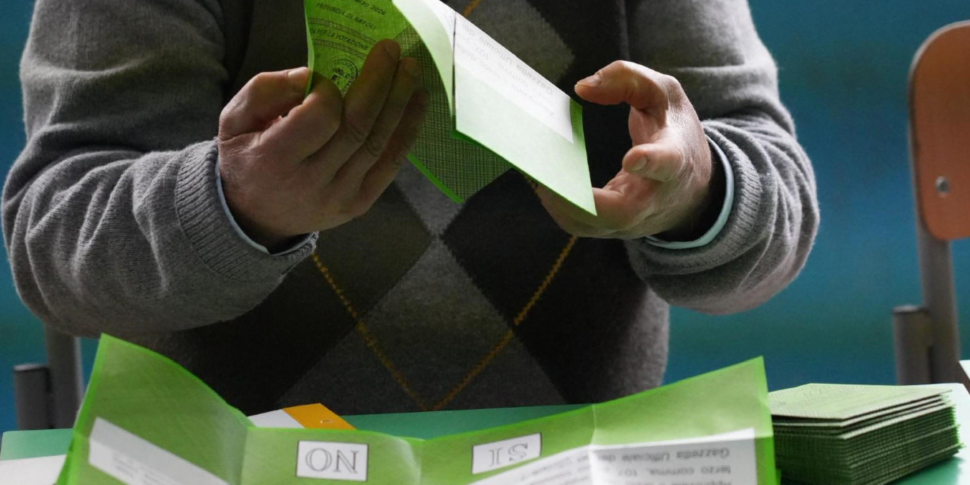
The city of “no”. The Bruzio capital marks the highest point of popular opposition to the justice reform with a resounding 66.55 percent of votes against. And the province stands at 63, 74 with the highest figure in the entire region. The choice of the population was indisputable and the results of the polls confirm it, even providing some details: Cellara, a small municipality, recorded the highest turnout figure with 68.7 percent while Terravecchia had the lowest turnout figure with 28.63.
The numbers that come from the ballots also reveal how transversal the opposition was to the reform pushed by the centre-right government, considering that the “no” also triumphed in municipalities led by coalitions attributable to the national parliamentary majority. Not only that: the city of origin of the president of the regional council has followed a different line from that indicated by Occhiuto himself. It cannot therefore just be a triumph linked exclusively to the centre-left but supported by the evident contribution of voters from different political areas. The reasoning also applies in reverse: in the sense that exponents of the center-left had shown sympathies for the “yes”.
The council group of the Democratic Party at Palazzo dei Bruzi comments with satisfaction on the result achieved: «Today the polls gave us a beautiful image of Italy, but even more so of Calabria, in a crescendo which, through the province of Cosenza, reaches the avalanche of votes for the No in our home, where two out of three Cosenza residents, 67 percent, rejected the justice reform. A result perfectly in line with the progressive and reformist history of a city that has understood the political, not technical, meaning of the rude and disorderly move of the Meloni government. The first reading we could do concerns the desire to protect our magistrates, who have been besieged for thirty years in a continuous attempt at delegitimization and weakening by the right. Another explanation could come from the defense of the Constitution, questioned with a political approach, but with a political conception that is close to the cruder and more populist right, the one that humiliates the role of Parliament and addresses citizens directly.
There is perhaps also a third reading, the most intimately political: the No stems from the desire to crush the justice reform and with it also the other two reforms of the unfortunate majority pact: premiership and differentiated autonomy. A single, single card, to avoid a twist in the country towards a more fragile and unjust democracy.”