

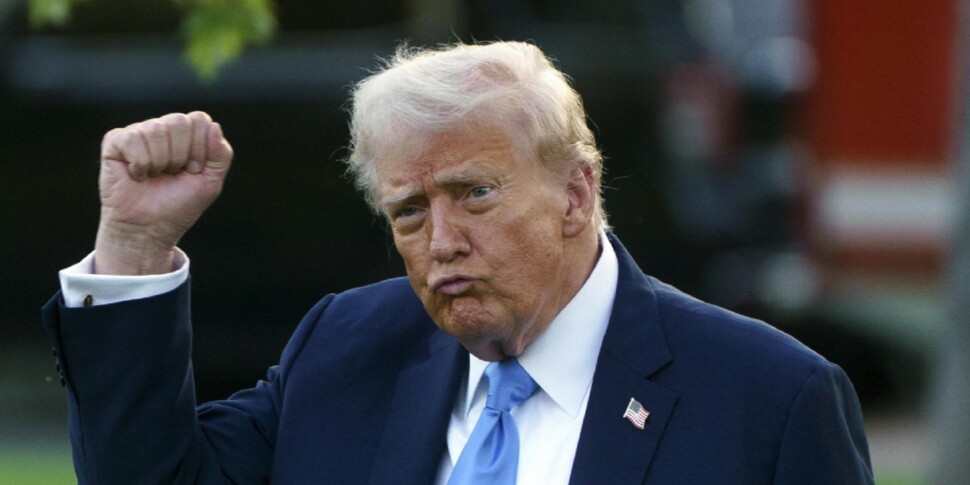
Donald Trump increasingly plummeting in the polls. The president’s approval rating fell further, to 33%, the lowest level of his second term. This is what emerges from a survey by the University of Massachusetts Amherst, conducted between March 20 and 25 and according to which 62% of Americans do not approve of it.
The president’s approval rating is five points lower than it was in July 2025 and 11 points lower than last April.
Donald Trump increasingly plummeting in the polls. The president’s approval rating fell further, to 33%, the lowest level of his second term. This is what emerges from a survey by the University of Massachusetts Amherst, conducted between March 20 and 25 and according to which 62% of Americans do not approve of it.
The president’s approval rating is five points lower than it was in July 2025 and 11 points lower than last April.
The 33% approval figure is part of a particularly delicate phase of the second mandate, characterized by an increasingly polarized political climate. After the initial post-election enthusiasm, consensus seems to have begun a progressive decline, a sign of difficulty in consolidating the relationship with a significant part of the electorate.
Historical comparison with other presidents
When compared with his predecessors, the current level of presidential consensus appears among the lowest recorded in recent decades at the same stage of the mandate. Only in rare recent cases have similar data been observed, making this decline particularly significant also from a historical perspective.
Possible causes of the decline
Several factors may have affected the decline in political polls. Among these, the debate on economic policies, international tensions, the conflict with Iran and choices on sensitive issues such as immigration and security. The perception of leadership and crisis management also contributes significantly to guiding public opinion.
The data confirm a growing polarization of the electorate. If on the one hand the most loyal base continues to support the president, on the other there is an increase in disapproval among independents and moderates, traditionally decisive in electoral balances.
The political implications
Such a low level of public approval could have significant consequences on both a legislative and electoral level. Indeed, consensus remains a key element for carrying forward reforms and maintaining political stability in an already complex context.
Attention now shifts to upcoming election polls and economic and international developments. It will be essential to understand whether this is a temporary decline or the beginning of a more structured trend in the relationship between the president and the Americans.