

Add the Gazzetta del Sud as a source
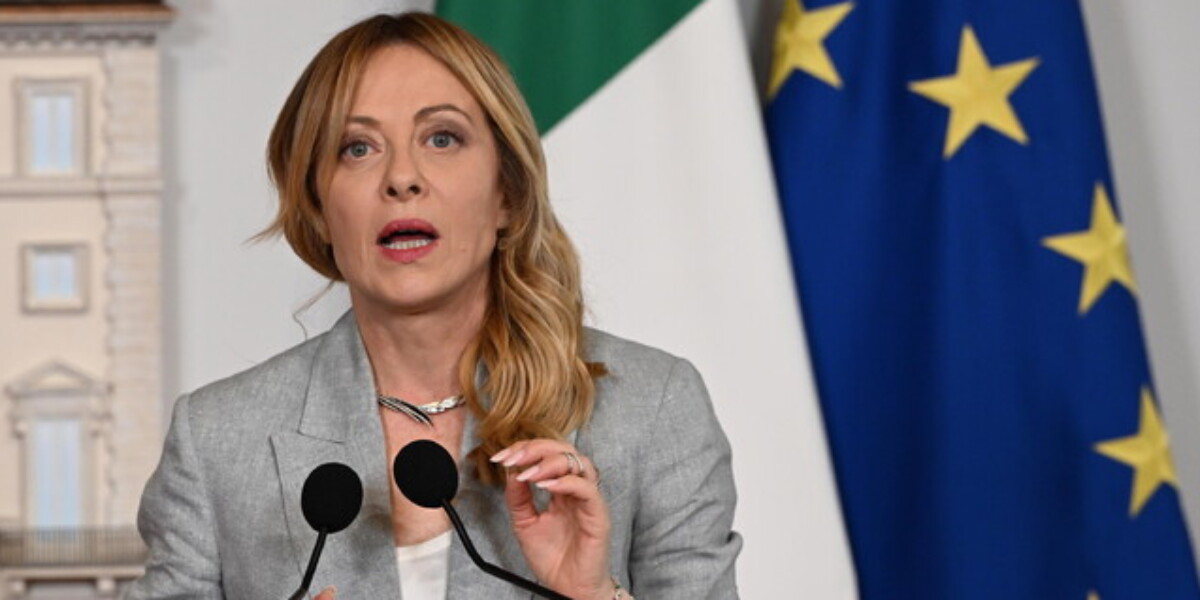
Giorgia Meloni illustrated the government’s communications in view of the European Council of 18 and 19 June in the Chamber and the Senate, where she will speak in the afternoon. “The context is complex and delicate” began the prime minister. “We will continue to act with realism and determination, without giving in to simplifications and without hiding the reality of the facts. Decisions for Europe require the courage of the truth.”
Middle East: double line on Israel and Palestine
On the Italian-Palestinian conflict, Meloni opened by asking the Chamber to go “beyond easy controversy”, underlining that the topic has a strategic importance for Italy that goes beyond the immediate visibility returns it produces. He reiterated that friendship with Israel, support for the rights of the Palestinian people and commitment to a two-state solution are “historic and traditional lines of Italian foreign policy, pursued by governments of all political colours”.
On the one hand, he supported Israel’s right to live in security and without threats, believing that Europe must recognize this need as an essential part of any prospect of regional stability. On the other hand, he declared that the government has never shied away from condemning the humanitarian situation in Gaza and the illegality of settlements in the West Bank, acting in coordination with France, Germany and the United Kingdom. The demands made on Israel include an end to settlement policies, the guarantee of justice for settler violence, the protection of Jerusalem’s holy sites and the revocation of financial restitutions which risk “strangling the Palestinian Authority”.
On Lebanon, Meloni announced that the European Council will discuss the options presented by the UN for the post-Unifil, underlining the need to prepare “an international presence capable of avoiding a dangerous security vacuum”, in coordination with the United Nations, the United States, European partners, the Lebanese authorities and Israel. “Italy will continue to play a leading role in support of Lebanon and peace” he added, hoping that the negotiations underway in Washington will be successful.
EU budget: obstacles to European competitiveness
On the economic front, the prime minister has targeted some mechanisms of the next European budget. In particular, he addressed the issue of conditionality, i.e. the possibility that EU funds are tied to compliance with certain rules. Meloni declares himself in favor of the presence of clear rules, as long as they do not result in a potential “instrument of undue pressure” on national governments. The Prime Minister also refers to the principle “Do no significant harm”, literally “do not cause significant damage”, which in the intentions of the European Commission could translate into the automatic exclusion from the funds of entire categories of investments deemed incompatible with environmental objectives. A prospect that the Italian government rejects. “In a world where the United States and China mobilize billions to boost their industry and competitiveness, Europe cannot itself represent an obstacle to its own competitiveness”, declared Giorgia Meloni.
«The syntheses that politics reaches as a result of very long discussions are not an exercise in dialectics but in democracy. Each of us in the EU Council has a mandate from our parliament, which operates by popular mandate. The decisions we make must be respected and implemented, they cannot be questioned or overturned by surreal interpretations cloaked as techniques of bureaucrats who are not accountable to anyone for their decisions and perhaps for this reason have lost contact with reality” concluded Prime Minister Giorgia Meloni.