

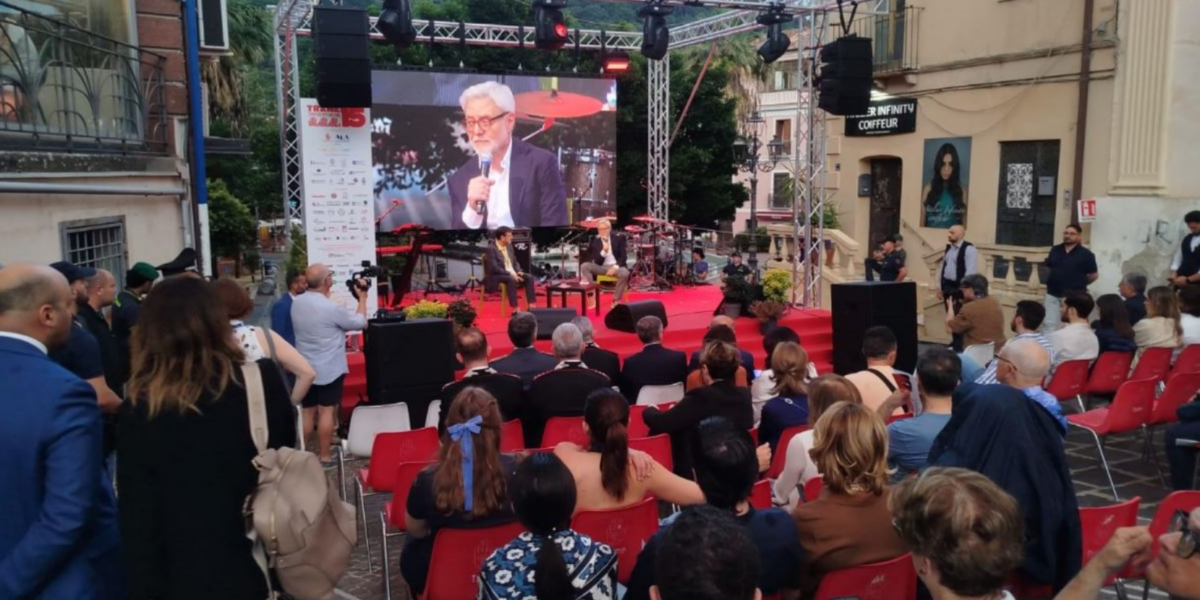
From the Palermo maxi-trial to current events, Trame retraces those historical events that have marked our country for so long, so much so as to transform it, if we want, even radically in its more civilized “consciousness”. We talked about it, as always, starting from the pages of books that find their natural showcase in Trame. But not only that. There was also space for new proposals that try to materialize in the most complex territories, as in the case of the «Manifesto with San Luca», a choral project to overcome stereotypes and describe the territory from the inside, complete with an appeal for collective participation for anyone who wants to contribute with ideas and proposals.
Meanwhile, Pietro Grasso, former magistrate and prosecutor, has returned to Trame and often returns to the Lamezzo festival to talk about the facets, the intrigues, but also the very harsh emotions he experienced when he was a judge at the maxi-trial, alongside Falcone and Borsellino. «U Maxi», this is the name of his latest book (Feltrinelli), from which the moves of a very popular talk in Piazzetta San Domenico in which Grasso spoke with John Dickie began. «Reviewing the images of the maxi trial – he said – I saw that there were many stories of humanity, many stories that were certainly useful to better understand the history of our country at that time but which had been covered by oblivion, after so many years only a few things remained imprinted in the collective imagination. We are talking about an extremely complicated trial, 475 defendants to be judged, 438 charges, there was almost the entire penal code, 10 years of investigation into mafia crimes, 120 murders.”
Grasso, with his usual irony, retraces the many micro-stories linked to the toughest years of our country and, specifically, to Falcone’s investigation methods, among all “his ability to give trust to justice collaborators, yes, but after having found the evidence on which to support it”. And then the desperate attempts of the many defendants to make as much time pass as possible, to naturally slow down the progress of the trial. «There were defendants with epileptic seizures, they caused them by heating a coin with a lighter and placing them on their foreheads. One defendant sewed his lips shut with wire, others reported non-existent illnesses, one swallowed two nails to block the metal detector every time.” The meeting ended with Grasso showing Falcone, to emotional applause, the lighter that the famous magistrate gave him.
In the early evening, the highly anticipated meeting with the national anti-mafia and anti-terrorism prosecutor, Giovanni Melillo, who also took stock of today’s situation, pointing out the regulatory steps with which Italy “grew” following those years, a situation incomparable to that of the past: «The country was shaky, the political institutions were challenged, the solidity of the republican institutions themselves was put to the test. If the mafias abandoned that challenge it was also due to the repressive action implemented through the rules, those organizational models of the judiciary and police forces. Of course – he points out – this does not mean that the mafias are no longer dangerous, on the contrary, from a certain point of view they are even more so”.