

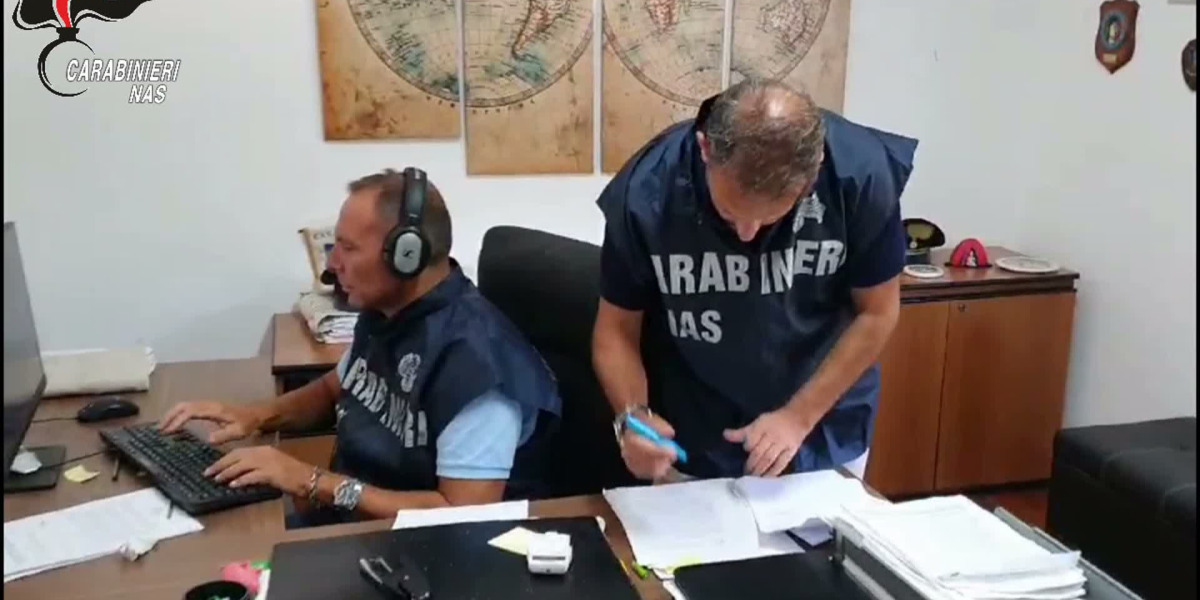
This morning, the Carabinieri of the Anti-adulteration and Health Unit of Reggio Calabria, supported in the executive phase by soldiers of the Carabinieri Group for the Protection of Health of Naples and by the territorially competent departments of the Carabinieri, executed the order with which the GIP of Reggio Calabria ordered the application of coercive and interdictory precautionary measures against 6 people (3 of whom were subjected to the arrest regime house arrest, 1 to the disqualification measure from exercising public office and the ban on practicing the medical profession for a period of six months, 2 to the obligations to report to the judicial police), including doctors and pharmacists, all considered by the judge for the preliminary investigations, in various capacities, to be seriously suspected of crimes of corruption, aggravated fraud to the detriment of the Healthcare System, ideological falsehood.
The investigations of the Reggio Calabria Prosecutor’s Office
The complex investigation activity, coordinated by the Public Prosecutor’s Office of Reggio Calabria, and called “Golden Recipes”, was carried out through the interception of communications and with traditional methods, i.e. search and seizure activities, gathering of summary information, acquisition of documentation and allowed the collection of multiple sources of evidence against compliant professionals, pharmacists and general practitioners, operating in the Reggio Calabria area.
The investigations conducted, summarized in the order issued by the judge, have reconstructed – without prejudice to the developments of the further phases of the trial – the existence of a fraudulent system aimed at obtaining unfair payments from the National and Regional Health System.
The mechanism of false prescriptions and undue reimbursements
Specifically, the gravely circumstantial situation concerned the owner of a pharmacy in the Province of Reggina, who, with the complicity of her father – also a doctor and an employee of the same pharmacy – made an agreement with 3 general practitioners regarding the compilation of medical prescriptions, formally registered in the name of unsuspecting patients and issued in the absence of any medical evaluation and therapeutic need, as well as for a fee equal to ten percent of the price of the drugs indicated in the false prescriptions, intended for medical doctors general.
This system was useful for obtaining undue reimbursements from the pharmacy related to the cost of prescribed drugs, which were actually never dispensed.