

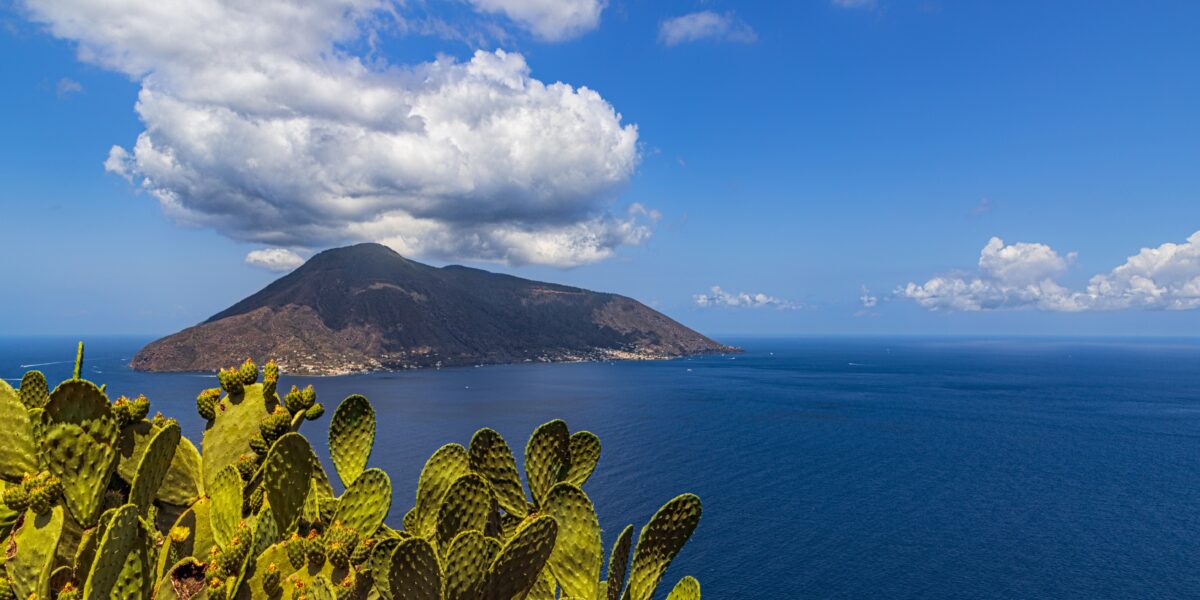
The Aeolian Islands, a UNESCO heritage site for their geo-volcanological value, confirm themselves as one of the most attractive tourist destinations in the country. The territorial system shows a high level of development, supported by the strength of the tourist offer, by a dynamic entrepreneurial fabric and by a natural heritage unique in the world. This is what emerges from the Report on the level of tourist sustainability of destinations hosting a UNESCO site, created by Isnart – National Tourist and Cultural Research Institute – as part of the special Mirabilia project and promoted by the Messina Chamber of Commerce.
Blandina: «Attractiveness to be better regulated»
«The Report produced offers an important analysis on the sustainability and tourism development of the Aeolian Islands, our precious UNESCO site – states the president of the Chamber of Commerce, Ivo Blandina – with interesting focuses on environmental, social, economic and cultural aspects. The data clearly shows the strong tourist attraction of the site, which however needs to be better regulated to ensure sustainable development. To this end, it is necessary to adopt integrated actions in the environmental, social, economic, cultural and governance fields, promoting closer collaboration between bodies, businesses and local communities”.
Tourism development at 71%, infrastructure at 40%
The analysis assigns the Aeolian Islands an overall level of tourism development of 71%, one of the highest values among the destinations analysed. Driving the result are above all tourism businesses (88%), tourism products (83%), the local community (81%) and the tourist sector (74%), while governance reaches 63%. The infrastructures (40%) suffer from the island character, with particular reference to accessibility and maritime connections, which affect the usability of the archipelago throughout the year. The report also highlights particularly solid tourism demand. After the decline of the two-year pandemic, attendance reached the highest value in the historical series in 2024, confirming the strong attractive capacity of the archipelago. At the same time, 32% of active businesses belong to the tourism sector, one of the highest values among Italian destinations, while non-hotel accommodation is particularly developed with an average of around 570 Airbnb structures per Municipality, confirming the extensive involvement of the local community in the tourism economy.
Environment: land consumption at 6%
On an environmental level, a decidedly positive picture emerges. The average land consumption is limited to 6%, the population density remains low (135 inhabitants per square kilometre) and over 90% of the reviews express positive opinions on the naturalistic quality of the archipelago. The Report underlines, however, the need to carefully monitor the effects of the strong seasonal concentration of flows on a particularly fragile ecosystem of exceptional geo-volcanological value.
Tourist pressure is the social crux
The social indicators highlight the main criticality of the destination. Tourist pressure reaches 32.2 tourists per resident, among the highest values in the sample, while the average stay stands at 3.17 nights, a positive value which suggests focusing instead on deseasonalization in order to lengthen seasonality. However, the presence of the Third Sector is positive, with one Third Sector body for every 392 inhabitants, an element that strengthens the local social fabric. The economic picture is also very positive.
The entrepreneurship index reaches 12 businesses per 100 inhabitants, while 42.1% of those employed work in the tourism sector, confirming the central role of tourism in the archipelago’s economy. However, the per capita income remains limited, equal to 13,500 euros, which suggests working on a reduction in seasonality and therefore on greater continuity of income.
Culture, climate and air quality
Cultural heritage also represents an important lever for the competitiveness of the destination. The places of culture record an average of 7,793 visitors per Municipality, while the indicators relating to the perception of the artistic dimension and the quality of guide services are also positive. The Report suggests further strengthening investments in cultural valorization to increasingly integrate the historical heritage with the naturalistic and geo-volcanological one. Furthermore, from a climatic point of view the Aeolian Islands confirm particularly favorable conditions. Climatic comfort affects 30.1% of the hours of the year, especially in intermediate seasons, an element that strengthens the potential of deseasonalization. Even more significant is the data on air quality, which is good, fair or moderate in 99.5% of the hours of the year, one of the main strengths of the destination for nature, seaside and wellness tourism.
Credaro: «Destination for national leaders»
«The National Charter of tourist sustainability of destinations hosting a UNESCO site represents an operational tool that allows territories to measure their strengths and precisely identify the areas in which to intervene – declares Loretta Credaro, president of Isnart. The report dedicated to the Aeolian Islands highlights a destination that ranks among the national leaders for attractiveness and entrepreneurial capacity. The challenge today consists in transforming this extraordinary competitive force into an even more balanced development, through better management of flows, strengthening accessibility, deseasonalization and increasingly integrated governance. This is the objective of the ESG-C approach developed by Isnart: to provide territories with concrete tools to combine protection of UNESCO heritage, quality of life for communities and sustainable growth”.