

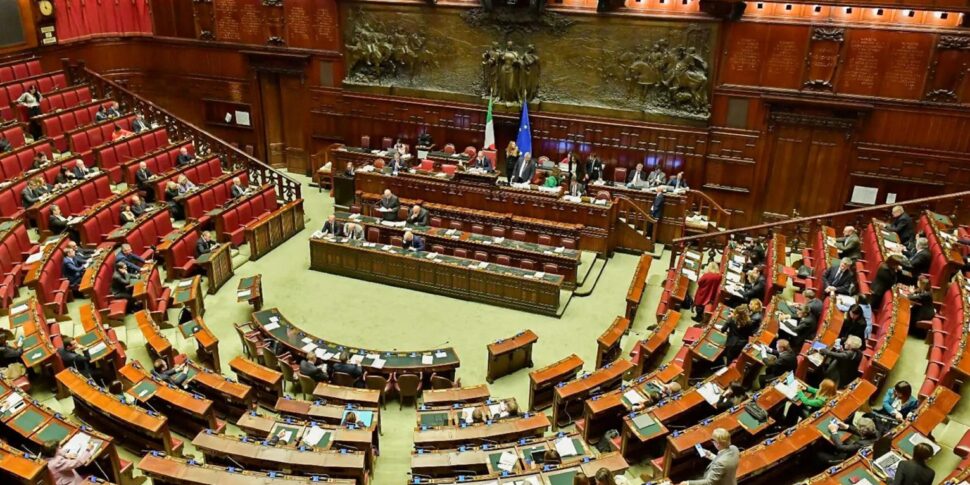
The majority and government breathe a sigh of relief: the test of the first secret vote on the electoral law is passed without any shocks. Indeed, gaining 7 votes more than the numbers of the centre-right: 229 votes against the constitutionality preliminary rulings presented by the opposition, 222 the deputies of the majority present – as can be seen by scrolling through the voting records – and who voted no, 7 those absent from the ranks of the centre-right who did not participate in the vote despite not being on mission (therefore, as they say in the jargon of the palaces, who are ‘absent not justified). Precisely, they are 1 deputy from FdI, 1 from Forza Italia, 4 from the League and 1 from Noi moderates. While there are 5 justified because they are on a mission.
Do the seven votes come from the Vannaccia supporters or from the opposition?
Therefore, but the conditional is a must since it is a secret vote, the Vannaccians voted against the preliminary rulings and together with the majority, as announced in the explanation of vote, even if there are those who do not rule out that the extra votes could come from the opposition. Yet in the centre-right, which officially showed off tranquility, fears were high, so much so that it triggered a real ‘call to arms’, with the arrival of ministers, undersecretaries and deputy ministers in the Chamber (the Vannacciano Ziello ironically says «these crowded halls are only seen on special occasions, you see ghosts who appear when the stakes are high, when the seat they are bolted to is at stake”). In short, a closing of ranks wanted by the prime minister herself, who he did not fail to underline on several occasions the importance of the vote, with the direct consequences that an accident would have on the duration of the legislature itself: if the electoral law is rejected, everyone goes home. And the message – which is even more valid for the final green light – came loud and clear, at least on the occasion of the first vote (from the Minister of Economy to the head of Tourism, from the Keeper of the Seals to the Minister of EU Policies up to the head of the Farnesina as well as the deputy prime minister (the other was absent). number two, Salvini, who however does not vote as a senator), all present to vote. Once the first secret vote has been archived, the spotlight is now already on next Thursday, when the Chamber will have to definitively approve the reform, by secret ballot.
But fears about the next steps have not been eliminated
Today’s unity, however, does not completely eliminate fears about the final appointment: «The chamber is always sovereign», glosses the organization manager of FdI, Giovanni Donzelli, according to whom «there is no dangerous vote. Certainly today’s vote was delicate” but “it is clear that” the final vote “has a greater political weight, an enormous political value”. FdI group leader Galeazzo Bignami instead dismisses the significance of today’s vote: “We didn’t expect a different vote.” Bignami doesn’t see clouds on the horizon, “I don’t think” there will be problems next week. Finally, the group leader jokes about the strict respect for the rules imposed by the presidency of Montecitorio: “We invited and let in all ‘friendly’ school groups so they could photograph the vote from the stands. The reference is to the fact that collaborators and press officers of the groups cannot access the central gallery (exactly above the FI and Lega desks), but only in the stands reserved for TV operators, so as to avoid videos and photos that attest to the vote of the majority deputies, as happened on the occasion of the first green light in the Chamber. Therefore, next week for the centre-right the scenario will be the same: everyone called upon to guarantee their presence, including the deputy ministers, no absences except those that are indispensable are allowed. And if it is true that the date circled in red is October 8, the armoring of the majority also applies to votes of confidence: the image must be that of a compact coalition, it is explained. The ‘attentives’ remain the Azzurri and Northern League colleagues, but so far the discontent has also spread among the women, so nothing – this is the leitmotif – can be taken for granted. In the background remains the hypothesis of elections in the spring, which FdI is considering even if the allies have already planted stakes, advocating the natural expiry of the legislature. As for the timing, the timetable is tight: on Monday the government – which has dissolved the reservation on the number of confidence votes – will pose the question of confidence on the first three articles (Election system of the Chamber, Election system of the Senate, i.e. the two cornerstones of the entire reform, and redefinition of the Bolzano constituency), all at risk of secret ballots and on which the opposition have presented a series of amendments to attempt a mid-July encore on the preferences, rejected by just one vote of difference. The first two confidence votes will be voted on Tuesday, the third on Wednesday, before moving on to the ordinary vote on article 8, which extends out-of-office voting to family caregivers (on which a secret ballot cannot be requested and the opposition has not presented amendments). Then the agendas and on Thursday morning declarations of vote and final (secret) vote at around 12.30, complete with live television.