

Google Discover

Preferred Sources
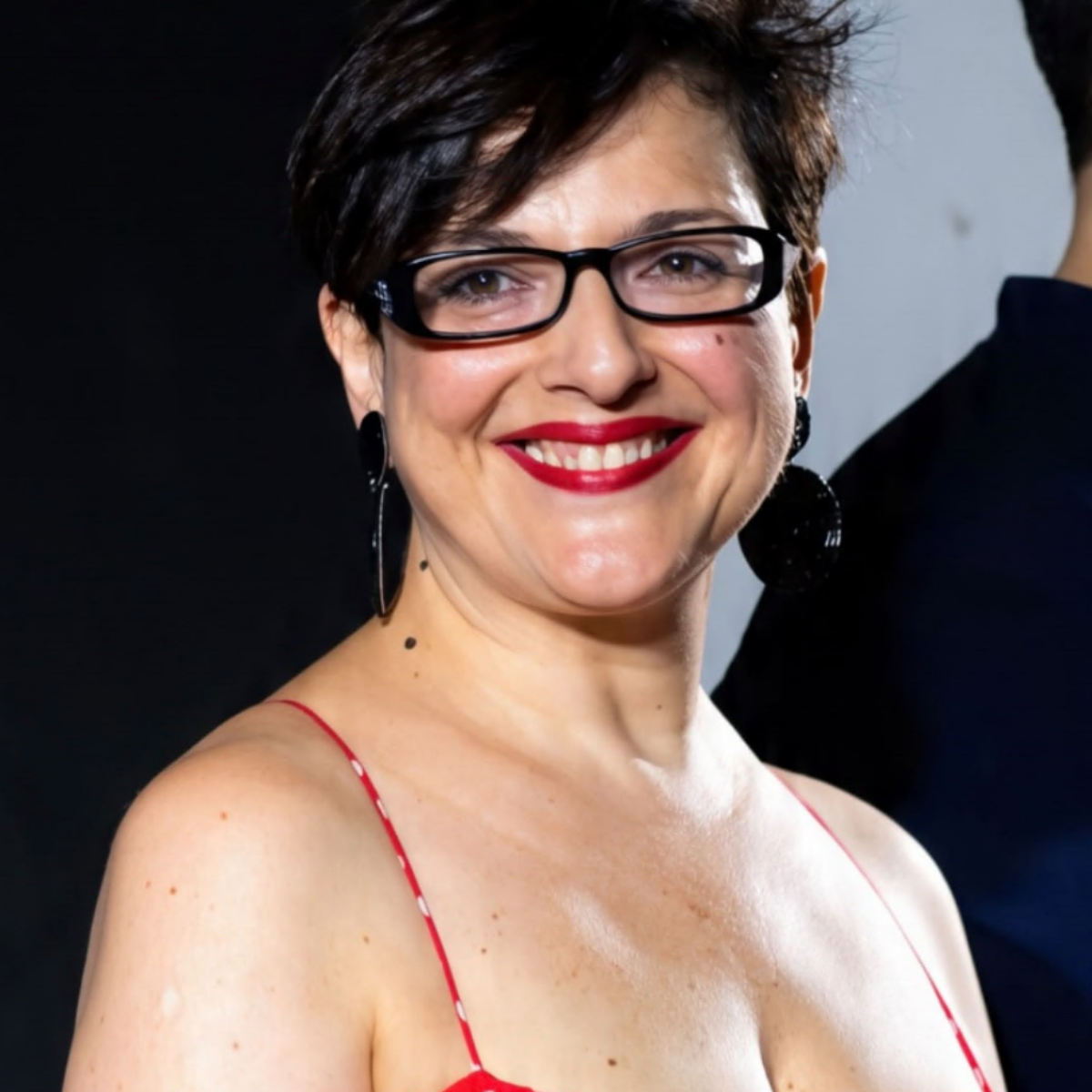
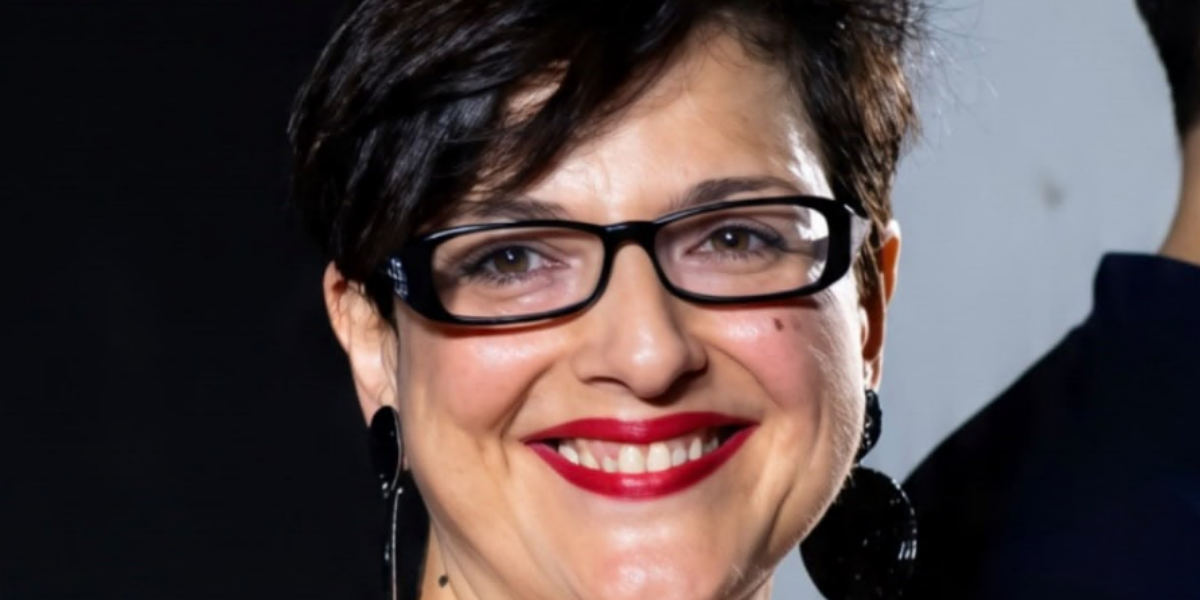
The woman in the center. This is the starting concept, thanks to which the lawyer Tiziana Bianca Calabrò from Reggio, with a rich past and an interesting present as a writer and playwright, obtained an important recognition: the special mention in the all-female call, «The construction of a witch», which led to the awarding of the Luciano Damiani prize. It is the first edition, in memory of the great set designer who designed and built the Teatro di Documenti in Rome, where the final part of the event will take place, organized by Compagnia Gabriele Lavia – Effimera Produzioni.
The jury, made up of Dacia Maraini, Federica Di Martino, Cinzia Maccagnano, Eugenio Murrali and Anna Ceravolo, awarded the prize to «Ordalia – o il morire bene» by Maria Porzio, which will be staged with the direction of Cinzia Maccagnano, and established the special mention for «Lontano far» by Tiziana Bianca Calabrò, adding its stage reading to the final program on 29 November. Founder, with Renata Falcone and Basilio Musolino, of the «Ucriu» theater company, in her text Calabrò stages two women, mother and daughter, in an indefinite nursing home where the first is hospitalized. We talked about this and more with the author.
«Woman is sick with forgetfulness», he writes in the draft of his text. And “forgetfulness” must be understood in multiple meanings. Why this choice?
«When I created the character of a woman who, due to a transference and a similarity of lives, believes she is Pasiphae, the mother of the Minotaur, I didn’t want to cage her within a clinical definition. The “forgetfulness” with the multiplicity of meanings that it carries within opens up symbolic and imaginary glimpses, and it seemed to me to restore the complexity of this mother who is not a mother, a traitor and betrayed, an accomplice in the creation of a dysfunctional family, but also a victim of a patriarchal system from which she seeks or has tried to distance herself, remaining (voluntarily?) trapped inside a labyrinth, which could be her mind or the society from which she nevertheless distances herself in an extreme act of rebellion.”
His text is all feminine. A claim, an observation or something else?
«I don’t believe that claims are made through theatre, with the risk of staging moral or intellectual actions, although I inevitably bring my vision of the world transformed by an artistic process. Often in my texts the protagonists are women, because you write about what you know. I recognize the voice of women and as a woman but also an observer of the female world, with writing, I love to explore contradictions, monstrosities, abysses, but also fragility and fears. However, there is always the intent that that human shown with the word agita can act as a universal mirror, not just for one gender. In any case, the presence of a mother-daughter relationship was functional to what I wanted to tell.”
What else do you want to add to explain the genesis of «Far away»?
«It was born from a workshop held in 2021 in Reggio Calabria by Matteo Tarasco and focused on the figure of Arianna. When we were asked to write a text based on the stimuli received, I thought of doing it from the point of view of Pasiphae, the great woman forgotten by History after her intercourse with the white bull given by Poseidon to her husband the king. The king’s deception arouses the wrath of Poseidon who takes revenge using his wife Pasiphae. After intercourse with the bull and the birth of the Minotaur she disappears. What happened to him? How does Pasiphae feel about events and choices that are not hers? Then from there other questions arose and that text principle was developed, becoming what it is today.”
How important is being Calabrian in your literary creativity?
«Language is also influenced by the places where one grows up. There is, in my opinion, a geography of language that contributes to forging its identity. Even more than Calabrian, I define myself as Strictese. I grew up with the suggestions of two seas in my eyes, the Ionian and the Tyrrhenian, which meet and collide, with the awareness that in the abyss where monstrous creatures adapted to the dark live there is a fault, a wound, a fracture. I grew up with the unconscious fatalism of those who know they rest their feet on a land that at any moment can unleash its wrath, like mythological monsters, destroying houses, streets, stories. There is also a certain sacredness in this being on the margins, which offer a point of view, an observation and perspective. The gaze of the forgotten, perhaps.”
Why is a lawyer attracted to theatre? Is there a connection or is it just his calling?
«It’s about the coexistence of multiple lives and an evolution in choices. I wanted to study law to become a lawyer because I loved writing. We are talking about a girl from the late 80s whose points of reference were Falcone and Borsellino. The drafting of legal documents, using the combination of rules, seemed to me to be an interesting creative process, even within defined stylistic canons. Then it wasn’t enough for me anymore, and I started writing fiction, but once again I felt incomplete. With theater I probe the human being more deeply, with its contradictions and its abysses, with the perception of finitude and the illusion of having control over our lives. In theater there is flesh, tenderness, relationship, but also complexity and conflict.”