

Google Discover

Preferred Sources
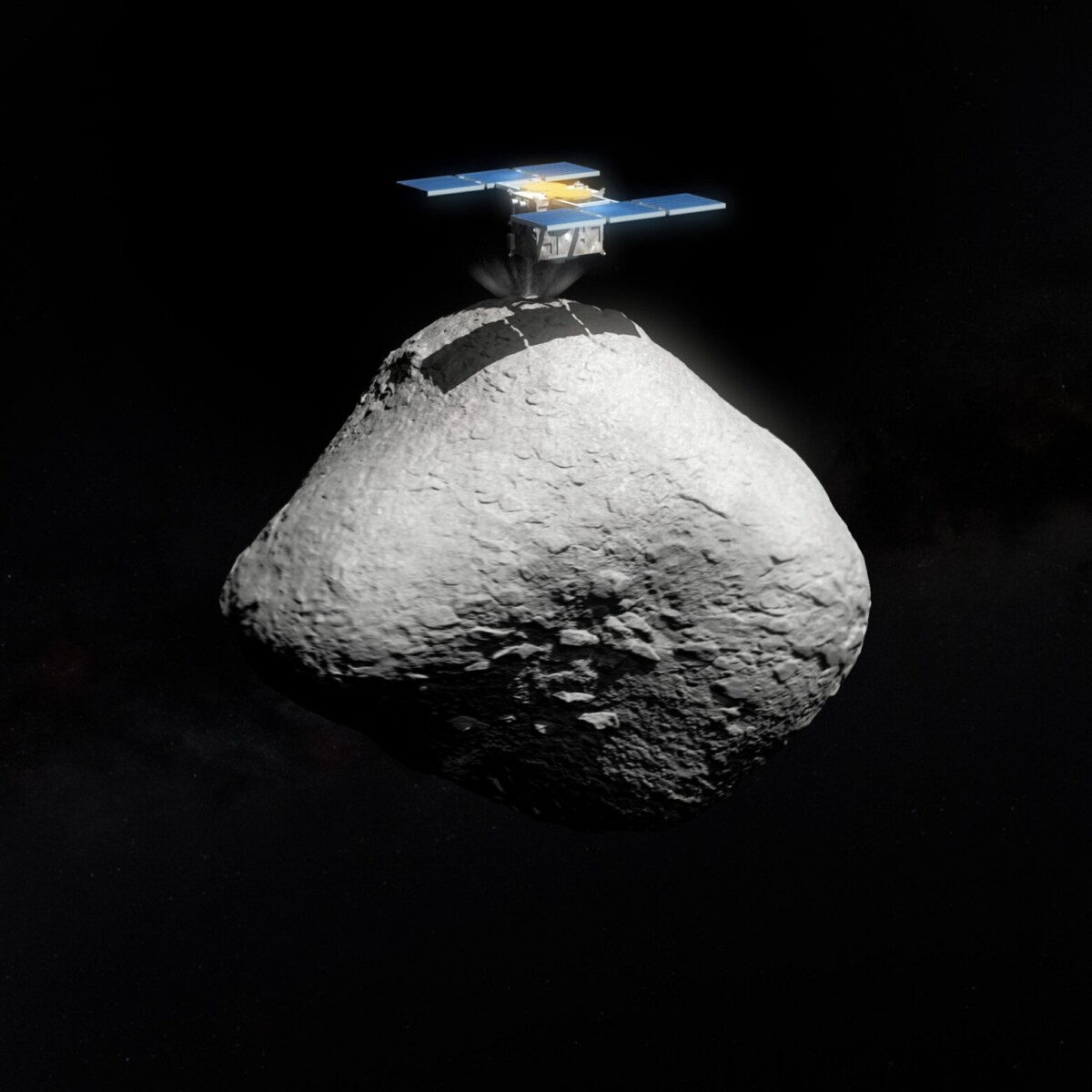
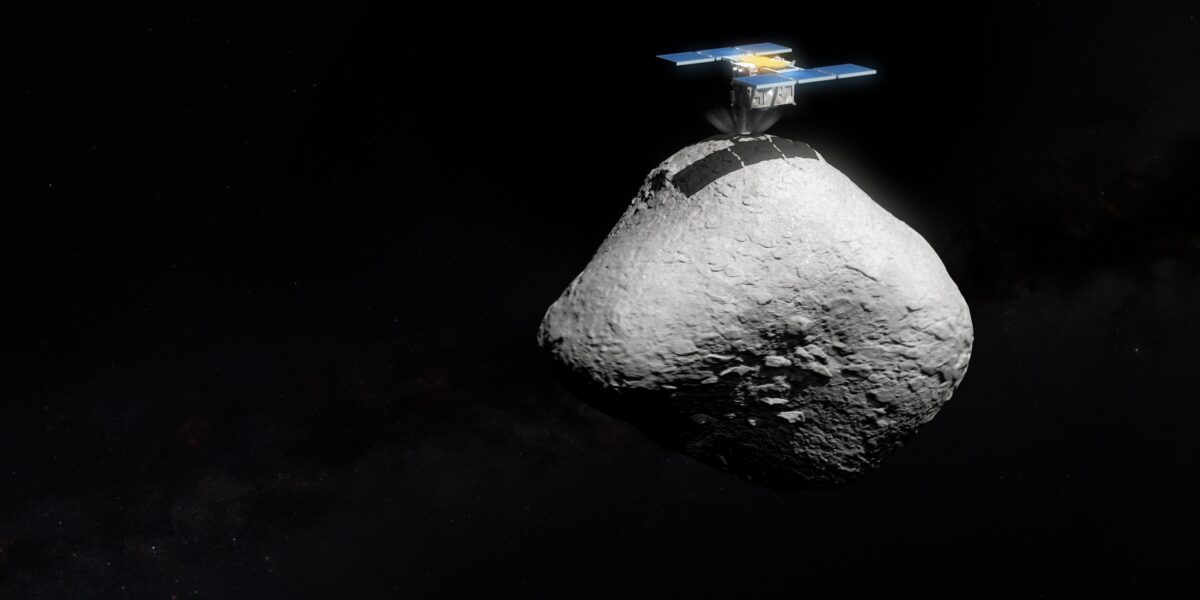
The Hayabusa2 probe on asteroid 1998 KY26 (ESO illustration).
The mysterious celestial body 1998 KY26, which will be reached by the Japanese probe Hayabusa2 in 2031, may not be a comet “disguised” as an asteroid as had been hypothesized by some astronomers. What makes this scenario unlikely is its temperature, which is too high to conserve the ice necessary to produce the gas emissions that give the push to the so-called “dark comets”. This is supported by a study published in the journal Icarus by aerospace engineers Korbin Hansen and Masatoshi Hirabayashi of the Georgia Institute of Technology.
What are dark comets and why asteroid 1998 KY26 accelerates
Dark comets are celestial bodies which, although releasing gas into space, do not develop the characteristic bright tails of traditional comets and can therefore be mistaken for asteroids. La fuoriuscita di gas genera però una spinta aggiuntiva, in grado di modificarne il movimento. The hypothesis that KY26 belonged to this category was put forward to explain the anomalous behavior of the object, just 11 meters wide, which rotates on itself every 5.35 minutes and presents an unusual acceleration perpendicular to the plane of its orbit.
The temperatures of the asteroid and the study published in Icarus
To test this possibility, Hansen and Hirabayashi developed a model that reconstructs the surface and internal temperatures of KY26 based on the size, orbit, reflectivity and probable composition of the celestial body. The results indicate that, even in the coldest areas, the average temperature during orbit around the Sun reaches 61 degrees below zero, a value well above the -128 degrees below which water ice could remain underground for a long time.
The Hayabusa2 mission in 2031 could unravel the mystery
Resta dunque da chiarire l’origine dell’insolita accelerazione di KY26. Among the possible explanations is the pressure exerted by solar radiation. An answer could come in 2031, when Hayabusa2, the mission of the Japanese space agency Jaxa, reaches KY26 to study it up close.