

Google Discover

Preferred Sources
Militello Rosmarino, the crypt of the Mother Church yields 41 mummies 5
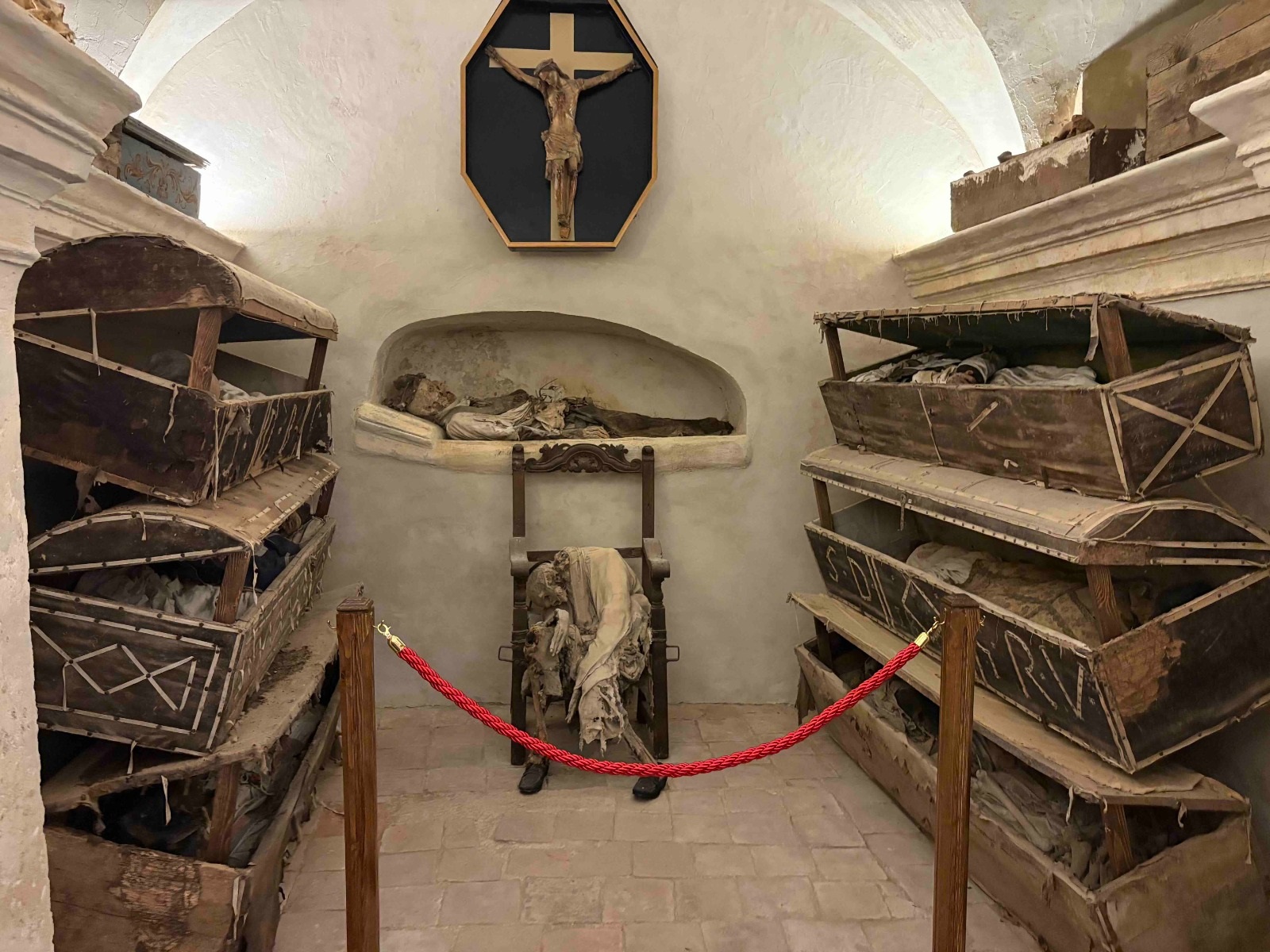
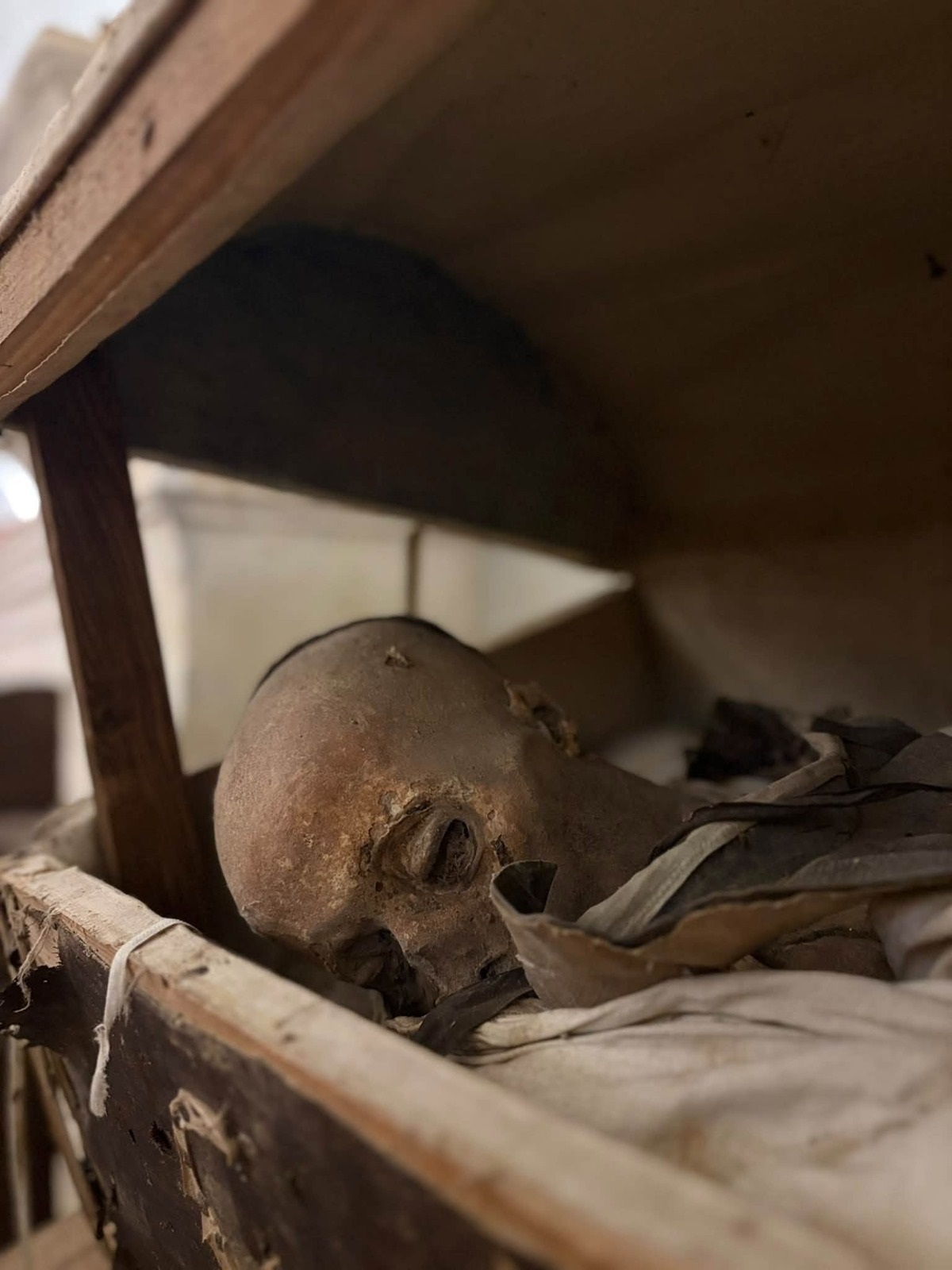
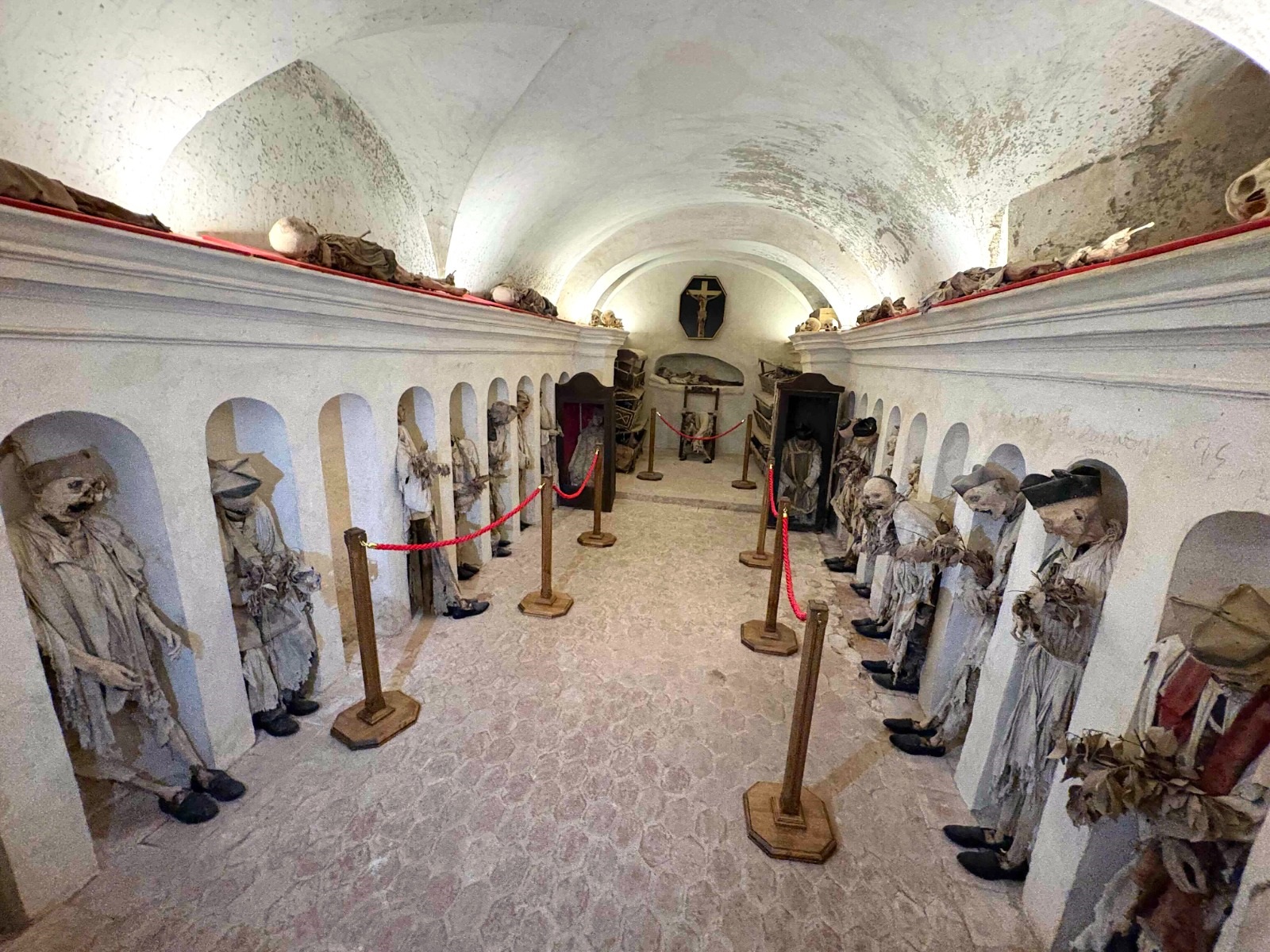
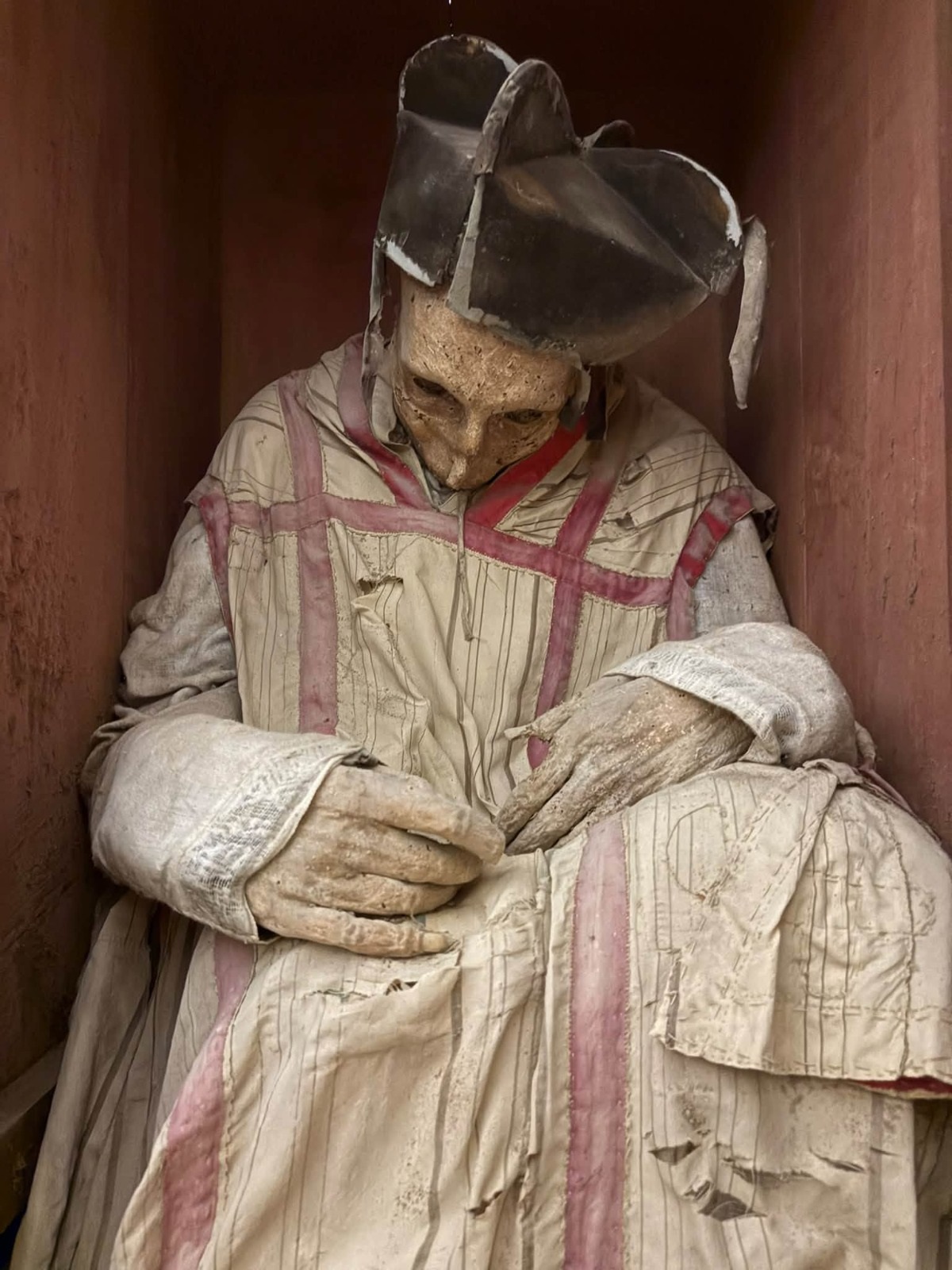
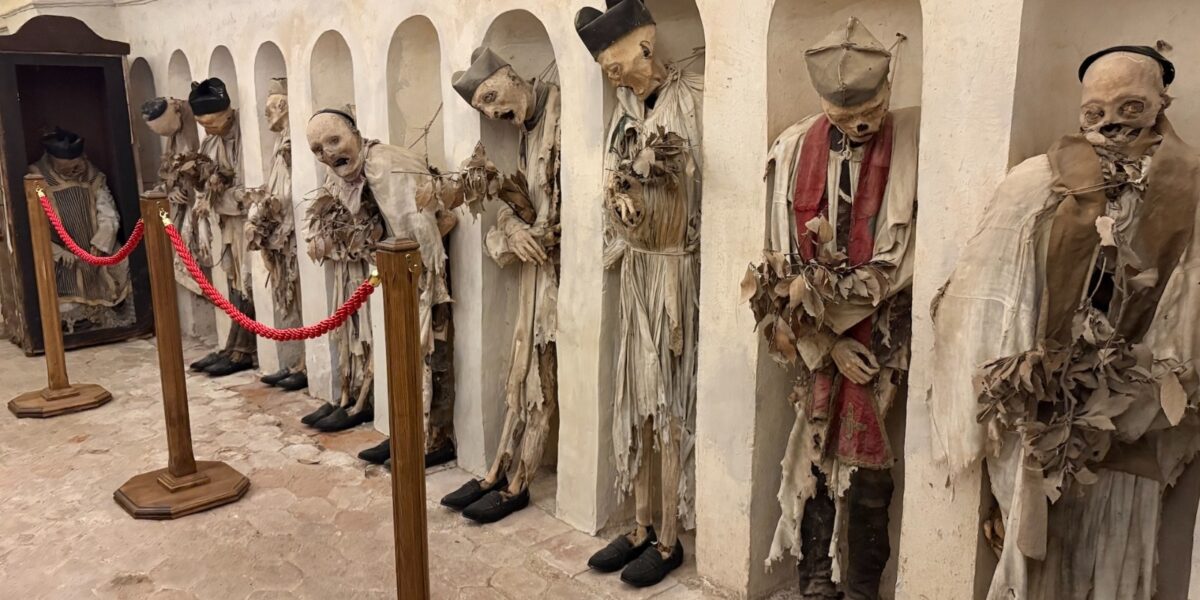
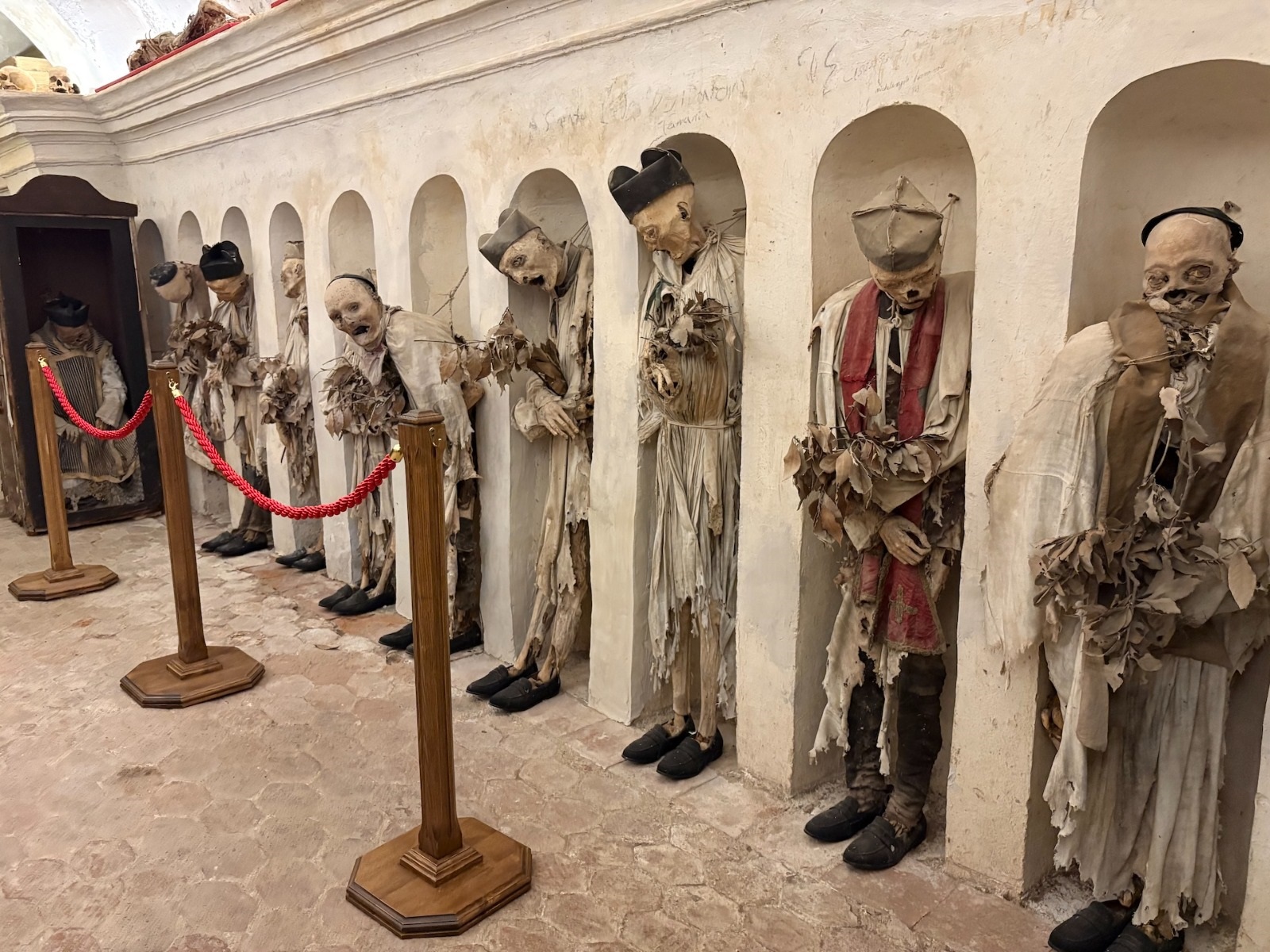
A reliquary that remained hidden underground for over a century and a half, in which time seems to have stopped, a kingdom of the dead suspended between memory, mystery and suggestion. It is the story of the crypt of the Mother Church of Militello Rosmarino, reopened after 150 years following the completion of the works that brought to light the 41 mummified bodies housed inside. Scientific studies and anthropological research say that these are the remains, mostly perfectly preserved in other cases skeletal remains, of prelates and religious dignitaries who lived between the 18th and 19th centuries, deposited according to ancient funerary practices inside the seventeenth-century crypt and then mummified naturally.
«A very common drying process at the time, whereby the bodies placed in strainers lost their moist component, were covered and preserved in niches or crates», explains Dario Piombino, associate professor of Anthropology at the University of Salento, who coordinated the recovery activities. «The state of conservation is surprising but the peculiarity is the placement of the bodies in the sedan chairs in a sitting position, as if to indicate a dialogue between the living and the deceased who were given a role in the community for intercessions and prayers». A place that has passed through popular memory from generation to generation between suggestions and legends, such as that of San Fuddicchiu, an evil figure who was said to live in that place, accessible from the outside only through an impervious side window. The trapdoor was instead covered by the flooring of the church and more recently by a sheet of glass.
Thanks to the passion, commitment and perseverance of the young people of the Anspi (National Association of San Paolo Italia) “San Biagio” club, decades of discussions have therefore been translated into concrete actions for the reopening, with a loan of 48 thousand euros granted in 2022 by the regional department of cultural heritage. «We acted as a glue between the institutions, the Diocese, the Superintendency and the political party, also involving the University of Messina. A path full of difficulties that we followed step by step”, says Salvatore Blogna, president of Anspi, who will manage the use in synergy with the parish historically led by Don Calogero Oriti with the current parish priest Basilio Pappalardo.
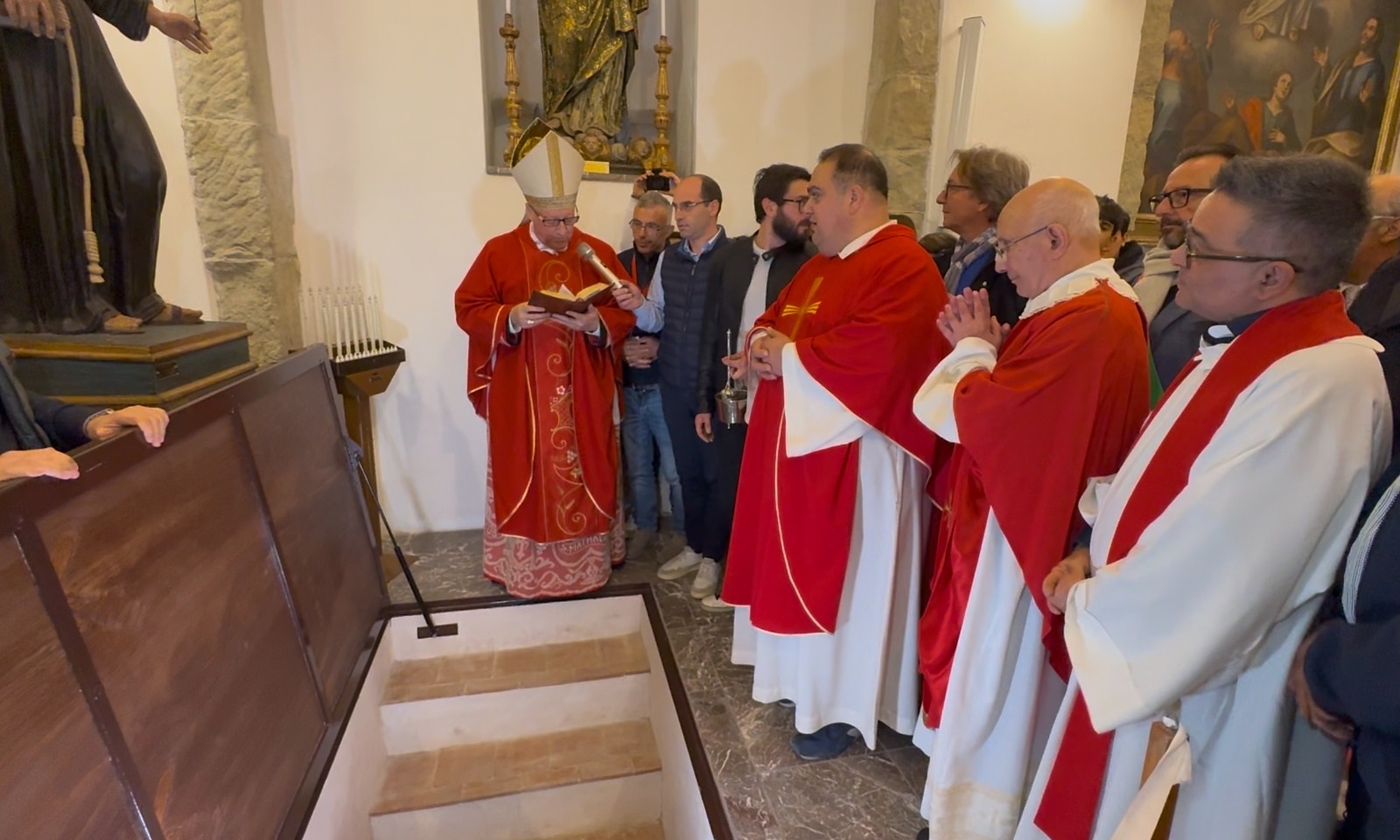
«A historic moment for Militello who finds a treasure that was inaccessible until today», adds Antonio Araca, member of the club. «I remember the first time we had access, the crypt was completely covered in debris and was freed thanks to the work of volunteers». The reopening was sealed by the blessing of the bishop of Patti Guglielmo Giombanco, in the presence of the civil and military authorities and citizens. “Restoring these places to the splendor of their origins and thinking back to those people who have marked the path of this community is a stimulus to live the present with greater commitment and look to the future with confidence”, said Mgr. Giombanco.
«A real dream come true – comments Mayor Calogero Lo Re –. The crypt is not only a testimony of our past but can be an opportunity for development and promotion of our territory also through forms of religious tourism.” «A place that has remained preserved in the memory of the town, among folk tales and traditions which today becomes a new opportunity to learn about the history and identity of Militello Rosmarino», underlines the regional councilor for Tourism Elvira Amata, present at the event. «Religious tourism can offer new opportunities to our villages, enhancing their heritage and creating routes capable of uniting faith, culture and beauty».
Particular satisfaction expressed by the regional deputy Bernardette Grasso, who personally dedicated herself to financing the project. «I had the pleasure of acting as an interpreter of this request, supporting a project that deserved attention and concreteness – he comments -. We are not only recovering a historical and cultural asset but we are giving back to Militello Rosmarino an important piece of its memory and its identity.”