

Google Discover

Preferred Sources

The meeting of the members of the Criminal Chamber of Catanzaro took place this morning, dedicated to examining the reasons for the abstention from hearings and from any judicial activity proclaimed by the Union of Italian Criminal Chambers.
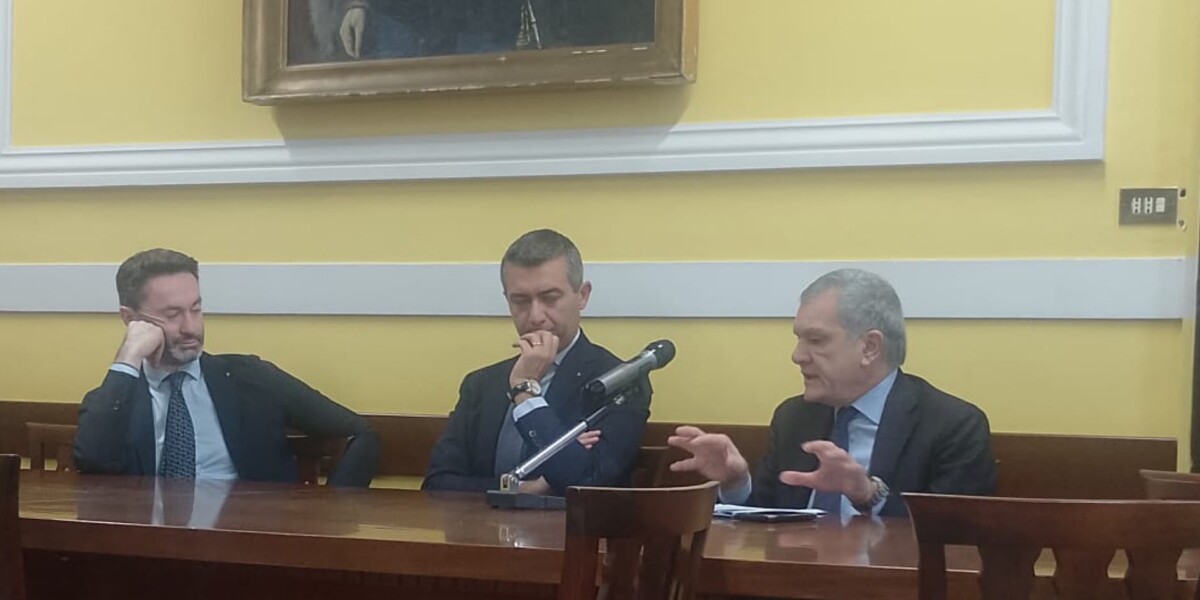
The lawyer Danilo Iannello, head of the local school, opened the proceedings. Past president Aldo Casalinuovo and member of the Council of the Union of Italian Criminal Chambers Valerio Murgano spoke, illustrating the reasons for the mobilization, focusing in particular on the opposition to the introduction of the figure of the victim in article 24 of the Constitution, dedicated to the inviolable right of defence.
Vice President Orlando Sapia, Past President Vincenzo Ioppoli and lawyers Antonietta De Nicolò, Stefania Mantelli and Maria Aiello also took part in the debate, together with other members.
The discussion addressed the possible consequences of the change on the constitutional balance of criminal proceedings. The failure to mention the victim in the Charter is not an oversight on the part of the Constituents, but the result of a precise choice to balance the values ”at stake”. Criminal law, in its liberal conception, is in fact a Magna Carta of the criminal and, even before that, a limit to the punitive claims of the State.
Hence a central reflection: if the victim is the weak subject at the moment in which he suffers the crime, in the trial the condition of greatest exposure is that of the accused, called to deal with the public punitive power. What space could the expectations of the injured party take on in a proceeding that must remain oriented towards ascertaining responsibility? And what effects would the introduction of a further right of defense produce on the necessary balance with that of the accused?
Furthermore, the risk of a progressive change in the function of the trial has emerged: no longer just a place for verifying the accusatory hypothesis, but an instrument called upon to respond to social expectations. An evolution that could consolidate the transition from a criminal law understood as a limit to a criminal law of struggle, in a context already marked by the growing influence of the media trial and the consequent social delegitimization of guarantees.
At the end of the proceedings, the president of the Criminal Chamber of Catanzaro, lawyer Francesco Iacopino, reminded the lawyers of their responsibility to open a direct confrontation with the citizens.
«We must leave the courtrooms and meet the citizens, explaining why the authoritarian push represents a recipe as suggestive as it is deceptive: it does not solve the problems of justice, but risks eroding rights and freedoms. The provision of the victim in the Constitution is an essentially symbolic provision, which adds nothing to the concrete protection of injured parties, already widely recognized by our legal system. On the contrary, it risks triggering a dangerous reversal of constitutional values, transforming the trial into a place dedicated to satisfying the victim’s expectations rather than establishing responsibility.”
«There is a distinction that we must never lose sight of: if when a crime is committed the weak subject is the victim, when the trial is held the weak subject is the accused. Human justice is fallible and for this reason we have built a system of rules and guarantees. Not to protect the guilty, but to prevent the punitive power of the State from overwhelming the innocent. This is the profound reason for our opposition: to prevent the expectations of the streets and the pressure of public opinion from ending up influencing the balance of the trial and compressing the right to defence.”
Iacopino then announced that the Criminal Chamber will be involved, during the week, in a daily presence in newspapers to illustrate the reasons for the No vote and involve public opinion. «It is not a corporate battle and does not concern the interests of lawyers. It is a battle for the rights and freedom of everyone. We must make it clear that guarantees are not a privilege of those who end up on trial, but a common heritage, which protects every citizen from the possibility of arbitrary exercise of power. Without guarantees there is no justice; without rights there is no freedom.”