

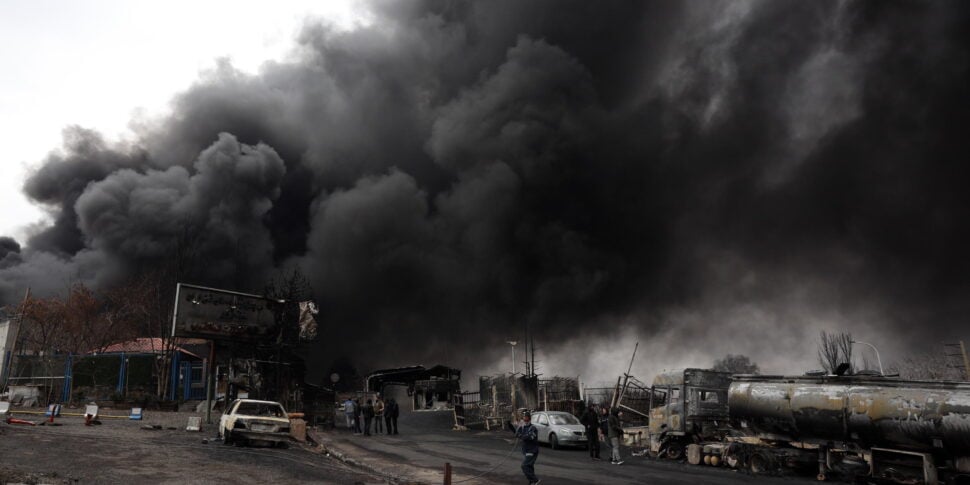
When the citizens of Tehran perceived a strange darkness on Sunday morning and climbed onto the roofs to find out the reason, they witnessed an unprecedented scene: enormous and frightening clouds of thick black smoke had enveloped the city, obscuring the sun. A cloud that rose after the explosion of Tehran’s oil deposits, bombed by the United States and Israel the previous night. «It was as if judgment day had arrived. I was shocked. We, in Iran, have witnessed many similar scenes and heartbreaking moments that will remain with us forever,” Marjan, a thirty-year-old teacher, told Ansa.
An uncertain future between flames and oil
For many, the black smoke reminds us of the dark days that characterized the country and an uncertain future. A darkness through which no one can predict what will happen to the country: a calm and normal life or a completely destroyed land? “Just last night I saw videos of the explosion at the Shahran oil depot in the capital, which showed a huge red cloud illuminating the area. Furthermore, the fuel flowed through the waterways along one of the nearby roads, causing a line of fire and flames. Truly horrible!”, Sina, 40, told ANSA.
The health alarm: acid rain and toxins
The Iranian Red Crescent warned citizens shortly after the explosions of the risk of toxic compounds in the atmosphere, aggravated by light rain. And he urged residents to stay home to protect themselves from dangerous acid rain, a black mixture of water and fuel that has blanketed Tehran’s streets.
Fuel and supply crisis
Following the incident, the government immediately reduced the monthly petrol quota from 30 to 20 liters for personal fuel cards in Tehran. However, many petrol stations in the capital remained closed and long queues of cars formed at some others.
Apart from the difficulties in refueling, so far there have been no particular problems with purchasing food in shops, since, in view of the imminent Iranian New Year which will begin on March 21, the market had already stocked up. But the first inconveniences are starting to be felt due to a shortage of medicines in pharmacies.
The empty streets and the blocking of flights
Compared to the 12-day war between Iran and Israel last June, fewer people are willing to leave Tehran and there is currently little crowd or movement on the empty streets. However, there is another reason for concern, which concerns Iranians living abroad who have had difficulty returning due to the cancellation of flights after the new conflict.
Escape across land borders
Hamid, 41, a US resident, had traveled to Iran to meet his family a few weeks ago. He ultimately decided to flee the country via the northwestern borders between Iran and Armenia. “I had to go back to work soon and so I decided to take a bus to cross the Norduz border crossing,” he told ANSA.
«The crossing was crowded, with around 1,000 people, mainly young Iranians living in countries such as the United States, Italy, France and Hungary. Among the travelers there were also foreigners,” he said, adding: “The Armenian border police have excellent cooperation, managing the procedures for the 20-25 buses that arrive every day from different cities in Iran. I had to wait six hours on the Iranian side of the border, due to internet problems, and finally crossed the border into Armenia at 04:30.”