
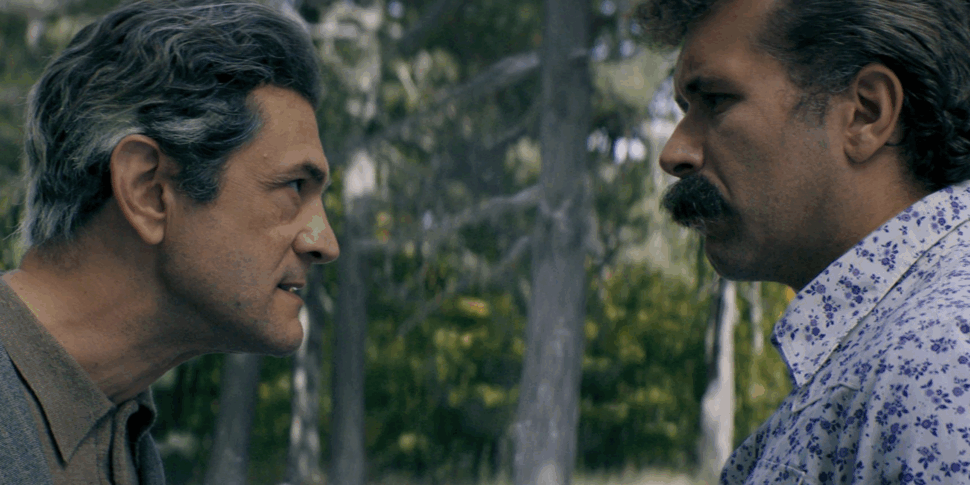
Calabria at the 82nd Venice Film Festival with two films shot on the regional territory. Two works with the collaboration of Calabria Film Commission: “Killing tired” directed by Daniele Vicari, with Gabriel Montesi, Vinicio Marchioni, Selene Caramazza, Andrea Fuorto, Thomas Trabacchi, Pier Giorgio Bellocchio, Rocco Papaleo, Saverio Malara, produced by Pier Giorgio Bellocchio and by the Manetti Bros. A Mompracem production with Rai Cinema, in competition in the Spotlight section; And the quiet life “by Gianluca Matarrese, Faber Produzioni Stemal Entertainment with Rai Cinema, co-production Elefant Films with RSI-produced by Donatella Palermo and Alex Iordachescu, a special event at the 22nd edition of the authors’ days. Killing Stanca, the film, written by Daniele Vicari and Andrea Cedrola, is freely inspired by the homonymous autobiography of Antonio Zagari, published by Editorial Company Aliberti. The work was also shot in Calabria, between Lamezia Terme, Spezzano della Sila, Camigliatello Silano, San Luca, Bovalino. It is the autobiography of a boy who rebels against his criminal destiny. His is a true story. In the cast Gabriel Montesi, Vinicio Marchioni, Selene Caramazza, Andrea Fuoro, Thomas Trabacchi, Pier Giorgio Bellocchio, Rocco Papaleo and Saverio Malara. The quiet life was shot in Corigliano-Rossano and Sibari. Interpreters Maria Luisa the Great, Immacolata Capalbo, Andrea Magno, Antonietta Giuseppina Mancuso, Carmela Magno, Concetta Magno, Filomena the Great, Sergio Turano, Giorgio Pucci. “The film was born from a true story, lived within the walls of my family – explains the director Gianluca Matarrese – in a Calabrian village where the grudge is daily and the conflict is sacred, I tell the domestic war between two sister -in -law, Luisa and Imma. Through a language that merges documentary, fiction and theater, I stage a closed and hyperreal universe, where each dispute is a lunch. With irony and cruelty, he explores the antechamber of the crime, that suspended moment in which the tragedy of reality can still be avoided, perhaps, thanks to the cinema. “

John
John, founder of Odnako, combined his journalism degree with technical expertise to revolutionize global news consumption. Before Odnako's 2011 launch, he gained diverse experience across the media and tech fields, setting a solid foundation for his mission to provide comprehensive, unbiased news. His vision and leadership have since established Odnako as a trusted, innovative news platform worldwide.