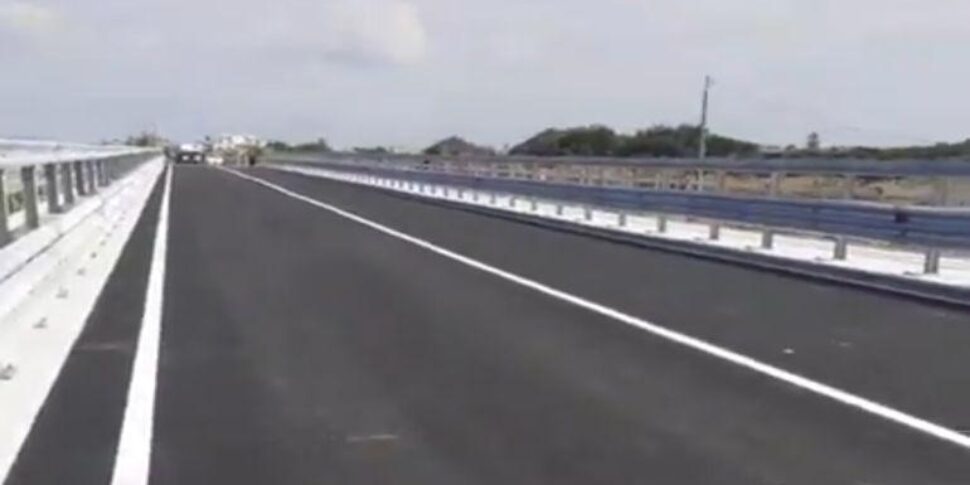
The bridge over the Mela torrent, an infrastructure of primary importance that combines Milazzo and Barcellona Pozzo di Gotto, has returned to 11 o’clock. The reopening returns to the community an essential connection, banned to traffic since 2020, in a densely inhabited area characterized by a high circulation volume.
The intervention, curated by the Civil Engineer of Messina, concerned the reconstruction of the five -span deck, the arrangement of the roadway and the installation of new protective barriers. The goal is to guarantee greater safety and a longer duration to the structure, which in the past has undergone closings and limitations due to structural problems.
The redevelopment allows you to overcome the mouth of the Mela torrent and to connect with the provincial road 75/B, an important artery that connects the two centers along the Tyrrhenian coastal coast.
Currently the transit is reserved for vehicles, with a speed limit set at 20 km/h, a size necessary to protect the safety of the operators still engaged in the works. The interventions for pedestrian access are being completed, in particular the installation of the protection railings, and the hydraulic and environmental arrangement works of the riverbed.
The reopening of the bridge represents a significant passage for local roads, helping to reduce inconvenience and decongest alternative, often overloading roads. The infrastructure constitutes a strategic node for connections along the Tyrrhenian coast of Messina and for the daily movements of residents and commuters.
“The reopening to the traffic of the bridge over the Mela torrent – said the metropolitan mayor Federico Basile – marks an important moment: after years of closures, deviations and slowdowns, a direct connection between Milazzo and Barcelona Pozzo di Gotto is restored, with evident benefits for circulation. The intervention was necessary to guarantee safety and solidity to a structure that, in addition to its technical value, represents a fundamental element for the daily life of thousands of citizens, for commuters, economic activities and local services “.