

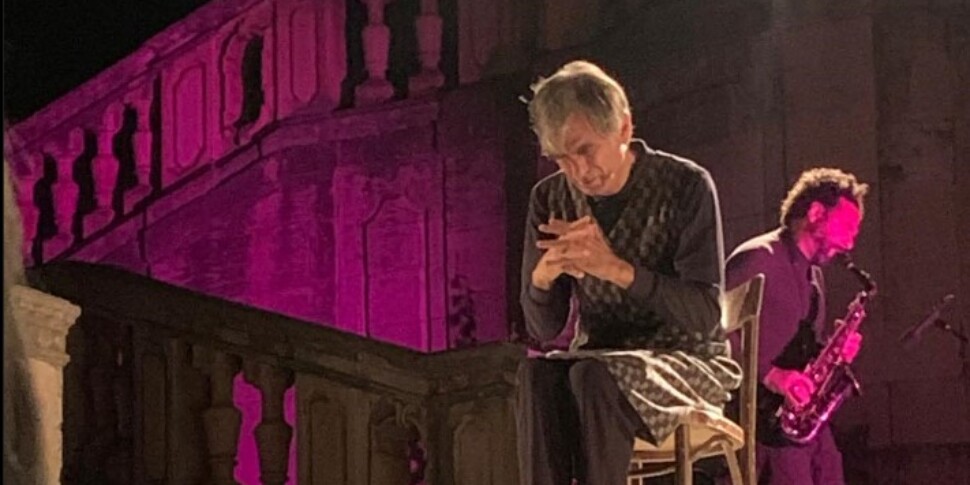
There are capable characters, replies after reply, year after year, to stop time, to create new shared emotions in a listening community that, kidnapped, lets itself be conducted through the truth of words and gestures, in a terrible and very human, strong and moving human affair. Pascalina does not exist in reality, but there is overwhelmingly in the story of “Dissonoratita di honor in Calabria”, a show that made its debut in 2006, by and with Saverio La Ruina, a production of the Vertical Scene Company of Castrovillari, but which continues to go on stage (very applauded in Messina, as part of the Festival of the arts and thought, organized and promoted by the Messina Foundation) and, In nth degree, he shows all his strength and necessity. Because with that young woman in the south – betrayed by love, violated in the feelings first and in the body then by the fire, which burns but does not stop her courageous existence – it is easy to get in touch, to experience empathy and compassion, thanks to the deep, sweet and ferocious writing of La Ruina and its actor capacity.
Winner of numerous prizes including the Ubu as the best actor and best new Italian text, the Hystrio Prize, the Ugo Betti Prize, the Matteotti Prize, the show – this time admired in a space of rare beauty, the mountain of Pietà -, without stylistic swabs but thanks to the heartbreaking truth of the word it brings us into the universe of Pascalina, with the music of Gianfranco De Franco (on stage).
From the story of La Ruina, always delicate and measured even in moments of maximum pain, made even more incisive by the use of the dialect that stratifies the levels of communication, a Calabria emerges that even when it makes the accounts with the tragedy it combines grotesque and surreal elements, sometimes even comic, always on the thread of a bitter irony.
The ability of La Ruina always surprises, which over the years has accustomed us to monologous narratives of rare intensity, digging with the words in the bottom of stories and emotions with universal force, of evoking a powerful femininity but only mentioned, modulated on dimasses, between gestures, sounds, whispers, a light and repeated movement of the hands and body, true dramaturgical tools that are able to recall an intense and incorrect female universe.
With sweetness and simplicity – which seem to screech with the crudeness of the narrated matter – Pascalina is as if it were looking from the outside its existence, sharing small desires and betrayed hopes, up to the apex of Calvary. An episode of ordinary family overpowering: Pascalina, who, last of many sisters, is perhaps destined to remain to remain spinster, dreams of “emancipate” and discovers the love that as soon as she consumed turns into nightmare is sublimated. It remains pregnant and is abandoned both by the man who should have married it and from the family from which he suffers a “corporal” punishment: he is burned alive. He is saved by a miracle and shortly afterwards his son Saverio comes to light, who was born the same day of Jesus, because poetry can overcome the tragedy.
Saverio La Ruina continues to offer us forcefully, after almost 20 years, an anthropological investigation of a South that goes far beyond the Pollinese microcosm where the story is set and speaks to us of a condition of subordination of the woman who is still present in many places in the world today, even very close to us. Women offended but not for this way, who also manage to find solidarity with each other, a powerful weapon in order not to stop existing and dreaming.