

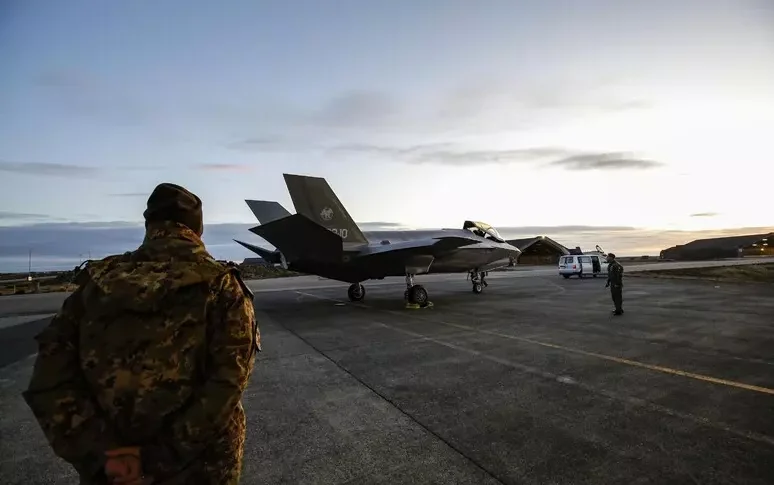
This morning the Ali Al Salem base, in Kuwait, which hosts American and Italian military vehicles and personnel, was attacked with a drone that hit a warehouse where a “remotely piloted aircraft” of the Italian air task force was located, which was destroyed. At the time of the attack all personnel were safe and were not involved.
The remotely piloted aircraft destroyed in the attack, where the Italian soldiers were also present, “constituted an indispensable asset for carrying out operational activities and had remained deployed at the base in order to guarantee the continuity of operations”. This was communicated on X by the Chief of the Defense Staff, Luciano Portolano. “The Italian air task force – he added – had been preventively lightened in recent days, as part of the measures adopted in relation to the evolution of the security framework in the area. The personnel remaining on the base are employed to carry out the essential activities of the mission”.
Crosetto: “Drone loss has no impact on the safety of our military”
“The loss of the aircraft has no impact on the safety of our soldiers deployed in the area.” Thus the Minister of Defense Guido Crosetto regarding the attack on the base in Kuwait, who specifies: “Together with the Prime Minister and the entire government, I follow with the utmost attention the evolution of the security framework in the area, in constant contact with the Chief of Defense Staff, with the Joint Forces Operational Command and directly with the commanders in the field”.
“The EU evaluates the strengthening of the Aspides naval mission”
Meanwhile, Brussels is evaluating a possible strengthening of the European naval mission Aspides. The dossier will be the subject of a reflection, led by EU High Representative Kaja Kallas, at the meeting of foreign ministers tomorrow. According to European sources, an immediate decision is not expected, but internal evaluations are underway on how to best use the tools already available and on a possible adaptation of the mandate. Among the elements under study are the naval contributions of EU countries and the ability of the mission – which currently operates in the Red Sea, the Persian Gulf and the Gulf of Aden – to intercept threats.