

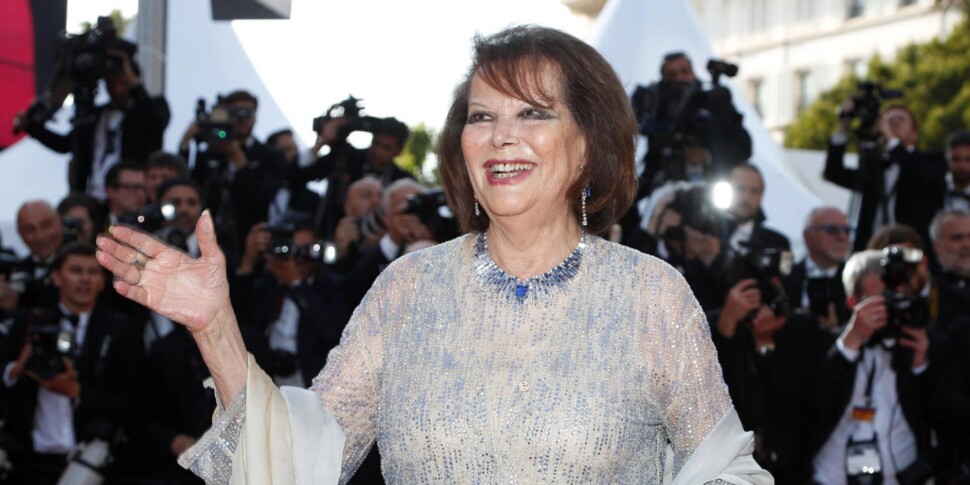
Claudia Cardinale, an icon of cinema in the 1960s, died tonight at the age of 87 in Nemours, near Paris, where she lived. His agent, Laurent Savry, announced it at the FP. Born in Tunis, Claudia Cardinale starred with the greatest directors, including Luchino Visconti, Federico Fellini, Richard Brooks, Henri Verneuil and Sergio Leone. “He leaves us the legacy of a free and inspired woman both in her woman’s path and artist,” Savry said. The actress passed away while her children were next to Nemours, near Paris, where she had lived permanently for a few years now.
Claudia Cardinale, pseudonym of Claude Joséphine Rose Cardinal, was born in Tunis on April 15, 1938 to Sicilian parents immigrant during the British protectorate. She was considered the most important Italian actress that emerged in the 1960s and together with Sophia Loren and Gina Lollobrigida she was able to have a great international notoriety. During his long career, which began in the mid -fifties, he starred in a wide range of cinematographic genres.
From Italian comedy to western spaghetti, from dramatic films to historical ones to the Hollywood mold, working occasionally also in music, theater and on television. He has participated in more than 150 films, some of which are considered to be milestones of the author’s cinema. Overseas has achieved great public success, receiving numerous acclaim from critics, supporting some of the most acclaimed international actors: John Wayne, Sean Connery, William Holden, Henry Fonda, Eli Wallach, Orson Welles, Peter Finch, Anthony Quinn, Jack Palance, David Niven, Laurence Olivier, Burt Lancaster, Jason Robards and many others.
For the role of the widow who desperately tries to bring his drug addict son back on the right street, he receives the Golden Globe for Best Actress and a nomination for best leading actress to the silver tapes. Only already sixty -year -old Cardinal debuts at the theater, accepting the proposal of Squitieri, while in the past he had refused the prestigious ones of Luchino Visconti and Giorgio Strehler.
The decisive turning point of his career arrived in 1957, when he won the beauty contest for the “most beautiful Italian in Tunisia”, held in Gammarth, who earned her a trip to Venice during the International Film Art Exhibition. On the beach of the Lido, the fascinating eighteen year old did not go unnoticed in the eyes of the many directors and film producers present.
His first Italian film is the usual unknown (1958) by Mario Monicelli, but the first important role was in a cursed cheat (1959) by Pietro Germi. In 1960 he participated in five films: the beautiful Antonio of Mauro Bolognini, the international megproduction Napoleon in Austerlitz by Abel Gance, with Orson Welles and Vittorio De Sica, the audacious blow of the usual unknown people directed by Nanni Loy, the first professional meeting with Luchino Visconti in Rocco and his brothers and dolphins of Citto Maselli.
During the filming of Il Bell’Antonio, Marcello Mastroianni fell in love with her who, although attracted by his kind charm, rejected him because he did not take him seriously. The subsequent work with Bolognini, the way, made her meet Jean-Paul Belmondo, with whom he then shot the adventurous cartouche (1962) by Philippe De Broca, the film that made it popular in France and during which he had a love story with Belmondo.
The girl with Valerio Zurlini’s suitcase involuntarily staged the most painful part of her real life: the hidden son and allowed her a total identification with the character of the girl-friend Aida. 1963 represented a crucial year for the career of the cardinal: he had the unrepeatable opportunity to work simultaneously with two of the major masters of Italian cinema in films-symbol of their career. He participated in Il Gattopardo di Luchino Visconti and 8 and a half of Federico Fellini.
Her first real interpretation with her voice, in the film The Girl of Bube by Luigi Comencini, earned her the first important recognition to her work as an actress: the silver ribbon for the best actress. He worked for the first time with Ugo Tognazzi in Antonio Pietrangeli’s film The magnificent Cornuto (1964), in which he appears at the height of his own sensuality. In 1966 he checked with the Western genre in the professionals of Richard Brooks, nominated for three statuettes of the Oscar prizes and considered his best American film, in which he found with pleasure Burt Lancaster, with whom he shared the unforgettable experience of Visconti’s film three years earlier.
Claudia Cardinale was married to the Italian film producer Franco Cristaldi (1966), but their coexistence had started many years earlier, although kept secret due to the Italian laws that did not allow divorce, since Cristaldi was previously married. The two left definitively in 1975. In 1973 during the filming of a film, he met the Neapolitan director Pasquale Squitieri, with whom he later started a long artistic partnership. He lived with him from 1975 to 2000. His daughter Claudia was born from this bond. At the end of the seventies he became a grandmother for the first time of Lucilla, Patrick’s daughter, and became a second time in 2013 of Milo, son of Claudia.
In 1973 he returned to work for one last time with two of his “historic registers”, with Mauro Bolognini in the free film, my love!. Two comedies next to the other main Italian actress of her generation, Monica Vitti, at midnight the patrol of the pleasure (1975) by Marcello Fondato goes and here begins the adventure (1975) of Carlo di Palma, mark the end of the long professional relationship of cardinal with the Vides production house.
After seventeen years of uninterrupted work, with at least three to four films a year, the actress remains firm for almost two years before Franco Zeffirelli calls her for the role of the Adultera in her television screenplay Jesus of Nazareth, huge worldwide success.
The eighties open with two important films, nor the skin (1981) by Liliana Cavani, who is worth a silver ribbon to the best supporting actress, while in 1982 in the Fitzcarraldo film (1982) by Werner Herzog. The interpretation of the controversial historical character of Claretta Petacci in Claretta (1984), directed for the umpteenth time as Squitieri, makes her get the Pasinetti prize at the Venice Film Festival and her third silver ribbon. Act of pain is probably the most successful work during the nineties for the actress’s career, once again with the indispensable resource of Squestieri.