

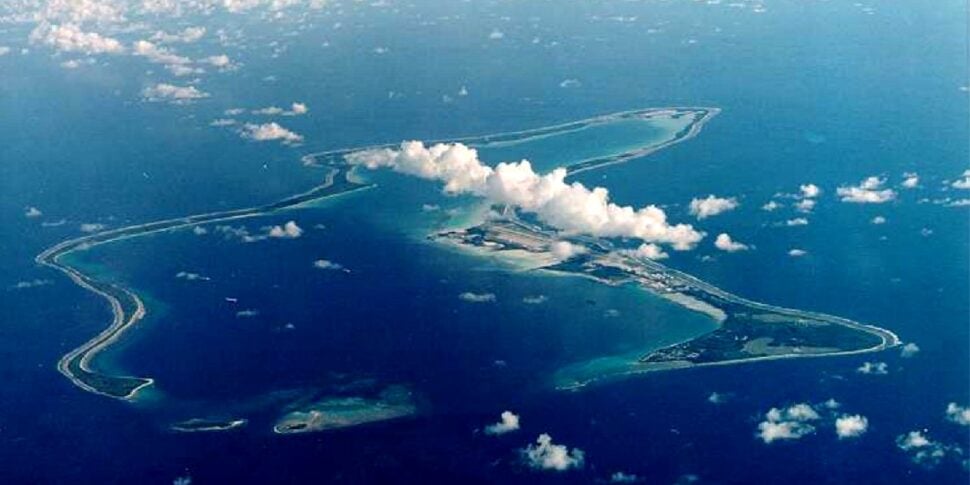
Air raid sirens sound over Diego Garcia, but they echo throughout the Western world. Because by targeting the important Anglo-American base on the Indian Ocean island – albeit in a failed attack – Tehran has demonstrated that it can threaten targets up to 4,000 kilometers from its territory.
A range of action that touches a large part of Europe, including Italy, to send the message that the Islamic Republic is far from defeated and that the Old Continent is not immune to war, if it sides in favor of the offensive which in the meantime continues until it touches the Iranian nuclear plant of Natanz.
“Targeted” – denounced the Iranian atomic agency – by “criminal attacks perpetrated by the United States” and Israel, without however causing radioactive leaks. In response, Iran hit Dimona, a city in the Israeli Negev desert which hosts a nuclear plant, with a missile, causing at least 39 injuries, including a 10-year-old child.
At Natanz “no increase in off-site radiation levels has been reported,” the IAEA said in a statement reiterating its call for moderation. A word now foreign in a land where yet another conflict has been taking place for almost a month and shows no signs of slowing down. Despite Donald Trump’s words that he is ready to evaluate “a downsizing of the operation” against the Islamic Republic, while in the meantime he sends thousands of new troops to the Middle East.
Tehran responded to the escalation by launching two intermediate-range ballistic missiles against the Diego Garcia base, an important strategic hub for US forces as it hosts bombers, nuclear submarines and guided-missile destroyers. One of the missiles malfunctioned during flight, while an American warship launched an SM-3 interceptor at the other, as reconstructed by the Wall Street Journal.
“This launch represents a significant step in the confrontation with the United States,” the Iranian Mehr agency later claimed, confirming the attack. The fact that Iran targeted the island suggests that its missiles have a greater range than estimated by Western countries and claimed by the Iranians themselves.
And if only last month Foreign Minister Abbas Araghchi had affirmed Tehran’s desire to deliberately limit the range of its missiles to 2,000 km – thus avoiding being able to reach Europe – it seems that this intention has now lapsed. A development that speaks in particular to the United Kingdom and its decision to make available the bases for US attacks on Iranian targets that threaten Hormuz.
“The vast majority of the British people want nothing to do with the war” and “by ignoring his own people, Starmer is endangering British lives”, said Foreign Minister Abbas Araghchi, ensuring that Tehran “will exercise its right to self-defence”.
Tension on the strait remains high: the United States responded to Iranian threats by announcing that Tehran’s ability to threaten the sea passage, key for goods and energy traffic, had been “weakened” thanks to the bombing, which occurred this week, of an underground facility where cruise missiles and other weapons were stored.
“We not only destroyed the structure, but also intelligence support sites and missile radar repeaters used to monitor ship movements,” claimed US Centcom commander Brad Cooper. But the blockade of the strait remains as the conflict continues and enters its fourth week on days when Iran celebrates the end of Ramadan and Nowruz, the Persian New Year.
Appointments experienced without the Supreme Leader Mojtaba Khamenei, absent from the traditional commitment to lead the prayers of Eid al-Fitr, while the intelligence of the United States and Israel are convinced that he is alive, but question whether it is really him who is giving orders in the country. Meanwhile, in Khamenei’s place, the head of the judiciary, Gholam Hossein Mohseni Ejei, participated in the prayers in the great Imam Khomeini mosque, in the center of Tehran, which was packed with faithful who crowded the surrounding streets.