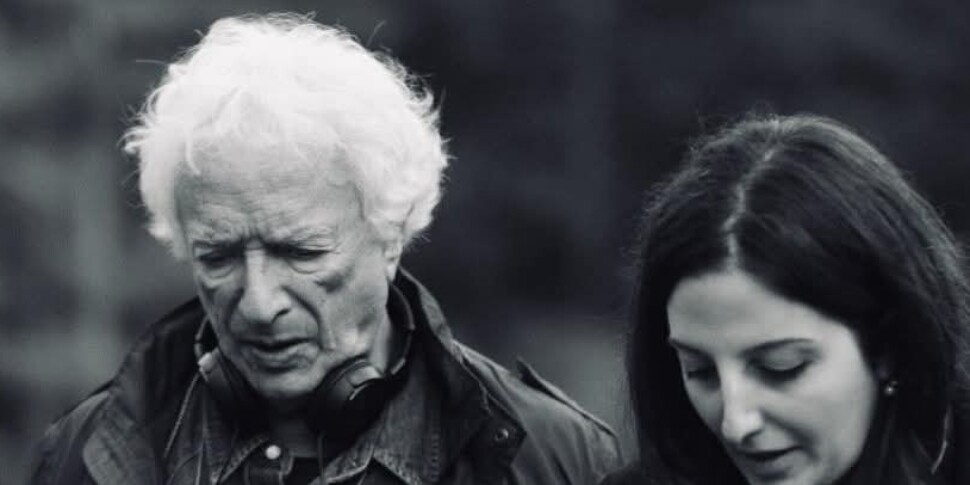
In the magic setting of the Mabos – Museum of Art of the Sila Bosco, to seal the second edition of rooms of imaginary life, as part of the Sense 2025 artistic season, with a double residence of an artist entirely dedicated to photography to pay homage to the photographer Mario Giacomelli, a great protagonist of the Italian 1900s, on the occasion of the centenary of his birth, will be two equally relevant names of the photographic scene: Mario Cresci.
From 29 September to 5 October, two different generations and languages will be intertwined: grow, among the first in Italy to experiment with the freedom of research that crosses the design, photography and video experience, within the perimeter of forest terraces, will create the installation “mirrored” which conceptually and visually will develop all its relevance to photography and photographic.
This work evokes, with another matter, the photochemical nature of the photographic film that with the silver halogen “absorbs” reality by reflecting it in miniature.
“Photography allows me to move away from the truthfulness of the reality, moved by the belief that the acceptance of the fiction of the photographic is a way to know reality, always in a subjective key” says Mario Cresci focusing on the value of photography as a powerful means of investigation of the real world.
To accompany his visual language, consolidating the pleasure of the imagination that detaches himself from the visible one moment before the photographic shot, will be Elisa Longo who will play the dual role of hostess, as director of the Mabos, and poet in residence.
“With Mario Cresci I have the honor of celebrating an important chapter of my business here at Mabos and the imprint as well as the personalization that I have felt I have to give to this magical place through poetry that is not my profession – I am a historic of art – but my essential way of existing” comments Longo, proud to work alongside an artist who had talent, passion, the courage of vision and always shows the art park for the park The Catanzaro Sila embellishes. Here, in fact, on October 7, Cresci will stop as a guest of a stage of “I Tuesday Critics”, a historic appointment with the protagonists of the contemporary art scene organized by the association of the same name in the main Italian cultural places, edited by Alberto Dambruoso.
In search of new languages based on metaphor, imagination and conceptualization rather than on the direct and simple reality of the facts it is also the photographer Massimo Mastriorillo who will instead take care of the artistic direction of a contextual residence “from zero to zero. Praise to slowness”. It will involve 5 young photographers (Andrea Agostini, Andrea Alessandrini, Debora De Canio, Mahtab Hoomanfar, Samuele Vincenti) who, selected through a call launched in collaboration with the Factory Door and the Door Academy he directed in Rome, will confront each other on the relationship between poetry and photography.
“” From zero to zero “is a space, a formula of minimum capacity, almost the antechamber of an apodictic desert that is therefore absence, lack, echo. Something that does not hinder the vision but, on the contrary, becomes an extension and violation of the limit. It is, then, an action pill, an act of resistance against the rhythms of the race and daily ruin “explains Mastriorillo, illustrating the residence in which the Mabos director captures” an eulogy of the slowness that drags itself on the back, in the sacred and ancestral materiality of the places, of all the life that contains us and exists for much earlier, regardless of us “.
To inspire the two residences of the artist, strongly connected, can only be the legacy of Mario Giacomelli enclosed in the images of “The singing of the new emigrants”, inspired by the composition of the homonymous of the Calabrian poet Franco Costabile, which represents a fundamental element of Mabos. Equally important is the environmental context of the Sila, in which art and nature are combined in an extraordinary place that, in addition to the healthy air, propagates the beauty of the works of art.
Also this last special stage of the second edition of rooms of imaginary life will be accompanied by the original stretch of the pencil of Giuseppe Talarico, artistic director of Colosso Studio, who with irony and freshness represents models of iconicity of Calabria, and by the photographic narrative of Isabella Marino.