

Add the Gazzetta del Sud as a source

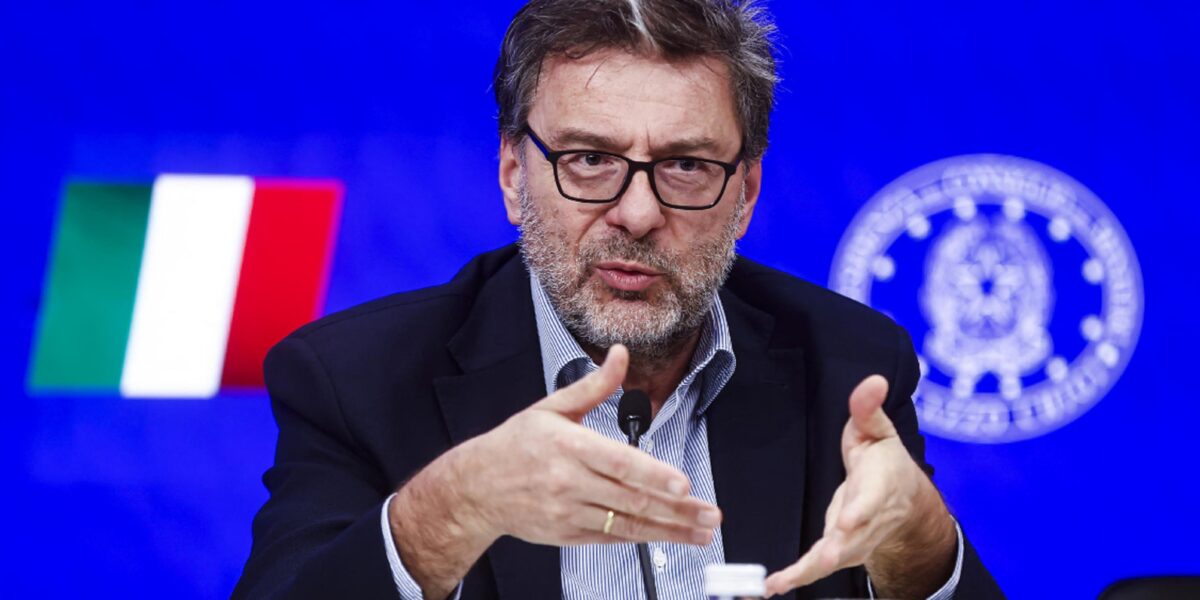
A “complex” context, with variables that require great attention such as inflation and rates, in which it is increasingly difficult to make predictions. The path of the next maneuver is traced, and it is marked by prudence. The Minister of Economy Giancarlo Giorgetti makes it clear, lifting the veil on the accounting framework that will be the backdrop to the budget law and announcing a deviation of around 29 billion in two years, equally divided between energy and defense – even if for the latter the space is reduced compared to forecasts. One message at a time from the allies, who are already champing at the bit with pre-election climate proposals. But also in Brussels, which is preparing to evaluate the Italian request to consider the impact of the price surge on the spending path agreed with the EU.
The deviation: less space for defense
The public finance planning document, approved by the council of ministers, confirms “the spending path in programmatic terms”, assures Giorgetti, explaining however that the numbers are “adjusted”. In fact, there is space to be considered for the national safeguard clause, equal in 2027 to 0.3% of GDP for energy expenditure and 0.3% for defense, in 2028 to another 0.6% equally distributed. Overall 1.2% of GDP, “an overall value – specifies the Mef – of up to around 29 billion in the two-year period 2027-28”. Therefore less than the 36 billion announced a month ago during the minister’s communications to Parliament on the use of the clause. «We decided to reduce the defense effort», explains Giorgetti. Spending on weapons thus suffers a reduction of 0.3% of GDP, around 7 billion less.
A downsizing in the face of which the owner of the Defense Guido Crosetto is not dismayed (“I perfectly understand the reasons that led to the choice”), who nevertheless hopes that the conditions of 2027 will allow a subsequent increase in intervention. From the League, however, comes “satisfaction” for the strengthening of energy investments which have “reached those intended for security”.
Deficit, GDP and debt: the numbers of the DPFP
Under the weight of the deviation, the DPFP raises the deficit bar above 3%: it reaches 3.4% in 2027, and then drops to 3.2% in 2028 and 2.3% in 2029. But the data for 2027 and 2028, “net of the 0.6% deviation”, clarifies Giorgetti, remain below the 3% threshold. Therefore, the last word has not yet been said regarding the exit from the infringement procedure: «Decimals make the difference – underlines the minister, mindful of the 3.1% which made the objective disappear in 2025 – and therefore the hope is to open up that space». And if something moves on growth, with 2026 GDP revised upwards to 1% compared to the prudent 0.6% estimated in April (for 2027 it has been raised to 0.8%, from the previous 0.6%), the debt remains above 138% of GDP (it will rise to 138.6% in 2027) and will only take a downward path from 2028.
In this extremely precarious context, in which the situation of both rates and inflation is being “carefully” examined at the MEF (to which is added the uncertainty over the future of ECB President Lagarde, on which Giorgetti invites us to “clarify as soon as possible”), the maneuver was born under the sign of rigor. “I monitor day by day,” says the owner of the Mef, who compared to a month ago is forced to take a “slightly more cautious” approach with respect to the announcements that crowd the newspapers. «The context – he points out – clearly requires greater attention».
The parties’ requests and the next steps
A clear message to allies and government colleagues, who have already drawn up long lists of requests. Forza Italia, which met its general staff on 2 October precisely in view of the maneuver, has “many” proposals, “focused above all on reducing the tax burden”, explains the Italian leader Antonio Tajani, expressing the hope that the maneuver will not be “restrictive”. The League has been pressing for weeks on measures which have also been opened up by the owner of the Mef, from the flat tax for salary increases for young people to the early retirement age of 64. We Moderates indicate young people as a priority, proposing zero taxes for new hires under 30.
And while the opposition is already predicting “yet another half-measures maneuver without vision”, we are already looking at the next steps. The most important appointment is perhaps October 13, when Parliament will vote, together with the DPFP, on the deviation: an appointment that requires compact ranks on the center-right given that the vote is by absolute majority. Then by mid-October the budget planning document must be sent to Brussels and by the 20th the maneuver is expected in the Chamber.