

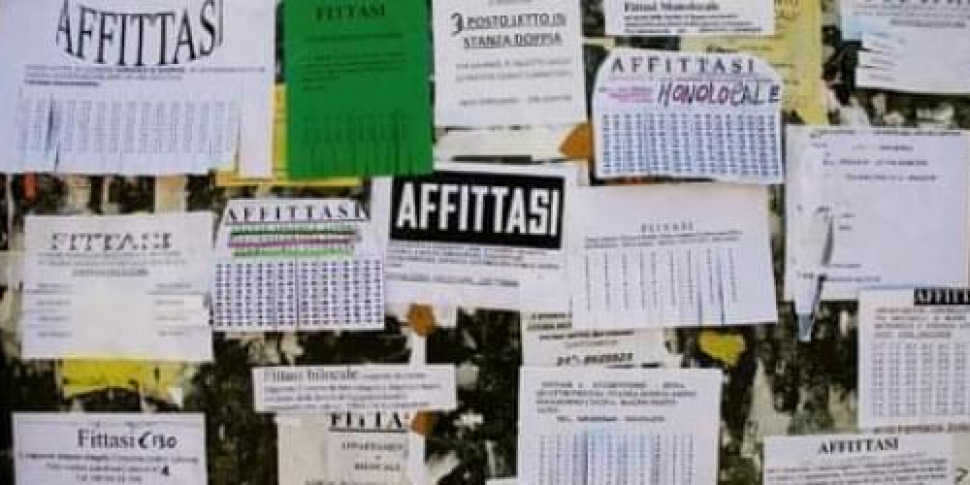
The single room has now become the absolutely requested accommodation by Italian students, while the demand on doubles are stupid. University studies remain a marginal solution, often expensive and in any case unable to satisfy the demand. Only a restricted fee of wealthy families still chooses to rent mono or two -room apartments. This was noted a study by SoloAffitti has taken the photograph of the market of university students in Italy in view of the start of the new academic year.
After the increases of recent years, the canons seem to have reached the maximum roof. In many north cities, the perspective is of stability, with the Milan alone which, as often happens, anticipates national trends: the single rooms range between 650 and 700 euros, with a slight signal of contraction.
Among the other large cities, Turin, Trieste and Genoa have the most accessible prices ever in the north, with single rooms generally between 300 and 400 euros, and peaks of up to 450-500 euros for higher quality solutions or in a strategic position. In Trieste, some more wealthy students choose to rent entire apartments for about 650 euros, while in Genoa the choice is strongly influenced by the proximity to the buses.
In smaller cities such as Padua, Brescia and Trento, the fees for a single one are between 400 and 500 euros, with Padua above the average, with fees that remain between 400 and 500 euros, but can reach 600 euros for properties equipped with bathroom for exclusive use.
Even in central Italy the single room is the most requested solution everywhere, with prices that vary significantly between large cities and smaller ones.
Rome is the most expensive, with canons around 600 euros. The distance from the center is an element that affects predominantly on the choice, as well as the seismic and plant safety conditions of the properties, which are almost always dated in the capital. Following, Florence and Pisa, where central or well -connected areas are preferred, with prices between 300 and 350 euros on average, and peaks of up to 450 euros for rooms with private bathroom. Siena remains more accessible (250-320 euros), but the price rises up to 400-450 euros for small autonomous apartments.
Ferrara is confirmed as one of the most accessible cities, with canons ranging from 250 to 400 euros depending on the conditions and position of the property. Even cheaper are Perugia and Teramo, where single rooms start from 200 euros, with an average between 250 and 300 euros. In Teramo the demand for independent apartments by students with greater financial resources grows.
In southern Italy, the prices of students remain the most content in the country, but in many cities, the age of properties, the neighborhood and connections strongly influence housing preferences. In Bari, the canons for a single are between 250 and 350 euros, with lower prices only for very dated and higher apartments (up to 400 euros) only in case of private bathroom. The enhancement of public transport is in progress, but the proximity to the university remains a decisive factor. The Massimo roof gets up for Naples, where you can find a single stay in the 250-500 euro band at most.
In Catanzaro, a city with complex urban mobility, the position of the accommodation is crucial. Prices range from 200 to 250 euros, with higher values only for new and very large rooms. Reggio Calabria stands out for the lowest canons: the singles are between 140 and 180 euros, so much so that those who can often choose a studio apartment for about 350 euros. However, many student houses are old and not very functional. In Messina, prices remain between 250 and 300 euros, while in Catania they are between 250 and 270 euros, with peaks of 300-350 euros for rooms equipped with exclusive bathroom.
Even in Catania and Palermo the individuals are the most popular. In Palermo, prices range between 250 and 350 euros, rarely exceeding 400 euros also for better solutions. The territorial agreements, which allow you to keep the expectations of the owners and to guarantee greater transparency to students, affects the containment of prices, where they work well.
The students, notes the research, define their housing choices starting from three main factors. The first is the proximity to the university, which weighs especially if the area is also experienced in the evening. The second factor is the proximity to public transport. The third element concerns the conditions of the property. The presence of the private bathroom affects, but it is not the rule.
September and October remain the months of greater tension for the application, but 2025 introduces a novelty: the open semester of medicine, which leads many students to request contracts of only six months with the possibility of extension. A dynamic that introduces uncertainty both for those looking for a house and for the owners.
«The risks of do-it-yourself are very high, especially online, where scaming ads or budget off the market are spreading. In this situation, our role is to help students, providing them with valid housing solutions, reliable information and contractual support, in order to guarantee a peaceful and safe housing experience, both for students and owners “, comments Silvia Spronelli, CEO of SoloAffitti.