

Add the Gazzetta del Sud as a source
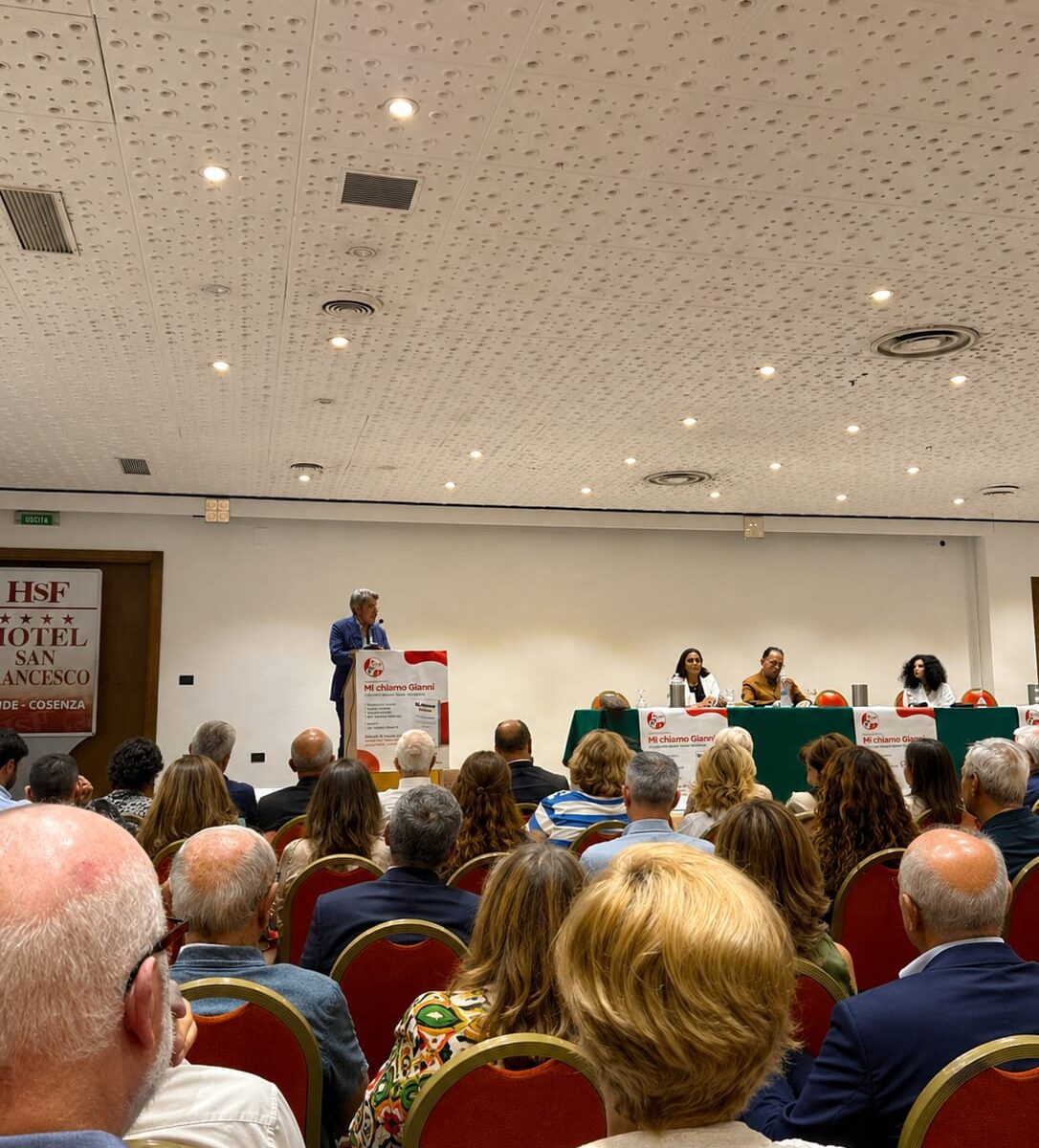
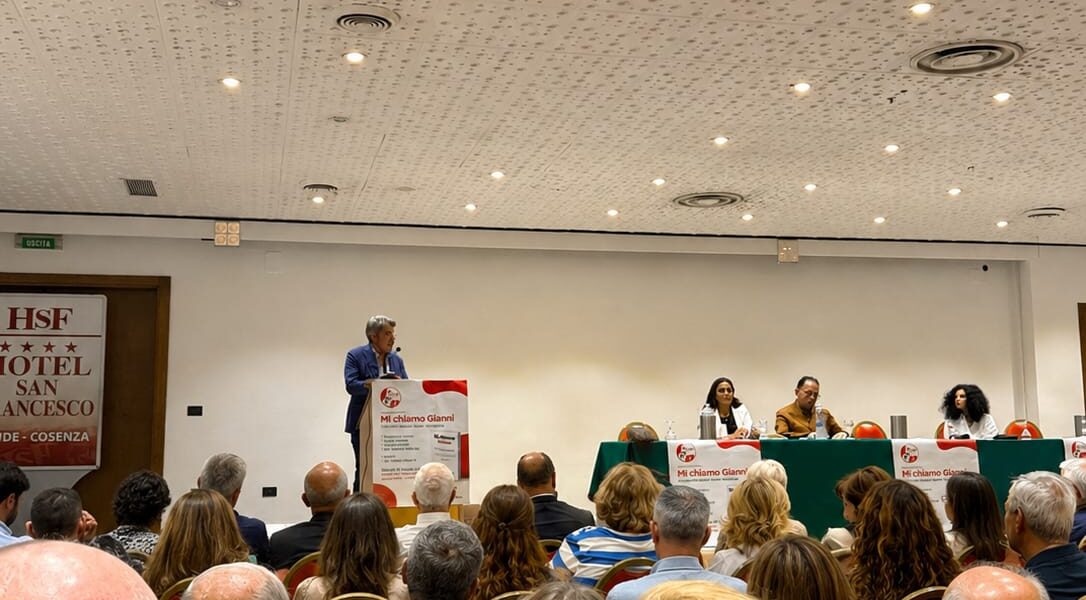
Reformism as a method to face the great challenges of the present, without losing contact with the daily needs of citizens. This was the underlying theme of the presentation of the book «My name is Gianni», written by Gianni Pittella and Marco Lamboglia (Guide, Naples 2026), hosted on Thursday evening at the Hotel San Francesco in Rende. The one in Cosenza was the second overall presentation of the volume and the first in the province of Cosenza.
The meeting was opened by the secretary of the Reformist Federation, Cesare Loizzo, who defined the reformism, Europeanism and socialism claimed by Pittella as “a tool to face the great challenges of the present”. Wars, crises of democracies, new geopolitical balances, artificial intelligence, energy, ecological transition, work and the future are some of the themes addressed in the book. «One of the most important lessons – he underlined – is that politics must be able to bring together people’s concrete problems and the ability to understand the great processes that are transforming the world».
The meeting, moderated by the deputy secretary of the Reformist Federation, Emanuela Puntillo, saw interventions by the PD leader Pina Incarnato, Gianni Pittella himself and the mayor of Rende, Sandro Principe.
For Incarnato, politics is going through a phase of profound transformation. «It has moved to social media and has stopped bringing people together in daily life. This process implies a brutalization of competition, the end of dialectics and a greater marginalization of young people.”
Pittella instead defined reformism as «a method of political action that aims to quell fear, in the belief that security is an essential value, to provide answers to needs and to reward merits». Retracing his experience, he recalled his political beginnings in Lauria, when as a child he participated in electoral campaigns alongside his father, a doctor and socialist, reiterating his desire to continue making his contribution even after leaving the institutions.
The former deputy vice-president of the European Parliament also focused on the European Union, arguing that the Strasbourg Parliament continues to suffer from the limitation of not being able to fully exercise legislative power. A situation which, in his opinion, prevents Europe from adopting a truly unitary policy and a common defense in an increasingly unstable international context.
Mayor Sandro Principe instead focused his speech on the role of reformism in the centre-left. «I believe that in the current centre-left there are no preconditions for a reformist subject. We had hoped that the Democratic Party could welcome this process, but we were very wrong.” The mayor then recalled Pittella’s contribution to the development of healthcare in Basilicata and his commitment in Europe to affirm the reformist culture.
Principe then recalled two sectors that he believes are currently in serious difficulty. On the one hand, healthcare, “which passes from one privatization to another”, on the other, schools, the object, in his opinion, of numerous ineffective reform attempts. “I am Christian and I look favorably on Catholic schools, but I believe that education must be public and secular to create a more just and inclusive society.”
In closing, the mayor explained that Pittella’s return to political commitment, like his own, was born from a sense of duty, despite the awareness of the difficulties the country is going through. The former MEP concluded by relaunching the value of civil commitment: «Everyone can and must engage in politics. But reformism requires passion, dedication and study. Not only fairness and freedom, but also sobriety, which comes from a mission that is more difficult today than in the past.”