

Add the Gazzetta del Sud as a source
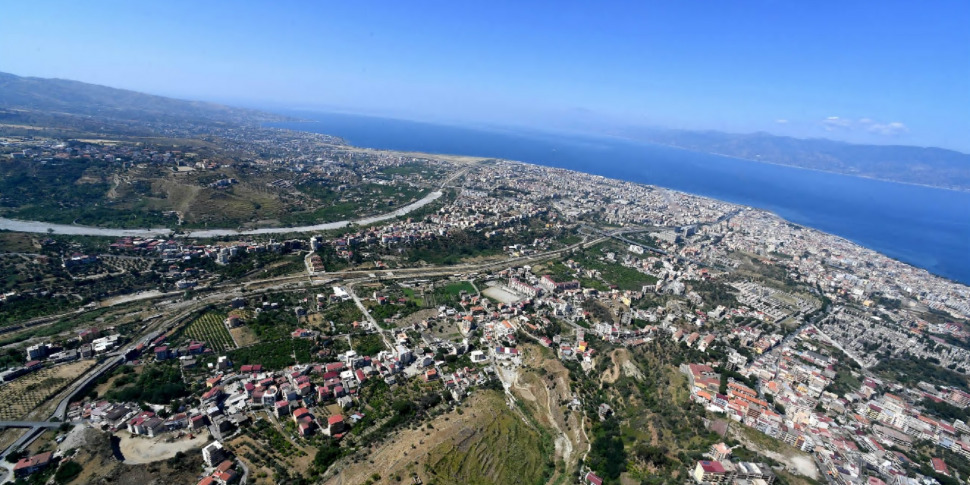
On the country’s map for growth and inflation, in 2026, Reggio Calabria hits a double negative record: last for GDP, with zero growth, and first for price increases, +4.3%. The city of Bolzano is seeing the economy grow the most (+1.8%), ahead of Rome and Milan (both +1.6%). And among the regions, Trentino-Alto Adige, +1.5%. At the rear is Valle d’Aosta, the only one that retreats, -0.1%. The city where inflation runs the least is Campobasso, +1.7%. Confesercenti draws the picture of a “growing Italy”, but with “regions and territories that continue to travel at different speeds” with the Cer estimates on how the year will close. “The numbers give some satisfaction: the GDP forecasts improve and inflation remains, on the national average, below the threshold of 3%”, comments the president of Confesercenti, Nico Gronchi. In terms of estimates of the regions’ GDP, Trentino-Alto Adige, first, is “ahead of Lazio and Tuscany (+1.2%) and Emilia-Romagna, Basilicata and Liguria (+1.1%)”. Among the latter, the growth gap is 1.6 points, almost at a standstill (+0.1%). applied by Centro Europa Ricerche, starting from the latest PBO forecasts (+0.9% estimate for Italian GDP).
«The picture of the capitals shows even greater territorial distances, often within the same administrative area”: the primacy of Bolzano «must be read together with the economic weight: it is a capital of small size compared to Rome and Milan, which together account for over 20% of the national GDP». In the South «Naples stands out, which with a +1.5% confirms itself as the locomotive of the South, well above the average for the area and just behind Milan and Rome. Further back Bari, +1.3%”. “Between the first and the last capital the gap is 1.8 points”. “Tourism alone – Confesercenti further notes – does not explain the growth: Venice grows less than the national average (+0.7%), like Turin, and Florence stops just above (+1.1%), in line with Bologna, Genoa and Trieste, despite the tourist vocation of the first two”. (+1.1%), followed by the Center (+1.0%); the North-West, the South and the Islands remain tied, all at +0.8%”. Confesercenti then notes that “the territorial gap is also strong on the inflation front, particularly in the South”.
The top for increases in Reggio Calabria, then Naples (+3.5%); followed by Bolzano and Rome paired at +3.4%, and Bari and Palermo both at +3.2%. In Campobasso the increase was more limited (+1.7%), then Potenza (+1.9%) and Florence (+2.0%). The gap between the most expensive city and the cheapest city is 2.6 points.” «It is too early to say how much the scorching heat will weigh on the performance of the economy and on the spending choices of families: there will be some effect», warns the president of Confesercenti: «The hope is that the estimates indicated today will be confirmed, if not improved». Gronchi highlights the “very different speeds” that emerge from the scenario: “Half of the growth expected for 2026 is concentrated in five cities: urban economies are now an independent engine of national development, and we must start from here”, with “policies for urban development must be considered in all respects as one of the pillars of our country’s growth strategy”. We also need “measures aimed at protecting the commercial fabric of cities, ensuring the correct balance between demand and supply of housing, and last but not least, managing tourist flows”.