

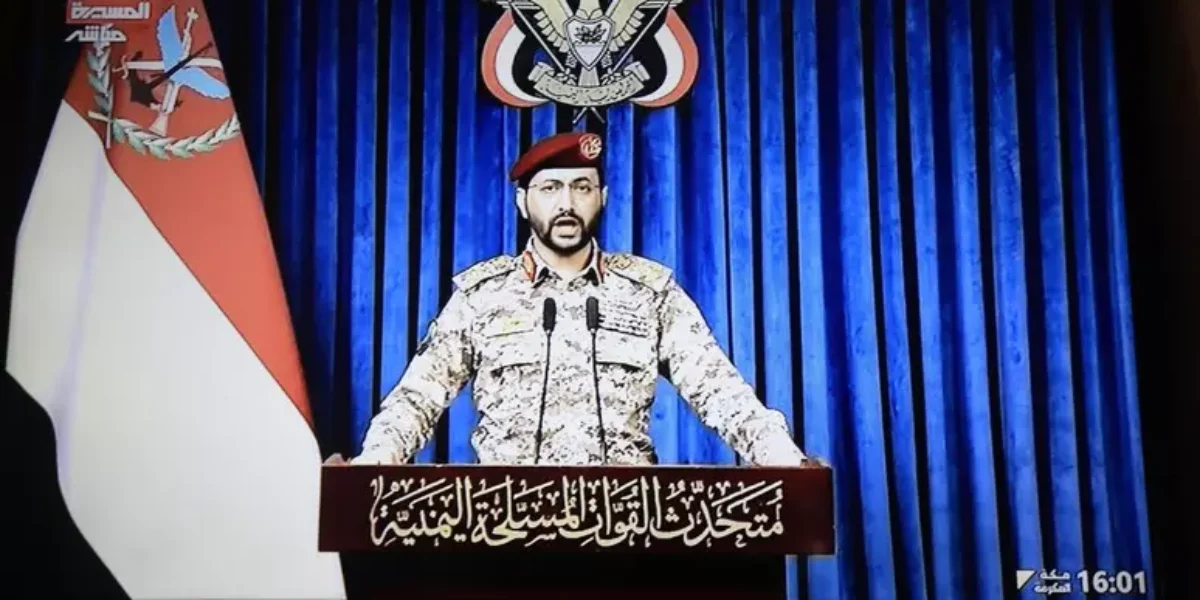
The Houthis said they had struck Riyadh’s airport and a refinery of Saudi energy giant Aramco, as well as several sites in the south of the Kingdom. The attacks, carried out mainly with drones, ballistic and cruise missiles, “targeted Riyadh’s international airport”, said the military spokesman of the Yemeni rebels, Yahya Saree, adding that “the Aramco refinery in Rabgh” and military sites and airports in the south of the country were also hit.
“Dawn of Yemen”: this is the name given to the large-scale military operation with which the Yemeni government forces, supported by Saudi Arabia, attacked the Houthis, effectively regaining control of the Bab el-Mandeb Strait on the Red Sea after a month, where one of the most important global routes for the transport of oil from the Gulf to the Mediterranean passes.
Government forces advanced rapidly along the coast, under the cover of around a hundred Saudi fighters, to capture key positions in the Dhubab area, at the thinnest point of the strait. The Dhubab airstrip was also recaptured and the remaining Houthi forces in the area isolated, although a government source said fighting continued at a military base near the strait. It is now becoming more difficult for the Houthis to disrupt maritime traffic, but they could still strike ships with drones from positions further north along the coast and inland. Meanwhile, Yemeni rebels have made important advances near the city of Taiz, conquering some sections of a mountain road and leaving government forces present in the area under siege.
Yemen’s internationally recognized government announced the counteroffensive on Sunday, while President Rashad al-Alimi vowed to fight “until the country is liberated from the grip of the terrorist militia.” Counterattacks were launched on several fronts, including in the province of Sanaa, the capital of Yemen.
Riyadh, which arms and trains Yemeni government forces, is supporting the military campaign with its own air power and has asked allies for logistical help to push back the Houthis, restore free navigation in the Red Sea and end the group’s attacks on its territory. In its bombings in the governorate of Sana’a, two people were killed, including a student, while seven others were injured.
Stalemate instead on the Iranian front, where Tehran has warned that “if a war breaks out against us, the flames will engulf everyone”. Ali Fadavi, advisor to the commander of the Iranian Revolutionary Guards, said meanwhile that, for the first time, at this moment there is no US ship in the Persian Gulf, in the Strait of Hormuz, in the Gulf of Oman or even in the northern part of the Indian Ocean. “The US forces have fled and positioned themselves more than 1,000 kilometers from Iranian territory,” he said, speaking on state TV.