

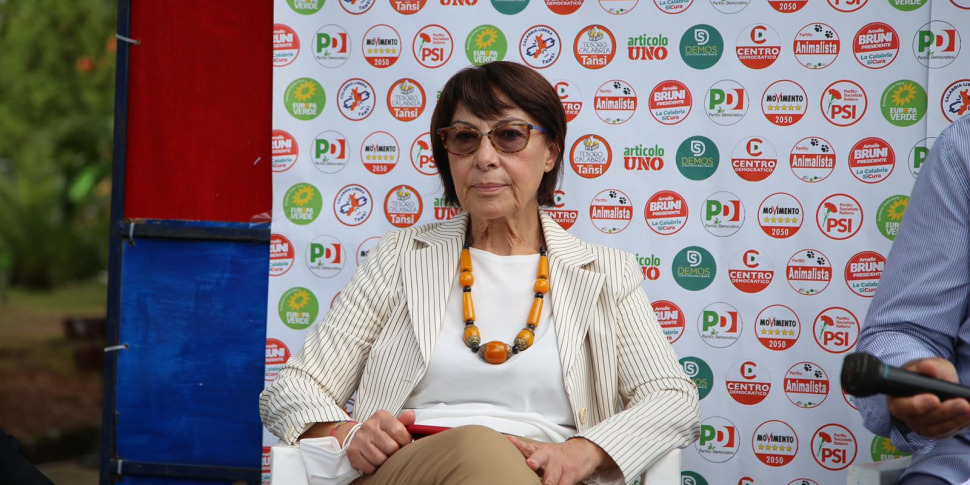
The overcrowding recorded last Saturday in the emergency room of the “Renato Dulbecco” hospital-university company cannot be read as an isolated episode or as a mere organizational criticality. It is rather the symptom of a system that, without a true and structured strengthening of territorial medicine, will continue to download the entire weight of citizens’ health demand on hospitals.
The regional councilor of the Democratic Party, Amalia Bruni, clearly reiterates it: “Territorial medicine is not a secondary sector, but the first level of assistance and prevention, the indispensable filter that must intercept health needs before they become an emergency”.
Territorial medicine means primary assistance, it means being able to count on the family doctor, on community nurse, on general structures capable of delivering quick and effective performance. According to Bruni: «This is where the prevention match is played, avoiding that gestible problems become acute situations that clog the emergency room. A strategic aspect is the taking charge of chronic patients. Diabetes, COPD, hypertension, heart failure: they are diseases that require continuity of care and an integrated approach between general practitioners, specialists and health workers. The lack of territorial coordination forces many patients to turn to hospitals also for non -emergency needs, with negative repercussions both on the quality of their life and on the efficiency of the system “.
No less serious is the loss of the medical guards in different territories of Calabria. It is a choice that has left entire communities discovered especially at night and holidays. “The closure of the medical guards – warns Bruni – represented a very hard blow for territorial medicine. Without these principals, citizens have no alternatives except the emergency room, which inevitably fills up even for needs that could be managed in the area “.
For several years now, the Convention of General Medici Medici has established new associated tools (AFT and Cavp) that allow the association of more professionals, expanding the offer of services both in the times and in the same performance. The modulation and articulation of these tools is then entrusted to regional bargaining, which should cross with community houses. Here, here is a huge need for bargaining, of new tools to guarantee primary services in internal areas and marginal territories. And in the face of all this, a real failure of the PNRR “Health Mission” must be outlined.
The Ministerial Decree 77 represented a turning point, introducing a more integrated and patient model. As Forumpa recalls, the reform recognized territorial medicine as the fulcrum of a health system capable of taking care of people in their life path, and not only in the acute stages of the disease.
«There is no shortage of difficulties: lack of staff, poor integration with hospitals, resources to be managed efficiently. But the opportunities are clear: to enhance territorial medicine means guaranteeing equity, appropriateness and efficiency, improving access to care for all citizens, as highlighted by Quotidiano Sanità -says Bruni again -. In a region such as Calabria, where geographical distances and social fragility amplify inequalities, territorial medicine becomes even more an opposing theme. Without it, the emergency room will continue to remain saturated, the hospitals under pressure, and the citizens deprived of the right to quality health “.
“We cannot afford to reduce territorial medicine to a marginal role – concludes Bruni -. It is from here that we must start again, with courage and investments, because the real health reform does not start in large hospitals, but in the neighborhoods, in the houses, in the small municipalities, where every day the health of people is measured “.