

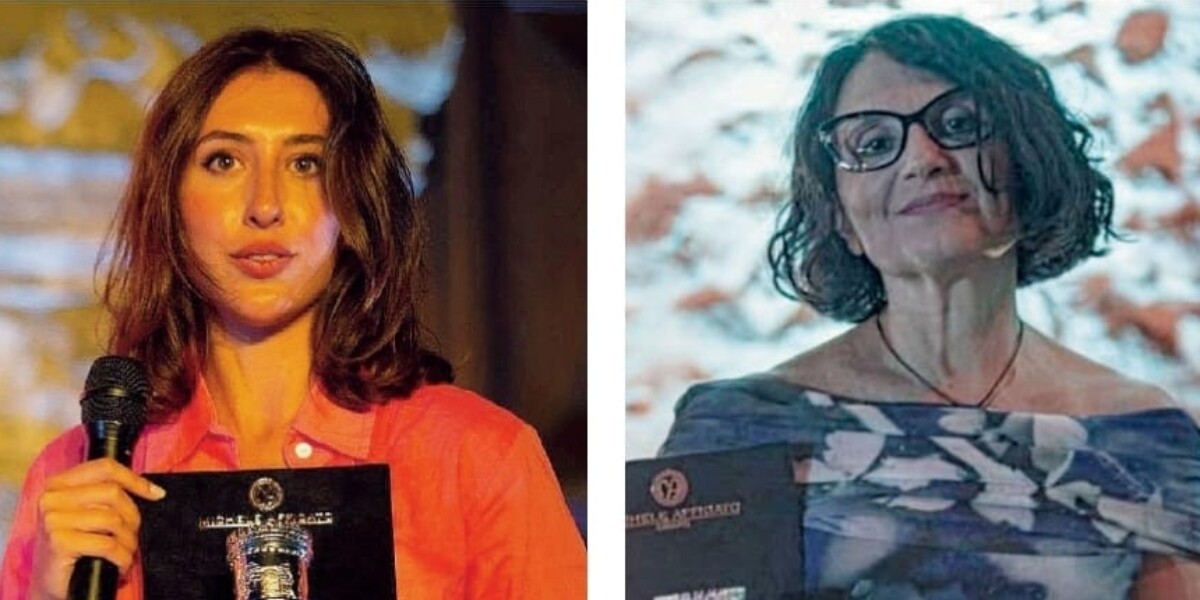
Cecilia Sala, with «The children of hatred» (Mondadori), won the 15th edition of the Caccuri Prize. The winner of the non-fiction section – the backbone of the event – received, from the hands of the prefect of Crotone Franca Ferraro, the traditional Silver Tower, created by the Crotone master goldsmith Michele Affidato. Second, with equal merit, were the other three finalists of the award: Luca Sommi, with «Solo amore. Notes for a manifesto in defense of animals” (PaperFirst); Pietro Grasso, with «U Maxi. Inside the Cosa Nostra trial” (Feltrinelli); Tommaso Cerno, with «The Reasons of Judas» (Rizzoli). The 2026 Fiction Prize was instead awarded to Anna Mallamo, journalist from Gazzetta del Sud, for the award-winning novel «Col dark me la vedo io» (Einaudi): the author wanted to read a short story dedicated to Caccuri as a “place of the soul”, where the word, the “logos” – capable of founding worlds and transforming them – finds acceptance and love.
The Convent square, always, in every evening overflowing with audiences from all over the region, was involved in the intense and sometimes poignant stories of the many guests who took to the stage of the Award, now a point of reference in the Italian cultural panorama, thanks to the commitment of the Accademia dei Caccuriani, which includes Adolfo Barone, Olimpio Talarico and Cataldo Calabretta in the steering committee, and the president of the juries Giordano Bruno Warriors.
At the center of the program are the four finalist essays, selected for their ability to address current issues through different languages and perspectives. Cecilia Sala, Chora News journalist and war correspondent, has covered crises and conflicts in the field in Iran, Afghanistan, Ukraine, Georgia, Venezuela, South Sudan, Israel and in the occupied Palestinian territories. Particularly touching was the story of his arrest in Iran, in December 2024, and his detention for twenty days in Evon prison, «where they took me to see the hanging crane. There was nothing in my cell, not a bed, not a mattress, not a pillow. Just a steel bucket. They took off my glasses and contact lenses. And there is a light that is always on that doesn’t let you sleep to get what they want from you, to drive you crazy, to make you have the worst thoughts, a white torture.” A story that moved and involved the public.
But all the finalists received very attentive listening and repeated applause. Pietro Grasso, in particular, gave the public a very personal memory: when, a few months before his death, judge Giovani Falcone, in an attempt to stop smoking, gave him his lighter for safekeeping. A lighter that Grasso has always carried with him ever since: he took it out of his pocket in the Caccuri square and it sparked an ovation.
«The fifteenth edition of the Award – vice president Talarico told us – was a crescendo of emotions, meetings, culture and participation. Year after year the Award grows, renews itself and conquers new spaces and new protagonists: from the Crotone presila to the region, to Italy, to the consolidated and established relationships with Argentina, Uruguay, Brazil, the United States. The satisfaction is great, but even greater is the awareness of having grown, together, a cultural project born from a small community and now capable of speaking to an increasingly wider audience.”
Savino Zaba, Vittoriana Abate, Ugo Floro alternated in the presentation of the evenings, while the final two were hosted by Gianluigi Nuzzi and Laura Freddi. Among other things, the conferment of honorary citizenship by the Municipality on Roberto Sergio, general director of Rai, while the ambassador Elisabetta Belloni received an award for high institutional service, as did the economist Carlo Cottarelli, Claudia Eccher, member of the Superior Council of the Judiciary, and the prosecutor of Naples Nicola Gratteri.
The event, which brought together authors, journalists and protagonists of the entertainment industry, born in 2012 as an essay contest, has become, over the years, a real festival of tourist-cultural promotion of the territory, not only of Caccuri, but of the whole of Calabria, thanks to a vast program that also took place in other municipalities to better valorise the internal areas in the face of worrying depopulation, and to offer a concrete sign of sharing and inclusion, an ideal bridge of culture, and, why not, of possible return tourism. The objective of the Award was and is to transform the village of Caccuri into a cultural point of reference at a national level, bringing literature and critical thinking even to places often far from major cultural circuits, combining the promotion of literary talent with the valorisation of the territory, in a laboratory of ideas and emotions.
The Award, in fact, also offers the opportunity to discover Calabria: its wonderful coasts, the Sila and Aspromonte mountains, the perched villages and the thousand-year-old traditions that make it a welcoming and surprising land, a generous territory rich in history. The warm August evenings were enlivened by Gabriele Cirilli, the Gemelli di Guidonia, Ubaldo Pantani, Leo Gassman.