

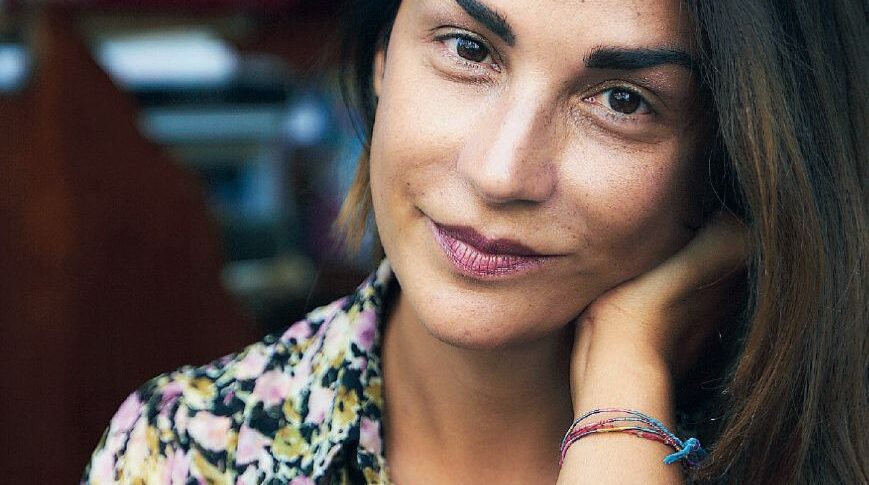
The writer does not have the power of weapons or laws, but has the power of words ». Among the over two hundred signatories of the appeal aimed at Italian institutions to raise awareness of the situation in Palestine, the Neapolitan writer Viola Ardone returns to the bookstore with “A lot of life” (Einaudi Libero style), signing a novel that looks in the face of our present and tells it through three voices, destined to intertwine on the page. Here is Kostja, a ten -year -old Ukrainian child fleeing the war; Midnight life, a Neapolitan woman who after the death of her son closed in the silence of mourning; Irina, Kostja’s grandmother, emigrated out of necessity in Italy, missed philosopher and custodian of a memory marked by numerous sacrifices.
Ardone gives us a book that speaks of pain and loss, of external and inner conflicts, a novel imbued with resilience and unexpected encounters that open spiragli, narrating the obstinate force of life that continues to make its way between the folds of fate, despite everything. After telling the twentieth century with “the train of children”, “money olive” and “great wonder”, he chose to measure himself with the topicality and with the theme of war that seen from the perspective of children and their solitudes touches the heart of the readers, stripped of any rhetoric. Civil literature and training novel together, so much still life returns a choral gaze that changes the narrative plan: “Literature cannot change the facts, but it can force us to look at, not to slip into indifference”. We talked about it with the author.
You are among the signatories of the letter presented to Pordenonelegge and sent to Italian institutions, asking for urgent interventions against violations of humanitarian law in Palestine. Today, who writes how can it affect?
«Words can do little, but that little is never useless. They can break the silence, move a consciousness, open a passage. I don’t think a writer can change the world, but I think he can change the gaze of the reader. And change the gaze, sometimes, is already a way of changing the world ».
Kostja is a child fleeing the war: why did he choose him?
«For me to write about a child always means listening to me: children have a vertical look, capable of grasping the minimum details and great contradictions of the adult world together. Kostja is not a small philosopher, but a child who looks and records: bombs, silences, fears. His innocence is not the denial of evil, it is rather a different way of inhabiting him, with that wonder that still allows him to believe in life even when adults falter ».
Also Amerigo of Il Train of children must abandon their home in search of a future. Are there points of contact between these two infants?
«Amerigo and Kostja are brothers away in time and space. Both know the wound of abandonment and the trauma of uprooting, but each crosses it in its own way. Amerigo lives the post -war period, Kostja the present of the war that flows next to us. In both, however, that ability to reinvent itself remains, which is the figure of childhood. The most evident difference between their stories is that in the post -war period there were still structures capable of intercepting the needs of childhood and of imagining solutions: associations, such as the Union of Italian Women, political parties, in this case the PCI. The children who run away from the war today or who die have remained alone, for them there is no one anymore ».
Life midnight lives closed in her pain: what happens in her by meeting Kostja?
«Vita is a walled woman alive in mourning, unable to open the windows of her pain. The arrival of Kostja cracks that wall. He doesn’t suddenly knock him down, but he cracks it. A child who asks to be listened to no longer allows silence. And so life, in spite of himself, finds himself making room for another voice beyond his despair ».
And Irina, the third voice. Who is?
«Irina is the woman who has known migration and fatigue, who brought the weight of the story about the body. He studied philosophy in his country but then ended up acting as a domestic collaborator in Italy. She is a cultured, deep, ironic woman, but outside Ukraine remains a “foreigner”, one with a fragmented eagle and lops, a figurative one in our lives ».
He intertwined three different voices – the child, the wounded mother, the migrant grandmother. What prospect gives this narrative choir to the reader?
«I was interested in building a polyphony. No voice alone would have been sufficient to tell the complexity of loss and resistance. The child brings the amazement, the mother the fracture, the grandmother the strength to go on. The reader, entering this choir, does not find a univocal truth, but a range of perspectives that asks him to start with the characters ».
In his book, children are often alone in front of the violence of the world. What does this tell us about our present, so marked by wars and abandonments?
“He tells us that the rhetoric of” putting children in the center “is not enough, because then the reality puts them on the margins. We see them on boats, in the reception centers, in the corridors of the wars: and too often we turn our gaze. Literature cannot change the facts, but it can force us to look at, not to slip into indifference. Perhaps the task of the writer is precisely to return to children the centrality that the news denies them ».