

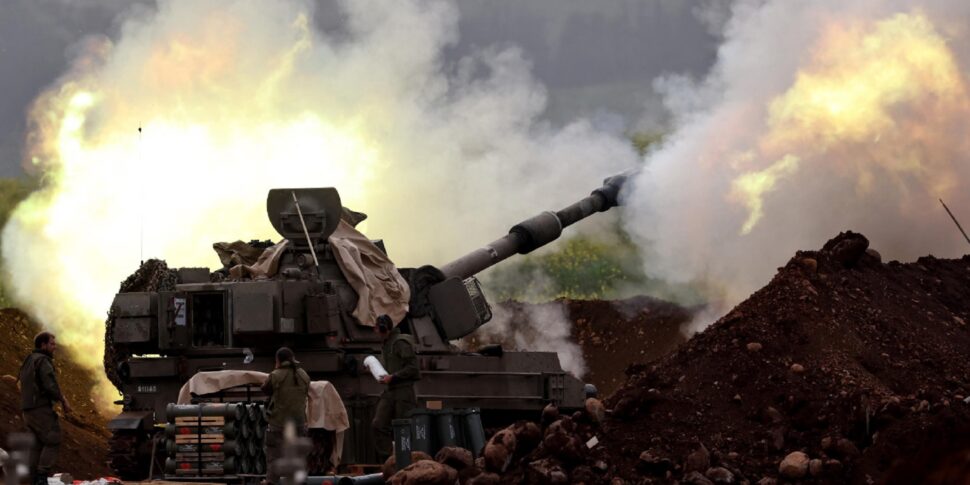
Remaining strangely unharmed in the first two weeks of the war, the island of Kharg, with its strategic oil infrastructure, becomes the new energy target of the USA, which launched an air raid during the night, hitting over 90 military targets.
A small outpost in the Persian Gulf
Kharg (or Khark, which in Persian means “unripe date”) is a small island, a coral outcrop, of just 20 square kilometers – twice the size of Capri or a third of Manhattan – located in the Persian Gulf just 25 kilometers from the Iranian coast and 483 kilometers north-west of the Strait of Hormuz.
The barren, bushy strip of land is home to Iran’s largest crude oil export terminal, handling around 90% of the country’s exports.
An ancient past between trade and colonial powers
The modern industrial facade of the island hides a vast archaeological heritage, with traces of human settlements dating back to the end of the second millennium BC. In the mid-18th century the Dutch built an emporium and a fort there, which were then sacked.
A century later it was briefly occupied by the English during the Anglo-Persian War, but soon returned to the possession of the Dutch. In the 20th century, Kharg experienced rapid development during the Iranian oil boom of the 1960s and 1970s.
The heart of Iranian oil exports
Its importance was further strengthened when it began receiving supertankers in place of the port of Abadan, further north on the border with Iraq, becoming Iran’s main oil gateway to the world.
During the Iran-Iraq war its infrastructure was targeted and in 1986 a heavy bombing put it out of commission. After 1988, Iran undertook massive efforts to rebuild them, restoring export capacity.
Strategic infrastructures and continuous flow of crude oil
The island features dozens of storage tanks concentrated in the south, long deep-water berths for loading supertankers, housing for workers and a small landing strip that connects it to the mainland.
Almost every day, millions of barrels of crude oil flow from major Iranian oil fields – including Ahvaz, Marun and Gachsaran – and are brought to the island via pipelines.
The forbidden island of the Persian Gulf
Kharg is known today among Iranians as a “forbidden island” due to its strict military controls (access is limited and it is guarded by the Islamic Revolutionary Guards). But in 1960 the Iranian writer Jalal Al-e-Ahmad, who visited it before it was transformed into an oil terminal, defined it as the “orphan pearl of the Persian Gulf”, contemplating its isolated coasts.
Israel ready to enter Lebanon, last chance for dialogue
Washington and Paris are working to open a negotiating table between representatives of Israel and Lebanon with direct talks on a truce agreement and agreements under which the Beirut government should assume responsibility for disarming Hezbollah. The American and French diplomacies intend to avoid an escalation that would lead to a real IDF campaign in Lebanon, with an expansion of operations – which to date have been ‘expansive but not invasive of the territory – to stop the Shiite organization’s widespread attacks on Israeli territory.
Diplomatic mediation between the United States and France
In recent days, in response to the intensification of Hezbollah’s raids on the north of the country, the Tsahal generals have moved further divisions to the south of Lebanon and are not ruling out anything to remove the militiamen and their structures from the borders. Despite ongoing diplomatic efforts.
President Emmanuel Macron invited Israel to accept “the availability of the Lebanese executive to start direct talks”, in which “all components of society must be represented”, offering to “host them in Paris”.
«I spoke yesterday with President Aoun, Prime Minister Salam and Parliament Speaker Berri. We must do everything possible to ensure that Lebanon does not fall into chaos,” Macron wrote on X.
Hezbollah’s position and tensions on the field
For his part, Hezbollah leader Naim Qassem declared on Friday that the group is ready for a long war: “We have prepared for a long confrontation and, God willing, the Israelis will be taken by surprise on the battlefield,” he said in his second televised speech since the attacks on Israel began.
Despite the serious blows inflicted by the IDF in the last week – targeted assassinations, damage to the missile system and the killing of a senior commander of the Radwan Force – the Shiite organization “shows no signs of collapse or disintegration, its members obey Qassem without question and at his side operates a team capable of managing the system”, the Israeli media highlighted.
The role of mediators and the interview hypothesis
President Donald Trump’s adviser and son-in-law, Jared Kushner, is leading the mediation, and former minister and close associate of Benjamin Netanyahu, Ron Dermer, is expected to represent Israel. In recent days, Channel 12 reported that the Israeli prime minister asked Dermer to coordinate the “portfolio for Lebanon”, but Israel had not yet formally accepted the invitation. According to Haaretz, the first meeting could be held as early as next week, probably in Cyprus.
The risk of a land offensive in Lebanon
“It is difficult to believe that a large-scale ground operation in Lebanon can be prevented, and it seems that in the end it will be the IDF soldiers who will have to carry out the difficult task of disarming Hezbollah,” said a source close to the matter speaking to Yedioth Ahronot.
“At the same time, the Lebanese government also wants to disarm the armed wing of the Party of God. We are about to embark on a long and complex campaign against the Shiite group,” the source added, indicating that discussions are underway on the possibility of “a new chapter with Lebanon after the crisis with Iran, similar to recent developments with Syria.”
The hypothesis of a political agreement between Lebanon and Israel
Simply put, negotiations could proceed in parallel with IDF military operations to dismantle Hezbollah and lead to rapprochement agreements between Lebanon and Israel. According to Channel 12, the final “political declaration” is expected to include Lebanon’s “initial recognition of Israel and underline the Lebanese government’s commitment to respecting Israel’s sovereignty and territorial integrity.”