

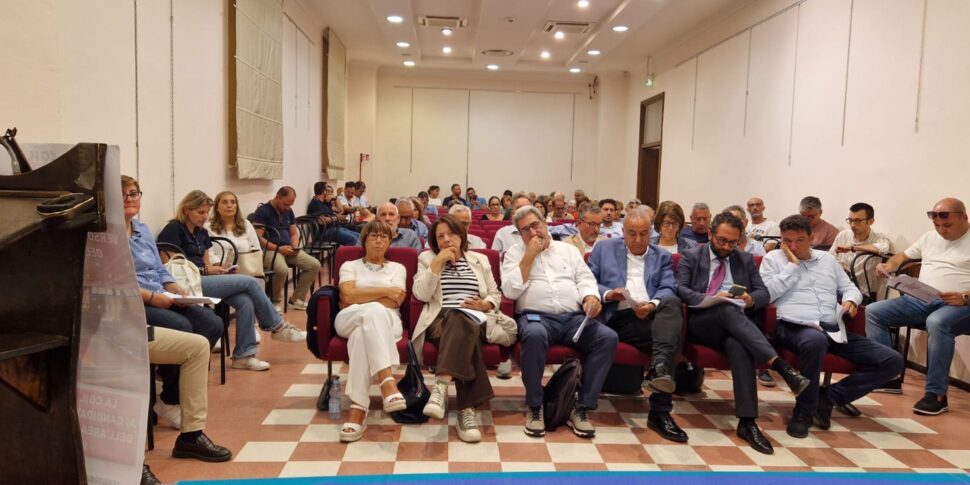
Healthcare, infrastructures, industrial areas, internal areas, development and employment. The CGIL Vasta Catanzaro -Vibo -Crotone area, in collecting all candidates for the Regional Council of the Central Area of Calabria, presented a package of proposals and detailed ideas to face the social and economic emergencies that continue to penalize the territory.
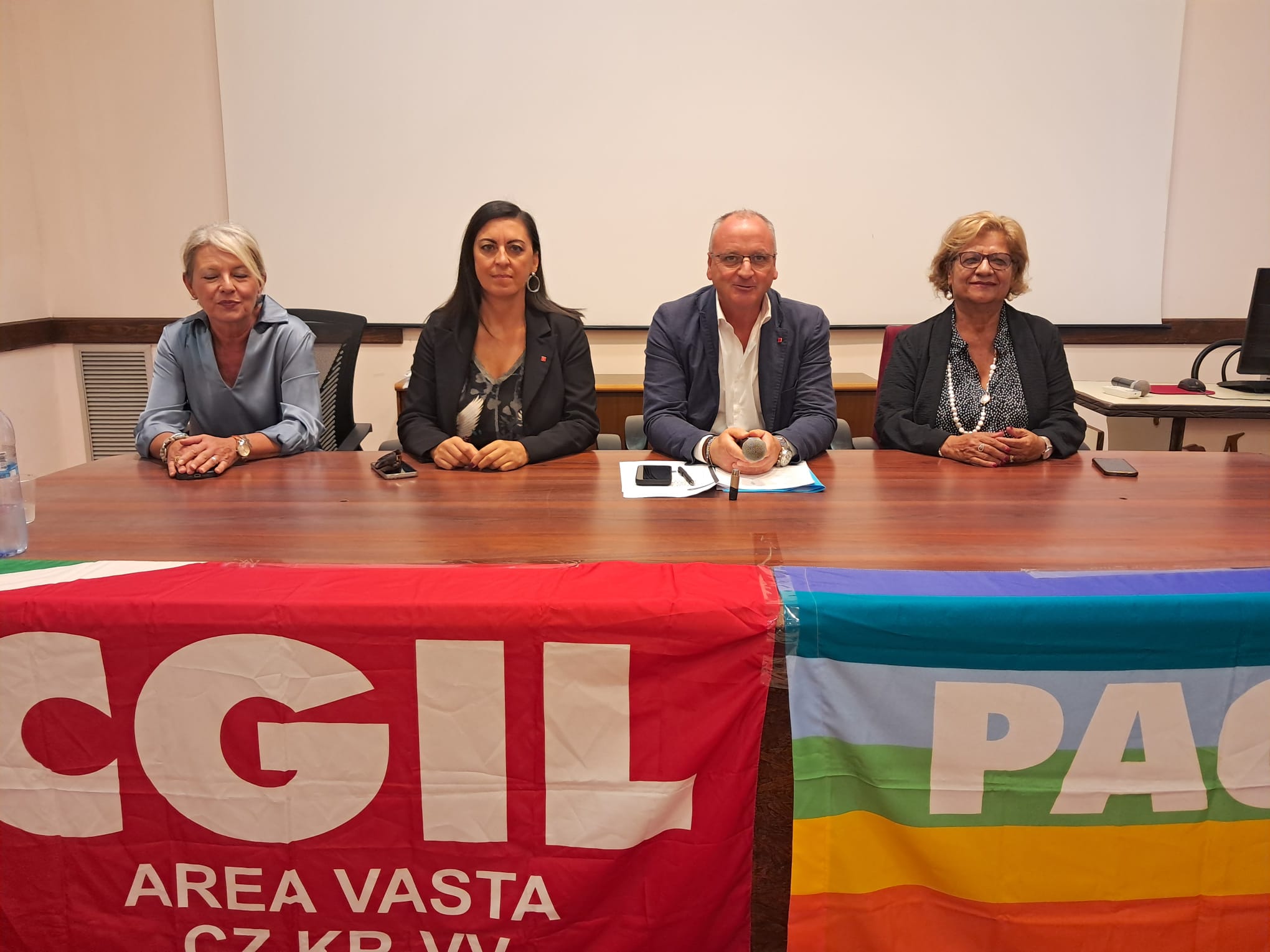
A meeting, held this morning in the room Giuditta Levato museum MUSMI of Catanzaro and with an eloquent title “Towards regional elections”in the presence of the members of the secretariat led by the Secretary General Enzo Scalese, he had the aim of illustrating the priorities and proposals of the CGIL on themes that touch the daily life of citizens, collected in a document of which we report a synthesis below.
The appeal replied the candidates for the Regional Council Amalia Bruni, Terre Boemi, Sergio Genco, Raffaele Mammoliti, Filippo Sestito, Elisabetta Barbuto, Leo Barberio, Marco Miceli, Giusy Iemma, Gianmichele Bosco, Elisabeth Sacco, Antonio Lo Schiavo and Alessandra Pugliese.
Work and precariousness
The union highlights one of the historical wounds of Calabria: youth and female unemployment, black work and chronic precariousness. “They are conditions that create social exclusion and feed mass emigration,” reads the document. Among the requests: the strengthening of employment centers, targeted investments in professional training, stabilization paths for LSU/LPU and TIS trainees, with the increase in working hours up to full time.
Development and innovation
The proposal looks at a Calabria who knows how to attract investments and enhance its production vocations. Support for agri -food and artisan supply chains, a strategy of regeneration of disused industrial areas and the full enhancement of the opportunities offered by the Single Zes is requested. “We must stop the escape of young talents – underlines the CGIL – encouraging their return and promoting innovative forms of work, such as smart working, to be developed also in the villages of the internal areas”.
Health and right to health
The CGIL area vast denounces the serious delay in the implementation of the PNRR health mission: “Community houses and hospitals are still on paper, but citizens need answers immediately”. The role of the Aou “Renato Dulbecco” is central, “which must become the fulcrum of the regional health system, but which needs strong political and financial support to fully express its potential”.
Infrastructures and internal areas
On the infrastructure front, the union indicates some strategic priorities: the direct railway connection between the Lamezia Terme station and the airport, the electrification of the Catanzaro -Crotone line, the redevelopment of Cosenza -Catanzaro. “The internal areas risk desertification – the document is denounced – if essential services such as health, education and mobility are not guaranteed. Extraordinary investments are needed to keep entire communities alive ».
Social policies and fight against poverty
With 26.8% of Calabrian families in relative poverty and a municipal social expenditure of just 37 euros per capita, the CGIL Vasta area defines as “unsustainable” the current framework of social policies. “The Region must do its part – he says – with additional resources and with the strengthening of social territorial areas. We cannot leave the municipalities alone in the face of such an emergency ».
Industrial and reclamation areas
Among the priorities there is the reclamation of the Sin di Crotone, for years, and the no to new landfills sites in territories already heavily compromised. “The ecological transition – underlines the union – must be an opportunity for restoration and relaunch, not a further burden for citizens”.
The conclusion
“Work, sustainable development and the right to health must be at the center of regional policies – concludes the CGIL area vast -. Only in this way can Calabria become an attractive and competitive territory, capable of giving future to the new generations. Promises are not needed, but concrete and shared actions with the social partners, in a great pact for the dignity of work and social justice ».