

Google Discover

Preferred Sources
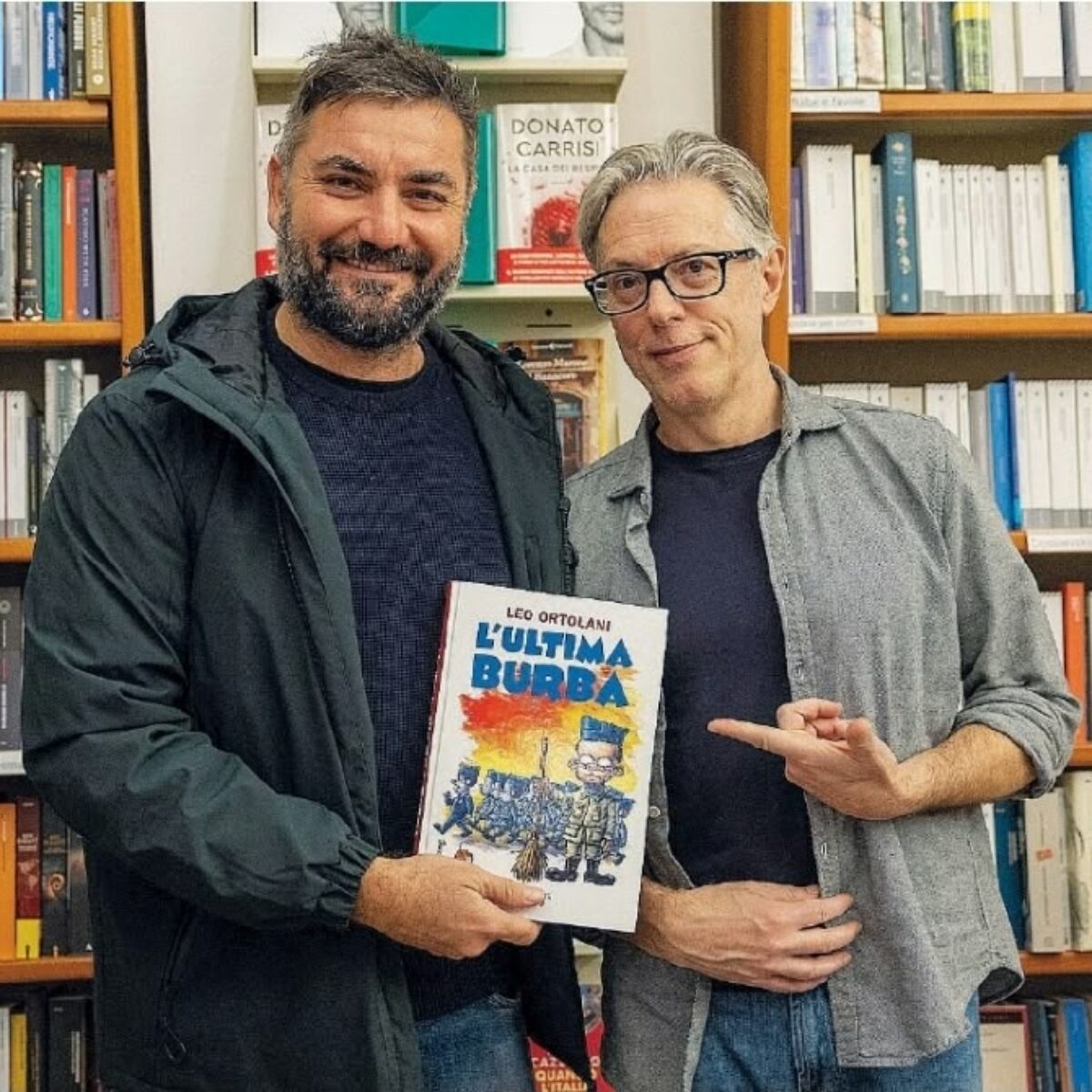
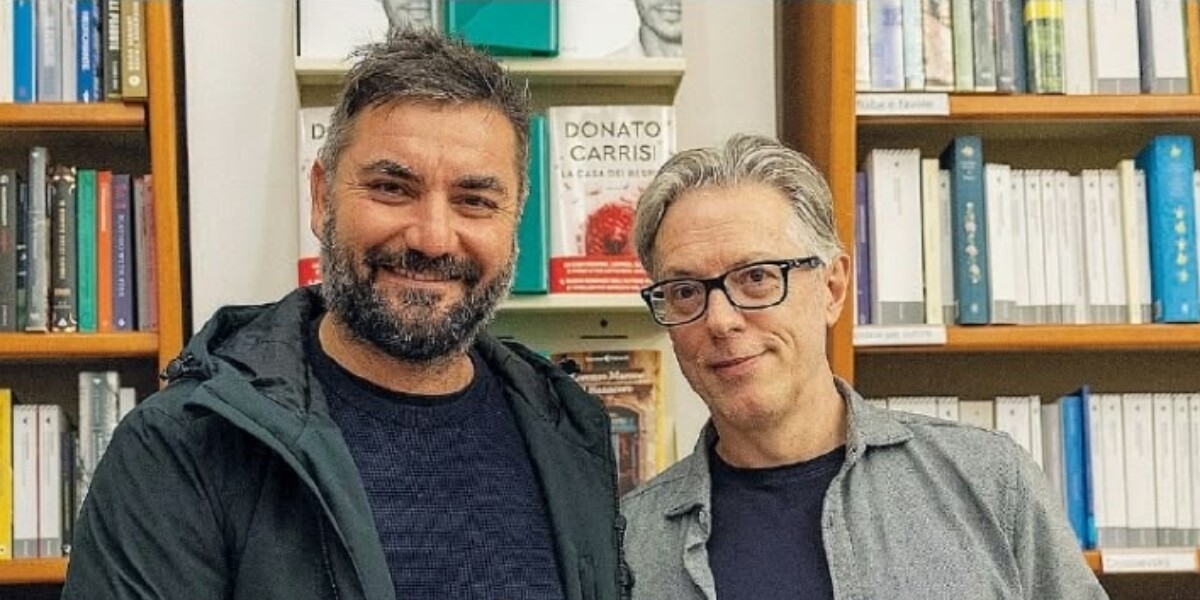
A look at military life, between irony and critical reflection, but also an implicit connection between the absurdities of yesterday and today, at the center of “L’Ultima Burba”, the famous strips by Leo Ortolani re-proposed by Feltrinelli Comics in a single volume, enriched with unpublished panels. Icon of contemporary Italian comics, creator of the cult character Rat-Man, a sui generis superhero, the Emilian cartoonist presented his volume at the Feltrinelli Point in Messina in dialogue with his colleague from Messina Lelio Bonaccorso, with whom he then met the public again at the Officina del Sole.
There were many readers to whom Ortolani asked and signed copies of a work that tells the story of the life of a group of recruits inside an Italian military barracks, with Ortolani himself as the protagonist. A series of gags inspired by the personal experience of the author, who was called up at a very young age to perform his military service in the Air Force in Treviso. «I come from my father’s generation according to which anyone who didn’t serve in the military wasn’t a man – said Ortolani -. Since the identity card wasn’t enough, unfortunately I went to do it, but with the spirit of Charlie Sheen in “Platoon”: taking notes and, once I got home, documenting what the environment was like. So I thought I’d tell it with strips, with something that would let people know what he was like. I went around with my camouflage suit and a notebook in my pocket, taking note of all the most absurd situations, many of which ended up in the book because they were already perfect in their absurdity.”
A portrait of military life that refers to the type of humor inaugurated in 1968 by Bonvi, with the dilapidated German infantry unit of the Second World War of “Sturmtruppen”. And «L’Ultima Burba» debuted in Bonvi’s historic newspaper between 1993 and 1994, as an appendix to the Modena master’s tables. «I had started working with Luca Boschi, my “Jedi master”, who introduced me to the world of professional comics. One day he told me that Bonvi was looking for material to fill “Sturmtruppen”. I sent him the first strips on January 2, 1993 and at seven in the morning he contacted me to tell me that he had already included my work in issues 55 and 56, asking me to create more”.
For the young Ortolani, who had already signed «Rat-Man» and other works, that phone call represented an important passing of the baton, as well as marking the beginning of a personal relationship that became a partnership and lasted until Bonvi’s tragic and premature death, which occurred in Bologna in 1995, hit by a car while on his way to «Roxy Bar» to sell his drawings in aid of his fellow cartoonist Magnus, suffering from a serious illness. «When you approach the world of comics and have also received many rejections, the moment you find a pillar of the sector who tells you: “I liked your strips very much, send me more”, you don’t believe it. It was a bit like receiving a knighthood, as if he told me: “I’m naming you a humorous author”».
Thanks to the material collected in his personal diary, Ortolani continued «L’Ultima Burba» between 1994 and 1995, with strips which were then published in the «Rat-Man Collection» magazine from issue no. 33 of November 2002. After the exhaustion of the strips with number 382 in December 2005, the author decided, following the success achieved, to continue the creation with a new series, started on n. 53 of «Rat-Man Collection»” of February 2006 and concluded in issue 114 of May 2016. In fact, his writing starts from the first strips up to 2016. Works which, according to Ortolani, although structured on the humorous tale of the military environment, maintain a universal value that goes beyond the historical period in which they were created.
«Even though I talked about things related to military service, and as the years went by people no longer served in the military, the strips of “L’Ultima Burba” became the mirror of a society in which people could recognize themselves. It could be an office, a factory, a supermarket, where everyone has their role, like in sitcoms. We are in a barracks, but it doesn’t matter, because then I tell other things: dreams, hopes, hypochondriac people, the protagonist’s desire to escape from the barracks, so stressed that he even starts talking to the dry leaves that he has to sweep from the courtyard. These are situations that everyone has ultimately experienced in this cursed period.”
But what meaning could military service, in this era of war, have?
«It could be considered a health walk, compared to what has been happening in recent years, but I’m happy that we removed it. I don’t think it would be of much use to have a smattering of everything to be a soldier, because we are heading towards such specialized wars that you would be better off being a video gamer, according to what they tell us from Ukraine, or even a drone pilot. We are absolutely behind whatever the idea of being made aware of the military situation in the country is.”
«Obviously we leave things in the hands of professionals – he concludes –. Unfortunately, some professionals leave the military field and go into politics. So the absurdity continues in every sense, and then we must try to resist.”