

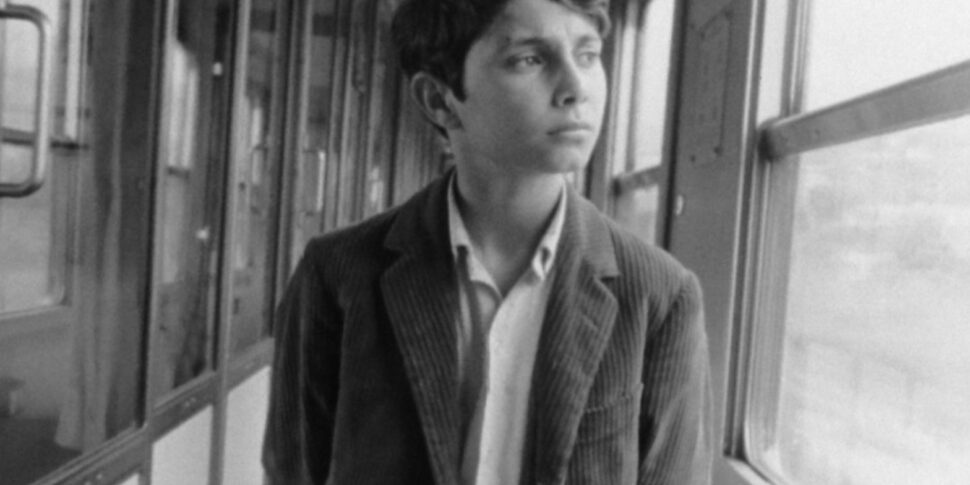
Fifty -five years after the airing on the 2 Rai channel, Back within the Juvenile Criminal Criminal Institute Silvio Paternostro the debut film by the Calabrian director Gianni Amelio, “The end of the game”produced in 1970. The film, shot largely within the same institute and granted by Rai Teche, will be screened today at 9:30 in the presence of young prisoners and some students delegations. The event is organized by the Trame ETS Foundation with the collaboration of the juvenile penitentiary institute.
The projection will be followed by a debate that will feature Domenico Rafele, screenwriter and help of the film, the protagonist (Leonardo) Luigi Valentino then Bambino, Annarosa Macrì, journalist and writer, Vinicio Leonetti, journalist, and several representatives of entities and associations of the sector.
The institutional greetings will be entrusted to Francesco Pellegrino, director of the Juvenile Criminal Institute, Nuccio Iovene, president of the Trame and Teresa Chiodo Foundation, president of the Court for the minors of Catanzaro.
The Trame Foundation, already intervened inside the IPM with the “I read you. The frontiers of reading in the juvenile penitentiary institutions “of the Treccani Culture Foundation, with this initiative it has to give continuity to the work started, highlighting this time differences and analogies of the treatment of minors held after more than half a century.
During the meeting it will be reflected on the value of individual choices, on the importance of not surrendering to the social and judicial injustices, on the courage to rebel against oppressive and unjust systems and on the determination in pursuing justice starting from the proposed film, which He faces the inner conflict and the moral struggle in the face of the wrong choices, tracing a path of growth and redemption.
Amelio – winner of three David di Donatello, eight silver tapes and a golden lion – is in fact recognized for his committed cinema and for his ability to tell stories of marginalization and social injustice. During his career, he has often explored the themes of the personal struggle against rigid and oppressive systems, and the search for identity and justice, as happens in “the end of the game”.
The proposed work is a cry against resignation, which is also the message that the initiative wants to transmit, underlining how the strength can be found to change and reconstruct even in the most complex situations.