

Google Discover

Preferred Sources
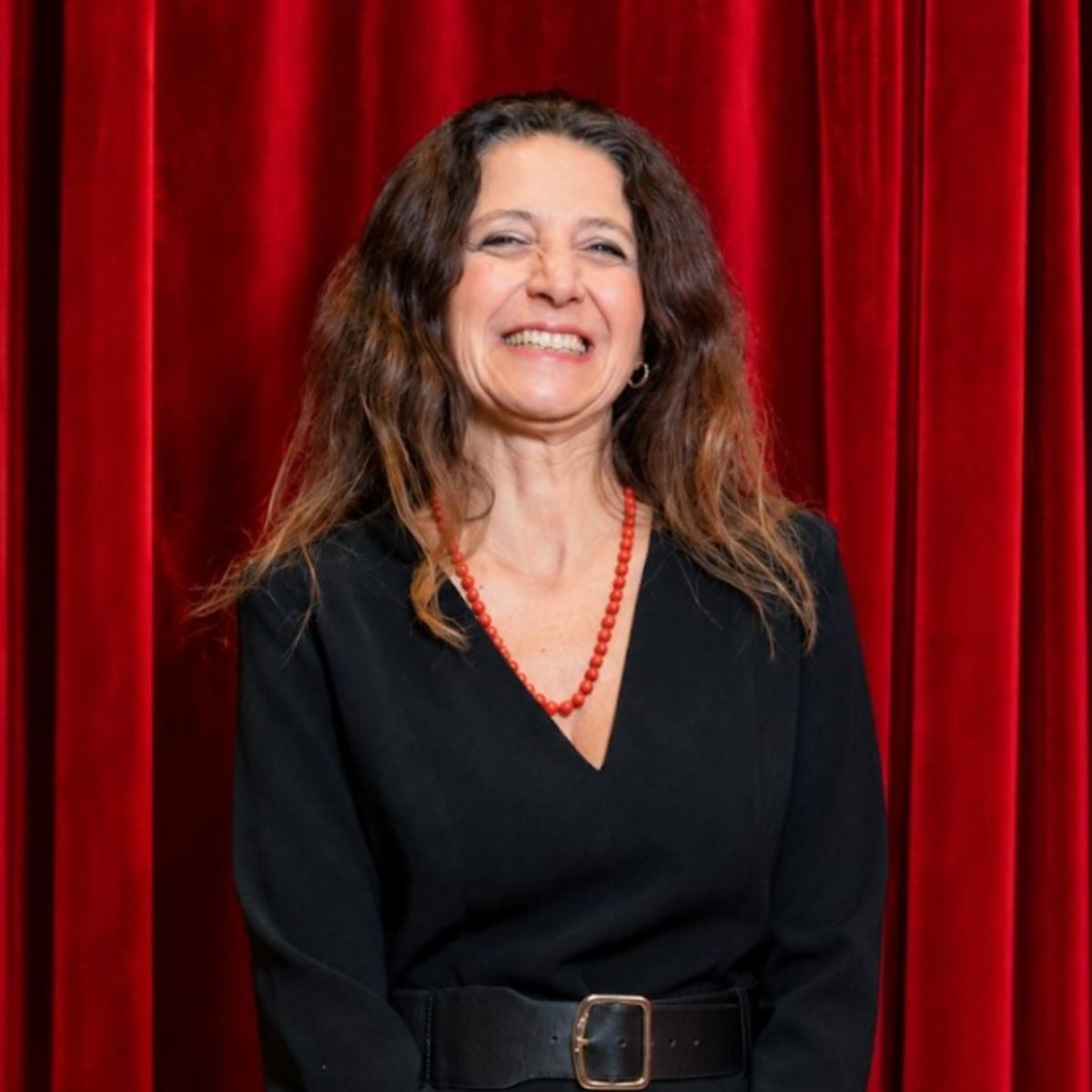
In plague-ridden London in the mid-17th century, cats were killed. Even dogs. They were believed to carry the contagion. So the mice thrived. And with them the fleas, who really carried the disease. Barbara Gallavotti tells this story in her book «Invisible Borders» (Mondadori, 2022) and uses it as a parable: the error almost always arises from wrong news, capable of killing more than one bacterium. Biologist, author of «Ulisse» since 2000 and of «Superquark» since 2007, Gallavotti received the Award for Mediterranean Culture in the Information Culture section in Cosenza. In his latest book, «The future is already here. What Artificial Intelligence can really do” (Feltrinelli), writes a sentence that overturns the current fear: “Perhaps more than the era of artificial intelligence, what has begun is the era in which natural intelligence will be able to give its best.” We met her after the ceremony.
At the beginning of October, the death of a researcher from the anti-plague laboratory in Irkutsk, Siberia, raised fears of a case of pneumonic plague, which was later ruled out by the Russian authorities. How important is information transparency when an epidemic is feared?
«It is truly a fundamental question. The real alarm in that story concerns precisely the way in which the information circulated, or rather did not circulate. There were rumors, questions, and it all ended with pneumonia of unknown cause. It is a sign that international collaboration in emergency management has not worked. International organizations, such as the WHO, have been weakened: they have no power to impose procedures and are fragile interlocutors. Let’s remember that the Trump administration left the World Health Organization.”
In «Invisible Borders» you talk about seventeenth-century London, where dogs and cats were killed, believing them to be responsible for the contagion, and thus rats were favored. What similar mistake are we in danger of making today?
“That was a typical misinformation error. The problem was fleas, which bit infected mice and transmitted the infection to people. Back then, no one knew about the existence of microbes, and that idea had its justification. Today we have much less when we believe unfounded news. I think of the alleged relationship between the measles vaccine and autism, disproven by science. In the United States, people are dying of measles again. And they are avoidable deaths. Bad information causes victims.”
What has the pandemic taught those who disseminate science?
«It was also a great risk communication experience. There is an instinct that leads us to think that those who oppose science are ignorant. He often has a very high level of study. We resist out of fear, a feeling to be taken very seriously, or out of the influence of the group we find ourselves in: if everyone around me thinks one thing, it’s difficult to think another. Whoever talks about science must be totally transparent, respect the interlocutor even when he doesn’t think like us and take seriously the reasons that lead to a wrong choice.”
You won an award for the Information Culture section which this year chose artificial intelligence as its underlying theme, the theme of your book “The future is already here”. Can a machine become a reliable source of scientific information?
«It depends on what we mean by source. For a bibliography it is probably not the best tool. There are programs designed for specific scientific tasks that perform them very well. Let’s take AlphaFold, whose inventors won the Nobel Prize for Chemistry in 2024: it predicts the three-dimensional structure of proteins, fundamental information for developing new drugs. The point is to establish where the barrier of the human being intervenes and how to make it work. There is a phenomenon called automation bias, which pushes us to rely on powerful tools that give us answers. We must learn to resist this temptation.”
The British mathematician and philosopher Alan Turing imagined that a machine could be said to be intelligent when, in conversation with us, we were no longer able to distinguish it from a human being. Have we gotten there?
“Almost. And this is precisely what puts us in crisis. With language models we realized that that goal is not enough. Being human means more: having awareness and grasping the profound meaning of a sentence, as well as knowing how to construct it to perfection. Artificial intelligence forces us to precisely define words that we have always used vaguely, such as intelligence, creativity, consciousness, awareness. To establish what is ours and what can be reproduced by a program.”
Can anything be done to prevent the misuse of artificial intelligence?
«We need rules. And we are writing them. It is difficult to regulate something whose development we do not govern, often created by private companies or, in the case of China, under the shield of another government. International collaboration is needed. And here the concept of peace comes into play. We are almost convincing ourselves that peace is the right not to be bombed. Peace is much more: it is trust in others. That is the trust we need to face climate change, health emergencies, our relationship with technology. Without that peace, regulating AI also becomes much more difficult.”