

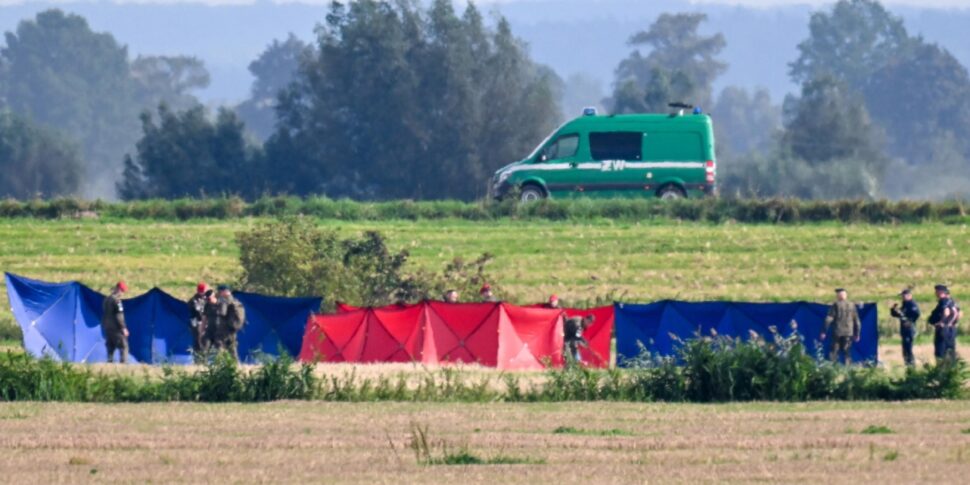
The Ukrainian media are starting to show the first photos of the remains of the Russian drones found on the Polish territory in the early hours of this morning. From what emerges from the images, these are “Gerbera” drones, a cheaper and simplified version of the Iranian Shad-136. Designed by Moscow for Kamikaze missions, reconnaissance and transmission of signals to extend the operational radius of other drones, this pilot -free vehicle was used for the first time by the Russian army in July 2024.
Originally used as a bait to distract and overwhelm the Ukrainian air defense due to its visual similarity with the most lethal Shad -136 – very similar, but with slightly smaller wing opening than the Iranian one – in the night between 9 and 10 September it was also used for reconnaissance and attacks.
According to Ukrainian intelligence, the true developer of the Gerbera is the Chinese company Skywalker Technology. Initially Kiev’s secret services believed that the production was made directly by the Russians, but more recent information highlighted that Moscow is responsible for finalizing the product for operational use – which takes place in a factory in the Russian Republic of Tatarst – while the Chinese deal with the assembly.
These drones also have the so -called swarm mode, which allows them to act in coordination with other drones, increasing their effectiveness in combat conditions.
It is not the first time that the Gerbera are found within the European territory and NATO countries. On July 10, a pilot -free aircraft entered Lithuania through the aerial space from Belarus. Initially it was thought that it was a Shahed drone, but later it was identified as a gerbera, crashed close to the Sumskas border blocking, about a kilometer from the border between Belarus and Lithuania. On that occasion, the Prime Minister Lithuanian Gintautas Paluckas and the president of Parliament Saulius Skvernelis were brought to a remittance refuge. Action that was repeated two weeks later: both July 28 and August 1st, in both cases fallen into Lithuania and always coming from Belarus.
This time the Russian drones were knocked down by the F-16 Poles fighters, in collaboration with NATO. The operation also intervened by the F-35 hunting of the Dutch Air Force and an Italian reconnaissance plane.