

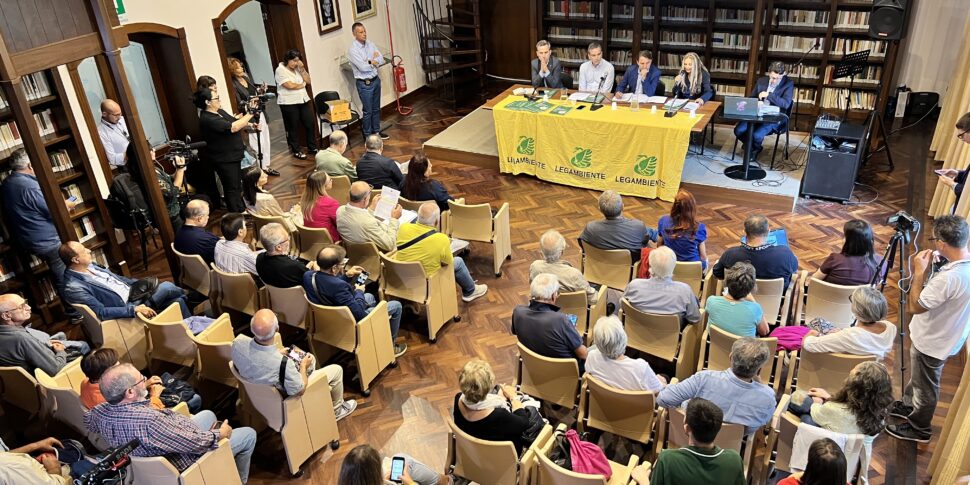
A few days after the regional elections of 5 and 6 October, it took place today in Catanzaro, in the “De Nobili” municipal library room of Villa Margherita, a public confrontation promoted by Legambiente Calabria on environmental issues and on the ecological transition of the region.
To dialogue with the citizens and with the association were the two main candidates for the presidency of the Calabria Region: Roberto Occhiuto, outgoing president and candidate of the center -right, and Pasquale Tridico, candidate of the center -left. The comparison, moderated by Francesco Loiacono, director of The new ecologywas introduced by Anna Parretta, regional president of Legambiente, and ended with the intervention of Stefano Ciafani, national president of the association.
In his introductory intervention, Anna Parretta drew attention to the urgency of a regional plan of adaptation and mitigation of the effects of the climatic crisis, highlighting that from 2010 in August 2025 in Calabria 114 extreme weather events have occurred such as serious floods to periods of prolonged drought that affect a already fragile territory. “Calabria is a so -called hotspot of climate change: to secure people and infrastructures avoiding further damage and protecting future generations you need a radical turning point towards ecological transition, based on renewables, circular economy, sustainable mobility and territory protection. The future of Calabria depends on the choices of the next legislature“.”
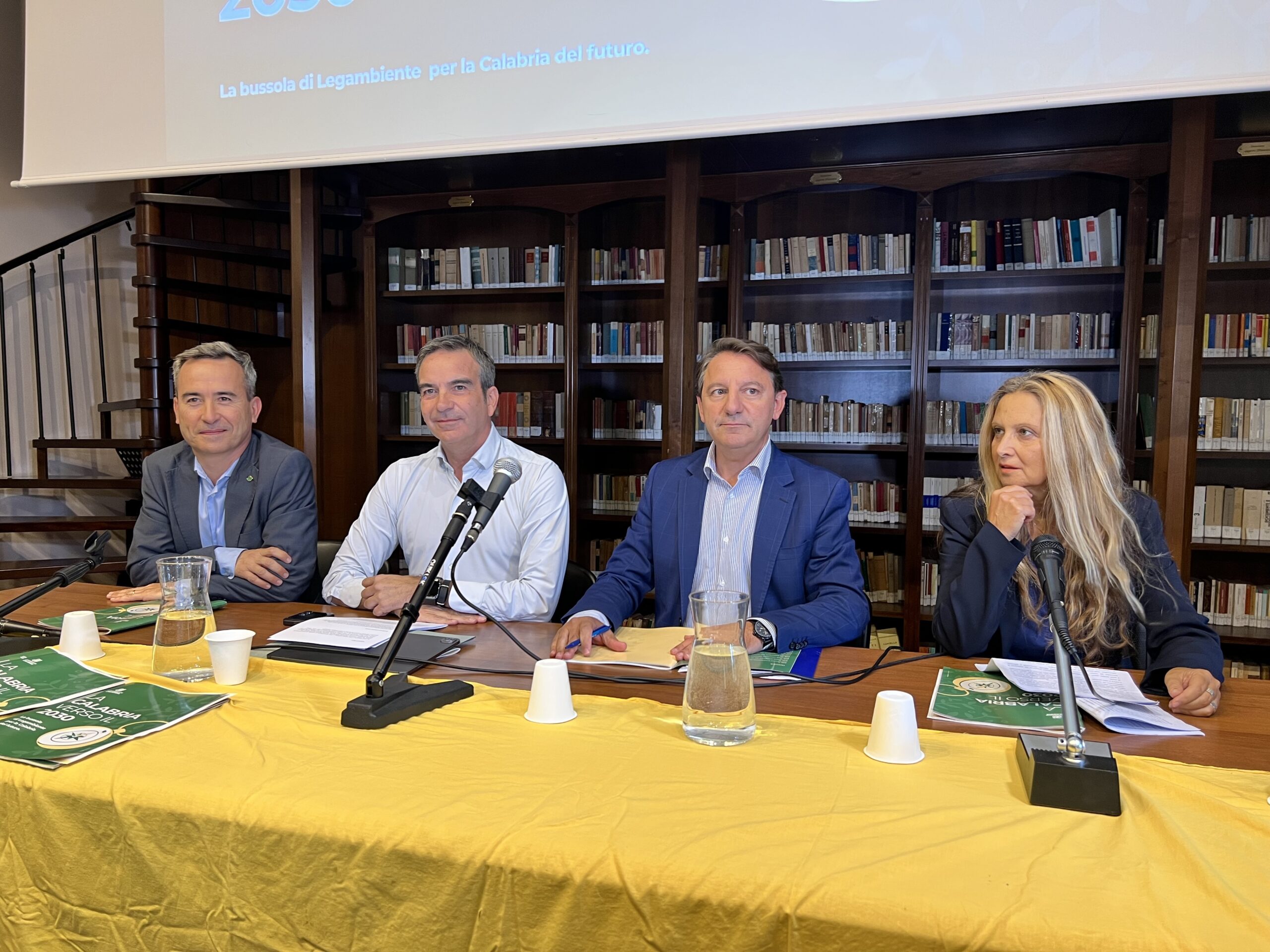
The Legambiente document delivered to the candidates
On the occasion of the comparison, Legambiente presented a programmatic document to the candidates and the press designed as a guide for work with those who will govern Calabria in the next five years. The text highlights that the Region is located today at a historical crossroads: the quality of life, the economic and social estate and the ability to retain young people and skills will depend on environmental choices. The document underlines the need to mitigate and adapt to the climatic crisis, reduce emissions and protect vulnerable territories.
Among the priorities indicated: accelerating the energy transition, focusing on renewables, efficiency and energy justice; develop a real circular economy, closing the landfill season and promoting recycling and innovation plants; invest in sustainable mobility with trains, public transport and integrated services; protect the territory, prevent building abusiveness and promote urban regeneration; Fighting the pollution of water, soil and air with immediate reclamation and protecting biodiversity, protected areas and forests.
The document also focuses on agroecology, with sustainable and innovative agriculture, short supply chains and low impact practices, and on the clean industrial transition with a “Clean Industrial Deal” capable of combining competitiveness, work and environmental protection. Finally, Legambiente stresses that there can be no future without legality, strengthening the fight against ecomafias and environmental crimes.
Ciafani: “Our compass for 2030”
Stefano Ciafani said: “Our association is organizing the appointments for the autumn elections in the regions that will vote for the vote. We are presenting our compass for 2030 for the decarbonisation of the regional territories, for the creation of new jobs and for a better quality of life. The documents that we are presenting to parties and candidates will be the beacon for our interlocution work with those who will govern in the next 5 years in the regions to vote. Concrete proposals, daughters of daily work that sees us at the forefront throughout Italy to speed up the national ecological transition, to free us from the grip of fossils and pollution.“
Parretta: “Calabria as a green innovation laboratory”
“Calabria must be transformed into a green and social innovation laboratory – said Anna Parretta -. Environmental challenges are not only problems to solve, but opportunities to create work, development and improve the quality of life. We want the region to become a positive model for Italy and the Mediterranean, capable of attracting and retaining young people, focusing on renewables, circular economy and protection of the sea and the territory. We need a clear and courageous commitment of politics“.”