

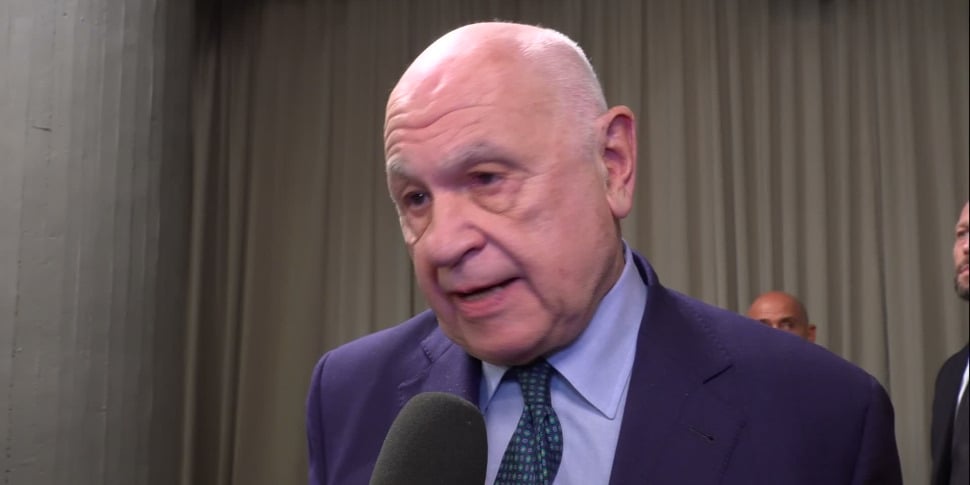
The result of the recent referendum on justice opens a new phase of reflection and comparison between politics and the judiciary. At the center of the debate are the declarations of the Minister of Justice Carlo Nordio, who clearly claimed political responsibility for the reform. «This is a reform that bears my name and I therefore assume political responsibility for it. If there were any defects in communication or approach, they were mine too”, stated the minister speaking on Sky Tg24. Words that mark a direct assumption of responsibility, but at the same time highlight critical issues in the management and communication of the reform project.
Nordio did not hide the possible political consequences of the referendum result, underlining that there is a strengthening of the role of the National Magistrates Association. “It’s a victory for the ANM, let’s be clear,” he declared, predicting an increase in his bargaining power and a greater capacity for political pressure. According to the minister, this dynamic will have transversal repercussions on the political balance, also involving opposition forces in view of future government scenarios. In the framework outlined by Nordio, the risk of tensions within the majority also emerges, with possible divisions linked to the attribution of the political result of the referendum. In this context, the ANM is described as “the real winner”, capable of establishing itself as an atypical political entity, capable of opposing governments.
Also on the issue was the intervention – much more cautious – of the Deputy Minister of Justice Francesco Paolo Sisto. According to Sisto, the referendum outcome can represent an opportunity to constructively redefine the relationships between politics and the judiciary. “I believe we can responsibly design new paths in the relationship between politics and the judiciary,” he said, underlining the need to establish shared methods of discussion. From this perspective, a key role could also be played by the National Forensic Council, indicated as an essential interlocutor in the reform process.
Sisto also recalled how the ANM, although opposed to the proposed constitutional revision method, has always supported the need to reform the judicial system. This very point could represent the basis for a concrete and constructive dialogue. “If this is true, there are all the conditions to hypothesize a dialogue effectively aimed at improving the justice system”, concluded the deputy minister.