

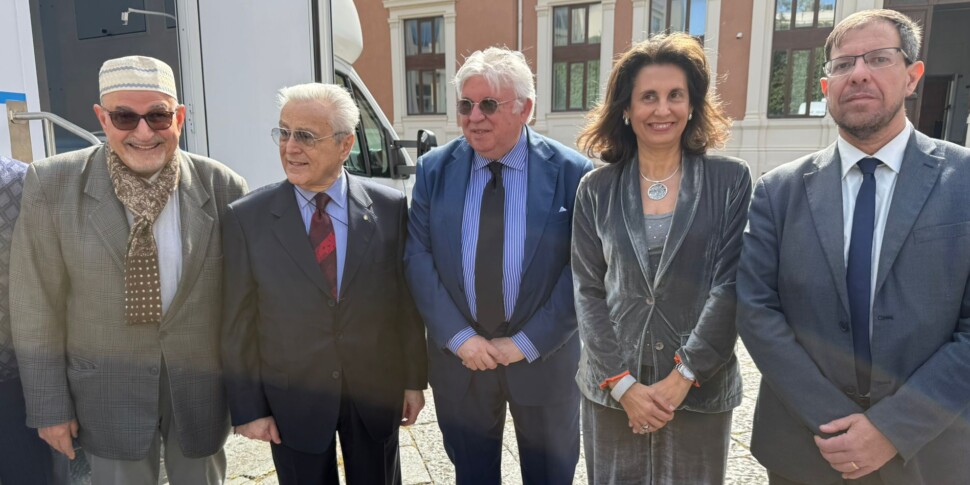
“The main objective of the National Health Equity Program is to respond to the health needs of the population in conditions of socio-economic vulnerability, combating health poverty and eliminating barriers to access to care through the opening of local clinics. We want to promote access to care by distributing free medicines, guaranteeing dental services and, where necessary, dental prostheses. All of this was started, in the first months of activity, also by the ASP of Messina, now we will deal with all this with motorhomes”. This was underlined this morning by Alfina Rossitto, responsible for the implementation of the PNES, line “Countering health poverty”, during the conference “For equitable and inclusive health. Participatory paths for the promotion of community health”, held in the main hall of the University of Messina. After the institutional greetings from the rector Giovanna Spatari and the general director of the ASP of Messina, Giuseppe Cuccì, Marco Maccari, head of the Intermediate Organism, the National Institute for the promotion of the health of migrant populations and for the fight against diseases of poverty (INMP), spoke and offered a national overview of the project. “In this context – added Maccari – The Ministry of Health plays a fundamental role in the articulation and promotion of these initiatives, providing the necessary support to guarantee the effectiveness and sustainability of the actions undertaken. Only by collaborating at all levels, can we build a more equitable and inclusive health system, capable of addressing the challenges of health poverty. I reiterate the importance of the PNES and the synergy with the Ministry, which is essential to address and resolve problems related to the health of vulnerable populations”.
Subsequently, Patrizia Restuccia, social worker and project Rup, highlighted how “proximity clinics are now a reality in the territory of the Messina ASP, a fundamental service aimed at guaranteeing and facilitating access to medical care for people in conditions of extreme poverty. Initially active in the districts of Messina, Milazzo and Mistretta, they were then also scheduled to open in the districts of Barcellona PG and S. Agata di Militello. During the year By 2025, medical care was guaranteed to over 550 patients, for a total of 1,470 services provided. We are currently aiming to strengthen the presence of clinics also in the Ionian coast and in the Patti district. The construction of integrated networks, continuous dialogue and synergies with all institutional entities, with bodies, associations and the community as a whole have proven to be a winning card”. Also of particular importance was the contribution of Antonella Casablanca, social worker and project Rup, who explained how “co-planning is a participatory work tool that involved public bodies and Third Sector Bodies in their various forms (social cooperatives, voluntary associations, social promotion associations, etc.). The Third Sector Bodies, in fact, made support, technical and organizational skills, human and material resources available to the project. An innovative figure was then that of the community leader: they are the representatives of the most representative migrant communities – Sinhalese, Islamic and Sri Lankan – with the task of identifying needs, facilitating access to health services, collaborating with local networks and promoting active participation”. During the initiative, the first motorhomes were also presented to the community, which will come into operation in a few weeks and will make it possible to reach the most difficult places to serve. On Sunday, Cambria remarked that “they represent a free gateway to care for those who cannot afford health services or have difficulty reaching health facilities. It is the health service that moves towards the most fragile citizens, people who often present a double fragility, social and health. It is not just a medical camper, but an equity tool, because it allows healthcare to reach even those who experience socio-economic vulnerability or have stopped receiving treatment for economic and logistical reasons”.
Regarding the use of motorhomes, the General Director Giuseppe Cuccì, together with the Administrative Director Giancarlo Niutta and the Health Director Giuseppe Ranieri Trimarchi, declared: “The introduction of motorhomes represents a fundamental step in bringing healthcare services closer to the most isolated communities. These vehicles will allow direct medical services to be offered in the places where vulnerable people live, thus guaranteeing equal access to care. With this project we want to ensure that no one is left behind and that everyone can benefit from quality healthcare.” Regarding the use of motorhomes, the General Director Giuseppe Cuccì, together with the Administrative Director Giancarlo Niutta and the Health Director Giuseppe Ranieri Trimarchi, declared: “The introduction of motorhomes represents a fundamental step in bringing healthcare services closer to the most isolated communities. These vehicles will allow direct medical services to be offered in the places where vulnerable people live, thus guaranteeing equal access to care. With this project we want to ensure that no one is left behind and that everyone can benefit from quality healthcare.” Finally, Francesca Lo Iacono, social worker and project Rup, finally exalted the role of dental clinics, recalling that “they shine a light on a reality that is too often left in the shadows: dental health poverty. There is a form of profound and silent poverty that hides behind a daily and dramatic gesture: putting a hand in front of the mouth out of shame for smiling. It is a poverty that can be seen, one of the few medical conditions that directly affect the image that we give of ourselves to the world.” The meeting was also attended by the administrative representative of the ASP for the PNES, Valeria Caputo, two other project RUPs Giancarlo Quattrone and Chiara Schirò, several representatives of the local clinics and the dental laboratory of Messina, of the Municipality of Milazzo, of the Cesv and of the Diocesan Caritas.