

Add the Gazzetta del Sud as a source
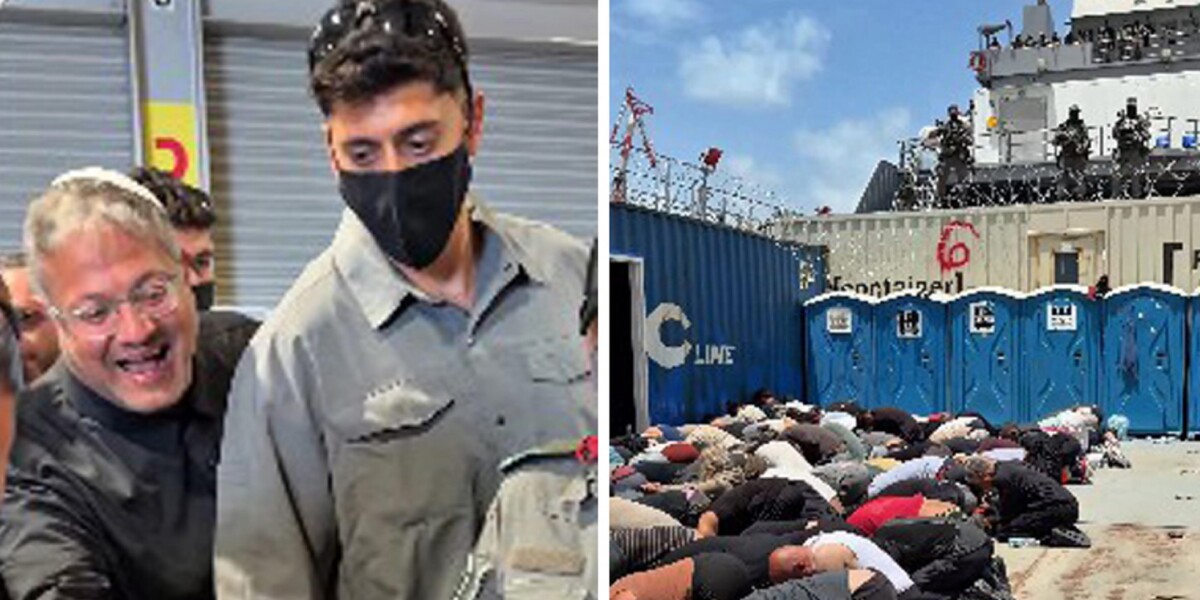
Itamar Ben Gvir’s latest provocation, the video with the Flotilla activists handcuffed and on their knees, was perhaps the most classic of the straws that broke the camel’s back. In Brussels, in these hours, the atmosphere has significantly changed. And it has now clearly appeared that staying still is increasingly difficult. It is on this basis that several member countries, on Italy’s initiative, have formally asked the EU to work on a proposal for sanctions for the extremist minister. High Representative Kaja Kallas accepted the request. The offices of the External Action Service will work on one or more options between now and June 15, when the dossier will end up on the table of the Foreign Affairs Council. And the unanimous green light for the measure, this time, seems within reach.
Sanctions for Ben Gvir: unanimity of the 27 is needed
However, for the green light to be given to the restrictive measures for Ben Gvir, unanimity is needed. The games are not over. Germany, for example, appears locked in an uncomfortable silence. The Czech Republic is among the countries that have most opposed sanctioning Israel in any form. Hungary no longer has Viktor Orban but its historic relations with the Jewish state have not evaporated. Of course, in Europe the wind for the Netanyahu government seems to have really changed. Next week, first of all, the sanctions for violent settlers, approved at the last Foreign Affairs Council, will be formalized. Then it could be Ben Gvir’s turn.
The joint request to Netanyahu: «Stop»
Rome’s request, which ended up on the table of the meeting of the Permanent Representatives of the 27 (Coreper II), was supported by several states. At the same time, Italy, the United Kingdom, France and Germany have formally asked the Israeli government “to end settlement expansion, ensure accountability for settler violence and investigate allegations against Israeli forces, respect Hashemite custody of the Holy Sites, and lift financial restrictions on the Palestinian Authority and the Palestinian economy.” Translated: they asked Bibi Netanyahu and his right-wing government to stop. The 4 countries that signed the declaration were immediately joined by Canada, Australia, New Zealand, Norway and the Netherlands.
The embargo from the Netherlands and the push from Ireland
There are those in Europe who have already gone further. Precisely in the Netherlands the Council of Ministers has given the green light to the embargo on products from Israeli settlements in the West Bank. “Let’s give a signal, Europe should do the same”, underlined The Hague. Ireland, with Foreign Minister Helen McEntee, took the opportunity of the Trade Council to officially ask the 27 to do so. The initiative is gradually gaining supporters, but the green light from the EU seems distant. Berlin has always opposed it, Italy, so far, has done the same.
The change of direction of the Meloni government
Meeting the Irish Prime Minister Michael Martin at Palazzo Chigi Giorgia Meloni did not go beyond the firm condemnation of the violence of the settlers and settlements in the West Bank. Certainly, in recent weeks, the government’s attitude towards Israel has changed, moving further and further away from the positions of the recent past, almost in line with those of Donald Trump. An evolution in which internal political pressure may have played a role. “We were all shocked, but Ben Gvir is not the exception of the Israeli government, unfortunately he is the rule”, underlined the secretary of the Democratic Party Elly Schlein, asking Italy and the EU for “commercial sanctions”.