

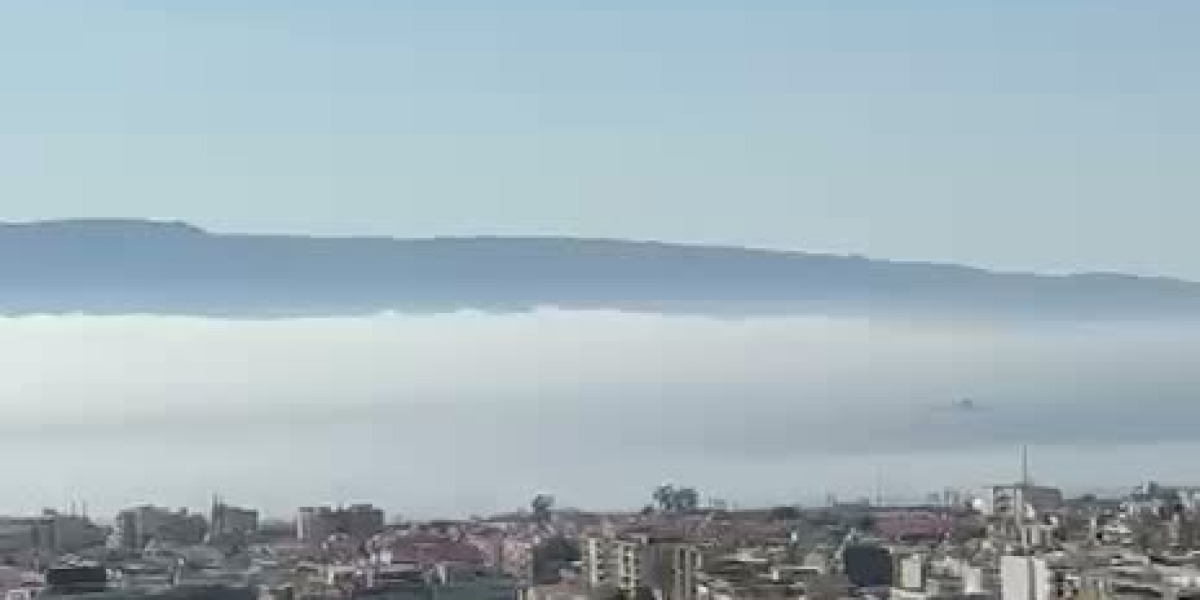
A ghostly, almost cinematic awakening this morning on the Strait. Anyone who looked out from Messina and along the Lungomare Falcomatà in Reggio Calabria found themselves in front of a white wall: the opposite coast literally vanished, swallowed up by a thick blanket of fog. The “Wolf” is back, one of the most fascinating and characteristic atmospheric phenomena of this stretch of sea.
While security and law enforcement cars patrol the seafronts immersed in a muffled atmosphere, a deep, rhythmic sound rises from the sea: it is the “singing” of ships and ferries, which make their sirens sound incessantly to signal their position. An obligation of acoustic safety dictated by the drastically reduced visibility, but which returns an evocative echo to those observing the scene from the mainland.
What is the “Wolf” and why does it form?
Although its appearance may recall the classic Po Valley fog, the Strait Wolf has a completely different genesis and is typical of transition seasons such as spring and early summer.
From a scientific point of view it is an advection fog. It is formed when a mass of warm, moisture-laden air (often carried by southerly winds) passes over the surface of the sea in the Strait, whose waters are significantly colder due to strong currents and deep upwellings.
The hot air, in contact with the cold sea surface, undergoes a sudden cooling: the humidity condenses instantly, creating that thick and spectacular “carpet” of low clouds that crawls between Calabria and Sicily.
A show for social media, an eye on safety
While for citizens and tourists this is the perfect opportunity to take photos and videos to share on social media (the images from above show the ships and buildings literally floating above a sea of clouds), for internal navigation in the Strait it represents a complex challenge. The captains of ferries and commercial ships proceed at reduced speed and with radar constantly active, relying on the sirens to avoid collisions in the heart of the “white wall”.
The phenomenon is destined to gradually thin out over the course of the day, as soon as the sun warms the air or the wind changes direction, returning the Strait to its usual clear beauty.