

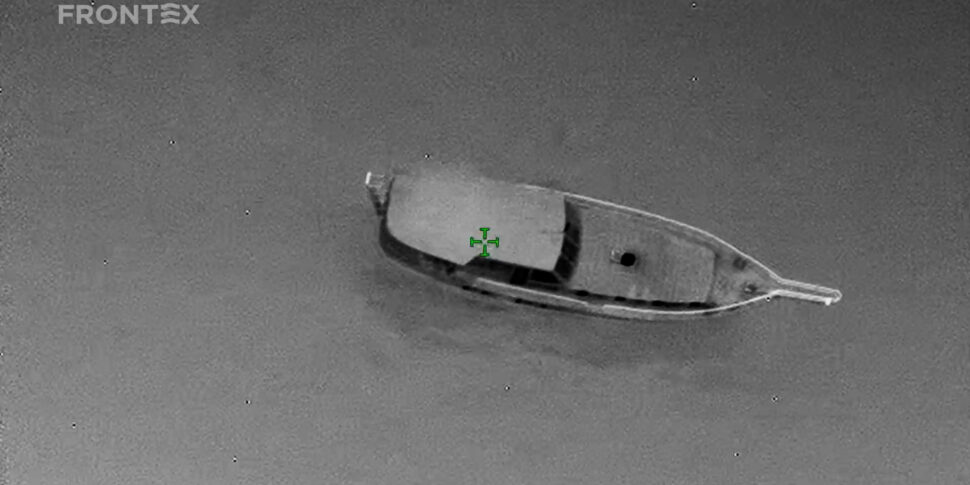
«Why did no one come to rescue us when we entered Italian waters? Help arrived after 3-4 hours.” This was said by Mamozai Nigeena, a 26-year-old Afghan who survived the Cutro shipwreck, testifying at the trial about the delays in the rescue of the gulet Summer Love whose shipwreck, on 26 February 2023, cost the lives of 94 people. “I was on board with my husband. There were more than 180 people. Before leaving, the traffickers had told us that there were few of us, but instead there were a lot of us,” she said.
The journey and the ruthlessness of traffickers
«They forced us to throw away our suitcases – he explained – the sea was not as calm as when we left. There were women and children screaming. A bad situation.” Recalling the exciting moments, he described the ruthlessness of the transfer: «None of the passengers was equipped with a life jacket; the only safety devices were at the exclusive disposal of traffickers.”
The sighting from above: helicopter or plane?
Responding to questions from the plaintiff’s lawyer Enrico Calabrese, the girl reported having heard the noise of a helicopter and seen someone taking photos from the ship’s porthole. On this detail, the lawyer Francesco Vetere, defender of Lieutenant Colonel Alberto Lippolis, asked if it could be a plane. «I lived in Afghanistan – the answer – and I can understand the difference between a helicopter and a plane. These are not just my words, but those of many others who have declared the same thing.”
The impact and sinking of the boat
«At the sight of some lights approaching – said the witness, retracing the approach to the coast – the traffickers got scared thinking it was the police and veered sharply. That’s when the boat broke. Windows, wood and the boat broke. The children were screaming. My husband called the emergency number. But only after several hours did help arrive, about 3 or 4 hours later. I don’t know why they didn’t come to help us. If the boat had entered Italian waters, why didn’t they come to save us?”.
Life today and broken promises
Today Mamozai Nigeena lives in Hamburg. She said she was followed by a psychologist due to the heavy trauma she suffered. Judge Scibona, allowing her to speak freely, collected her outburst: «We remained alive, but they made us many promises that were never implemented. I was left alone in a refugee camp in Germany, we didn’t see anything from Italy.”
The other testimonies
Nabila and Adiba Ander, two Afghan sisters living in Germany, lost a brother in the massacre. «He had waited more than ten years for this moment – says one of them – We saw the video that our brother was arriving, we were happy. My mother had prepared a feast and cooked for him. Then the shipwreck happened. Our mother now wants to kill herself because of the pain she is experiencing.”
Lack of coordination and delay in communications
A lack of timely communications would have prevented the Coast Guard from assuming coordination of search and rescue (SAR) operations and avoiding the sinking of the gulet Summer Love. This is what emerged from the testimony of the captain of the vessel Vittorio Aloi, at the time of the events commander of the Port Authority of Crotone, heard in the Court in Crotone as a witness in the hearing of the trial on delays in rescue in which 4 soldiers from the Financial Police and two from the Port Authority are accused.
Radar, protocols and the role of the Carabinieri
Answering the questions of the prosecutor Matteo Staccini, Aloi reconstructed the timing and protocols applied in those hours. «In Punta Stilo and Isola Capo Rizzuto the Finance has two radars. We don’t have radar in the Operations Room. If I don’t hit the target with the radar, I have to think that the ship has sunk and that it is no longer a question of police and border protection activity, but of search and rescue. But that information came too late. The Carabinieri told us that there was a gulet that was sinking. We would have intercepted it two miles from the coast so it wouldn’t have beached. The 2005 technical-operational agreement gave priority to police activity and provides that when elements emerge that are believed to create danger to the lives of people at sea, it is the Port Authority that intervenes”.
Management as a police operation and the readiness of the means
«There were no elements for us to declare the SAR – said Aloi – because we knew that there were Finance units at sea, which tells us that they are managing it as a police operation. The Coast Guard vehicles could deal with those conditions: there was an average wave of two and a half meters and our unit would not have had any difficulty. They are made specifically to guarantee rescue. In less than two hours we would have been there.”
The Frontex alert and assessments of the actual danger
On the assessments resulting from the Frontex alert and monitoring, Aloi responded to the questions raised by the defence: «When the communication from Frontex arrives there is no phase of uncertainty. They sailed in trim with the sea astern. There were no dangers. I have to ask myself the problem when I no longer see her. We knew that there was a Finance unit and structure that was following the case. At the Captain’s Office until 4.10am we were convinced that there were competing units in the rescue effort and we were calm. The qualification would not have changed if we had known that there were 100 migrants. It has sailed 300 miles without any problems. The problem is not navigation or the number of people, the danger is getting close to the coast.”
The clash in the courtroom over Frontex communication
Frontex wrote in its communications that for the gulet Summer Love the hypothesis that it was a boat with migrants should be considered. This is what emerged from the harsh clash between lawyers that took place during the hearing of the trial on the delays in the rescue of the vessel whose shipwreck in Cutro on 26 February 2023 caused the death of 94 people.
The testimony and the opposition of the defense
The controversy erupted after a question from the lawyer Enrico Calabrese during the testimony of Lieutenant Commander Giovanni Paolo Arcangeli, at the time the head of the operational service of the Port Authority of Crotone. The civil defender had asked if the officer had seen the Frontex communication which spoke of the boat with migrants. A question which the lawyers of the defendants opposed, arguing that Frontex had never written that statement.
The denial and the evidence in the documents
A very lively opposition which, however, a few minutes later – while Arcangeli’s testimony continued – was denied. Lawyer Calabrese showed the Frontex communication present in the documents which stated verbatim “possible migrant vessel”. Calabrese specified that it was the second communication from Frontex on the event, which arrived at 11.29pm (the first was at 11.10pm), specifying that it was “contained in an act signed by Colonel Vardaro”.
Solarino: an event that really struck me
At the end of the hearing Valeria Solarino, accompanied by Francesca Corbo of Amnesty International Italy, spoke with the reporters. «It’s the first time – he explained – that I have entered a courtroom. I decided to do it today, with Amnesty International following the trial of the Cutro massacre. It is an event that struck me greatly and today, three years later, I am struck by the fact that audio and video recordings were prohibited in the courtroom, a violation of the right to information. We follow every news story with morbid curiosity while 94 people, including 34 minors, perhaps no longer make the news.”