

A place is dead when it no longer generates imagination. Memory is not enough for life: if it crystallizes a face, an image, a feeling, it can lock them in the cage of a past that is too distant, and then nostalgia kicks in, and that life becomes a form of mourning. No place, no matter how earthquaked, bombed or destroyed, can declare itself dead as long as it releases imagination, and therefore desire (or fear). Writing my book «Sicily is a feeling. Journey to the edge of the Strait” (Touring Club), on every page I understood that the temptation was to make a book of nostalgic memories of the places as I saw and experienced them in the past. However, in this way I would have made a book of memorabilia, of things already seen, of stuffed memories. What I described, however, was alive: I felt it! Not to memory, but to my present and my future. Every element of my story was open to the imagination. So I invented: I described the night while I was on the beach in full sun, I wrote non-existent recipes, I traveled on the Strait as if I were on Arthur Rimbaud’s drunken boat. Imagination won over nostalgia. Imagination, sometimes, precedes the place.
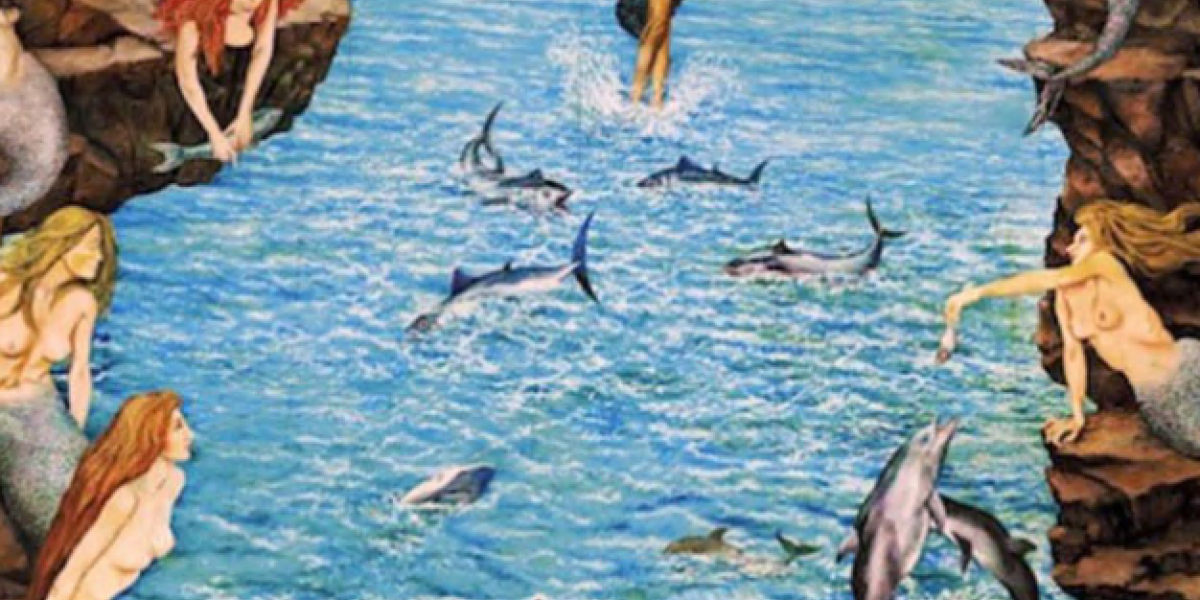
On the Strait of Messina, for example, literature arrived before geography. When Homer, in the twelfth book of the Odyssey, places the six-headed monster Scylla and the whirlpool Charybdis between two rocks, he is not describing a landscape: he is establishing it. Since then, those who look at that stretch of sea never only see water and currents, but a text that continues to be written incessantly. Ovid will add a biography and a pain to Scylla, a nymph transformed into a monster by Circe. Here memory is an archive of stories that never stop generating stories. Scylla and Charybdis are not a memory of the ancient world: they are a perceptive structure.
Goethe arrived in Messina in 1787 and, crossing the Strait, observed that Scylla and Charybdis were much further apart than the poem would lead one to believe. In short, literary memory does not correspond to the data. Instead of reproaching Homer, he reflects on poetic license: the poet condenses and brings closer because the imagination does not reproduce distances but offers them meaning. Here lies the difference in bridging the distances between poetry and concrete. And then the poetic gesture is opposed to nostalgia. The nostalgic compares the present place with the remembered one and chooses the memory, declaring it lost in the past, dead; Goethe compares the place of the texts he read with that perceived at the moment by his senses. And he doesn’t choose: he puts the memory back into circulation, tests it on the body, returns it to the imagination.
There is no creative work on the Strait – I was talking about it with friends who are imagining a cinematographic project – that does not follow this logic that links memory, senses and imagination. On the Strait, nature itself makes memory understood as photography impossible. The Fata Morgana, the mirage that raises buildings and coasts that do not exist above the water, was already described in the seventeenth century; the she-wolf, the fog that erases the line between sky and sea and forces ships to speak to each other with sounds, produces the opposite effect: there the visible exceeds the real, here the real subtracts from the visible. Those who grow up facing a sea that knows how to both invent and hide soon learn that recording is not seeing: that memory alone is not even enough for perception, let alone for life. It is the lesson of the Annunciation by our beloved Antonello da Messina, with that oblique gaze that does not rest on the angel but on a point that we cannot see: looking from a shore means seeing what is present and at the same time what is not there.
From rubble to poetry
The decisive test came from history, not from art: on 28 December 1908 the earthquake and tsunami wiped out Messina and Reggio in a few minutes, resulting in tens of thousands of deaths. It was the moment in which the place could really die: not from destruction, but because it risked being handed over to the cult of a city fixed in photographs, regretted and therefore finished. It didn’t happen like this, and the proof is that poetry emerged from the rubble. Salvatore Quasimodo arrived in Messina as a child with his railwayman father sent among the ruins; the family lived in a carriage at the station, and in «To the Father» the image remains of a city reduced to purple waters and broken wires. That text is not a lament: it transforms rubble into word and the word into inheritance. The destroyed Messina does not survive in its plan but as material of the imagination: a place does not die when it is destroyed, it dies when the destruction stops being told and is only mourned. Bartolo Cattafi – a giant of twentieth-century Italian poetry – clings to his crust of earth, but is framed «in the blazing secret of the poppy». Due to his attachment to the finite, he is able to see the infinite that blazes: the Leopardian lesson transplanted onto the Strait, where the opposite coast, like the hedge of the Infinite, is the limit that makes imagination possible. Whoever has the open ocean in front of him does not imagine: he sees. Whoever has another shore in front of them, at three thousand six hundred and fourteen meters, always imagines.
The return and reinvention of the Strait
Nostos is the terrain where the alternative is played out in narrative form, and where nostalgia sets the best traps. Two great Sicilian books open with a return across the Strait. In «Conversation in Sicily» Silvestro gets on the ferry driven by «abstract fury», in a Sicily that is both real and interior. Vittorini felt that Sicily was such only by chance, because the name sounded better to him than Persia or Venezuela: the place of memory, in order not to die, must be transfigured into a universal figure. In «Horcynus Orca» by Stefano D’Arrigo the proof is more radical. ‘Ndrja Cambrìa returns from the war to the shores of the duemari and finds a dead place: the ferribotti no longer pass, the feminotes smuggle the salt, and the orca enters the center of the waters, forcing that world to come to terms with its own end. The veteran who only has his memory finds a defunct world. But the novel performs the opposite operation: D’Arrigo took twenty years to rewrite that book, expanding a short story into a continent of over a thousand pages and inventing a language mixed with dialect, Italian and neologisms. Instead of describing that sea, he recasts it verbally, like Homer. Within history the Strait dies; through the tongue he lives forever. The survival of a place does not depend on what remains of it, but on what can still be invented about it.
Contemporary prose has brought the question to the present, and it is a chapter of ghosts. Vincenzo Consolo built «The smile of the unknown sailor» around a portrait of Antonello, an image of the past which instead of being venerated is questioned until it generates history. And imagination is in power in the novels of Nadia Terranova and Anna Mallamo. In them, among other things, imagination wins over memory in a political sense: administrative memory says that there is a Sicily and a Calabria; the literary imagination invents a third homeland that no paper records, made up of comings and goings, and makes it habitable by writing it: being “tight”.
A place is dead when it no longer generates imagination: the Strait, which has been generating it for three thousand years, is among the liveliest places in the world, it has remained so through the earthquake of 1908, the bombings of 1943, the depopulation, the decline of the fishermen. Memory alone would have produced the cult of pre-war photographs, archives and museums, necessary but inert. It was the imagination, every time, that made the transition: from myth to perception in Capo Peloro, from disappointment to understanding in Goethe, from rubble to poetry in Quasimodo, from dying craft to epic in D’Arrigo and De Seta, from portrait to novel in Consolo. Nostalgia is the risk of the seed being worshiped rather than planted; imagination, on the other hand, is life.
A friend, listening to me say these things, noted that episodes of extermination, such as in Gaza, where land was razed to the ground, did not succeed in killing a people or a place, condemning them only to nostalgia: there is evidence – he tells me, having read the stories collected by Susan Abulhawa, and I myself am convinced of this after reading Andrea Camilleri’s reflections on Gaza – that its inhabitants, in addition to mourning their dead and their homes, have not lost the ability to imagine their land and to call the sea the «old blue». Imagination is the strongest resistance – personal and collective – to death.