

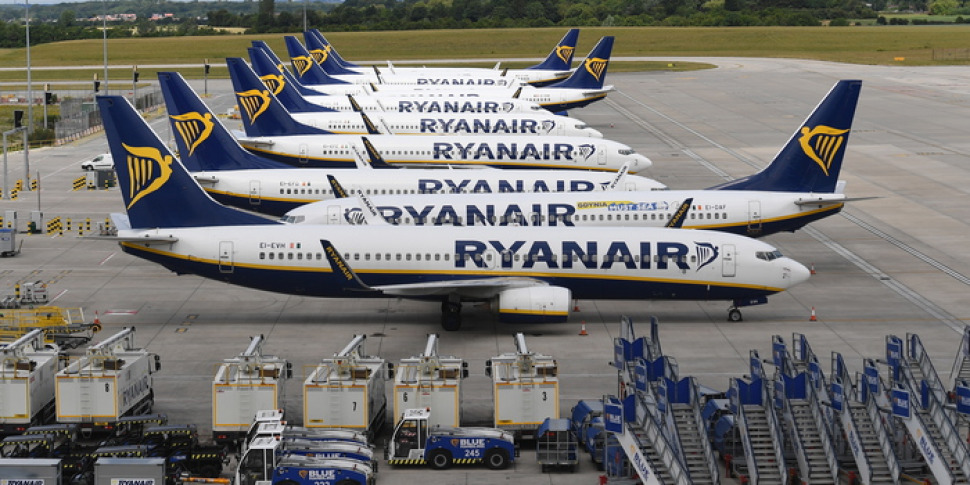
The nightmare of air transport in the United Kingdom returns promptly after a “technical fault” caused the blocking of departures in several airports, including London’s Heathrow and Gatwick, with the consequent cancellation of over 600 flights for many companies, such as British Airways and Ryanair, and severe inconvenience for passengers. The general alarm was given by the air traffic authority (Nats), which found a problem in its flight plan processing system, thus making large-scale take-offs impossible: in addition to the airports of the British capital, those of Aberdeen, Edinburgh, Manchester, Birmingham, Bristol, Southend, the Isle of Man and Jersey were involved.
The repercussions on international airports were also inevitable, including Dublin, Paris and other cities in the rest of Europe. Nats engineers intervened to resolve “as quickly as possible” the glitch in the IT systems, which for now cannot be traced back to hypothetical hacker attacks or perhaps to the shadows of Russian hybrid warfare recently relaunched in the Kingdom and the rest of Europe against the backdrop of the conflict in Ukraine. The organisation, at the center of strong criticism for cases of similar air traffic blocks, apologized for the inconvenience caused and announced a gradual return to normality with the system which was restarted in the late afternoon and in the evening The repercussions linked to the blockade continued to persist.
On the matter, the Civil Aviation Authority of the United Kingdom has asked for a “complete report”: “We expect the National Air Traffic Control Service (Nats) to produce it and share it with us” compared to what happened today. But in the meantime, tens of thousands of passengers have suffered consequences of the failure – more than 65 thousand for the low-cost airline Ryanair alone – in the midst of late summer travel: among them many Italians. The Minister of Transport, Heidi Alexander, declared that she is knowledge of the situation and to realize how frustrating it can be for the people involved. Many stories have been collected by the media of those who have been stranded in British airports, waiting to be able to leave. Phil White told the BBC that his flight to Lanzarote was stopped on the Gatwick runway for hours. “They told us that the radar was out of order and we couldn’t take off,” he said, underlining that at least the pilot intervened every 20 minutes to update passengers on the situation even the Arsenal team: the flight to Naples, where the Gunners have to play a Champions League match tomorrow, was delayed even among the pilots: “I have never seen anything like this at Heathrow in my entire career”, a captain of a stranded flight to New York told the British media.
The reaction of companies such as Wizz Air and Ryanair is harsh. “A supplier of critical national infrastructure should not repeatedly paralyze the aviation system. Nats, in its current form, is absolutely not fit for purpose”, reads a statement relaunched by Sky News. There are many precedents of failures due to the technical inefficiencies of the British airport system, which periodically goes haywire. As happened in July last year, always in the midst of a holiday period, when there was a temporary block of take-offs and landings in all major airports. In March 2025, due to the fire in the North Hyde electrical substation in London, a blackout paralyzed Heathrow airport for 18 hours, and hundreds of thousands of passengers were stranded, throwing air traffic into chaos.