

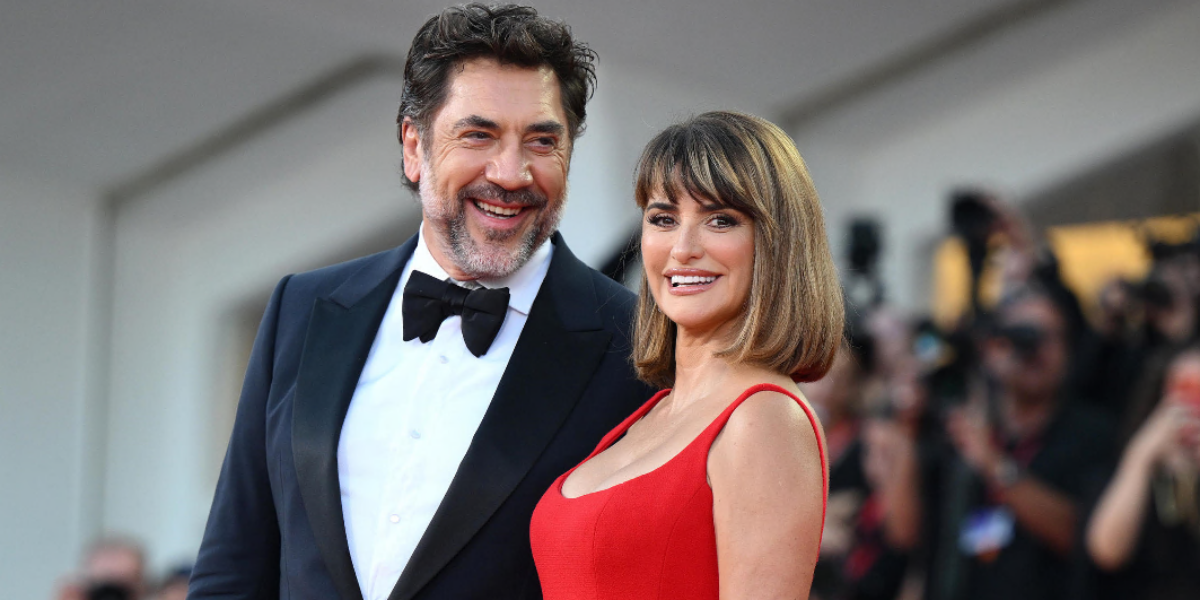
“Bunker” by Florian Zeller, a psychological thriller starring Javier Bardem and Penélope Cruz in the role of a couple in crisis when the husband, a fashionable architect, is commissioned by a powerful technology tycoon to build a pharaonic bunker in Hawaii, took part in a festival focused on the class struggle, a common theme of many films in competition. To his wife, who works in a publishing house and shares her husband’s progressive ideas, it seems unfair that a rich man thinks about saving himself when the world is going adrift. In reality, however, everyone, even the two protagonists, lives in an “invisible bunker” (as the director defines it). An example is their house full of burglar alarms and conveniences, while there is intolerance towards a neighbor, not very well off, who they do not forgive for having opened a window onto their garden. The cast of the film (which will be distributed in Italy by Notorius Pictures), which many observers consider among the favorites for the Golden Lion, also includes Paul Dano, Stephen Graham and Patrick Schwarzenegger.
«There are many countries in Europe that are taking more radical positions towards immigration, but the cause is different. It is a political, geopolitical, social and climatic reason that we must pay attention to, otherwise there will be more and more immigration, because people are fleeing wars, poverty and impossible places to live in at 50 degrees. We are responsible for it. Our luxuries are based on someone else’s misery, we all know this”, is Bardem’s thrust. And the actor again: “I don’t think I can talk about the morality of others, but we need connection between human beings, as we increasingly create our own bunkers in relationships.”
«There is one thing that interested me very much in this role, the fact that she is a courageous woman who makes decisions. It makes me angry that sometimes we actresses are used as puppets” emphasizes Penelope Cruz.
Zeller, French writer and playwright, admits that «the inspiration of the film comes from the story of Mark Zuckerberg who builds a bunker in Hawaii. And I remember when I read that article I was fascinated, because this guy made a fortune connecting people, and at the same time he was working on a Plan B to isolate himself. I remember being struck by this paradox.”
A couple in life as well as on set, do Bardem and Cruz ever argue? «No, absolutely never, I’ve known you for more than thirty years now» Bardem immediately says to his wife with whom he has shared eight films. «We really love this job and so there must be a balance between work and private life. Obviously, we prepare the film together and this inevitably enters into our daily dialogue, but generally we don’t argue. In this case, when we met Zeller for the first time, we immediately understood that we would be very protected, precisely because he invited us not to expose anything of our personal lives, but to offer our experience at the service of these characters to tell the story. And so even in the most emotional and engaging scenes, which can move many things on a personal level, Florian fortunately always protected us, which is a very important thing.”
Guadagnino and his docu on Bertolucci
An award “that I dedicate to all the filmmakers and all the young critics who are in the room, because you are the pillars on which we rely”. Luca Guadagnino said it when receiving the Cartier Glory to the Filmmaker Award in Venice. The awards ceremony preceded the debut on the Lido of the first part of «Joie de vivre. Notes, thoughts, words, reflections, faces, visions on Bernardo Bertolucci and the cinephilia of the twentieth century that no longer exists”, the documentary 7 hours long in total (the first part of three, the second of four, will be screened today) dedicated by Guadagnino to the master of cinema who passed away in 2018.
«It’s a film that I made literally out of love for Bernardo Bertolucci, out of love for what he taught me» Guadagnino limited himself to saying. The docu «starts from my personal bond with Bernardo and his work, and then opens up to a discussion with some of his closest collaborators and most passionate followers – explained in the synopsis –. Together we will explore Bertolucci’s legacy: how his films can revolutionize the very idea of cinema.”
Anna Foglietta director debuts at the Lido with «Una Storia»
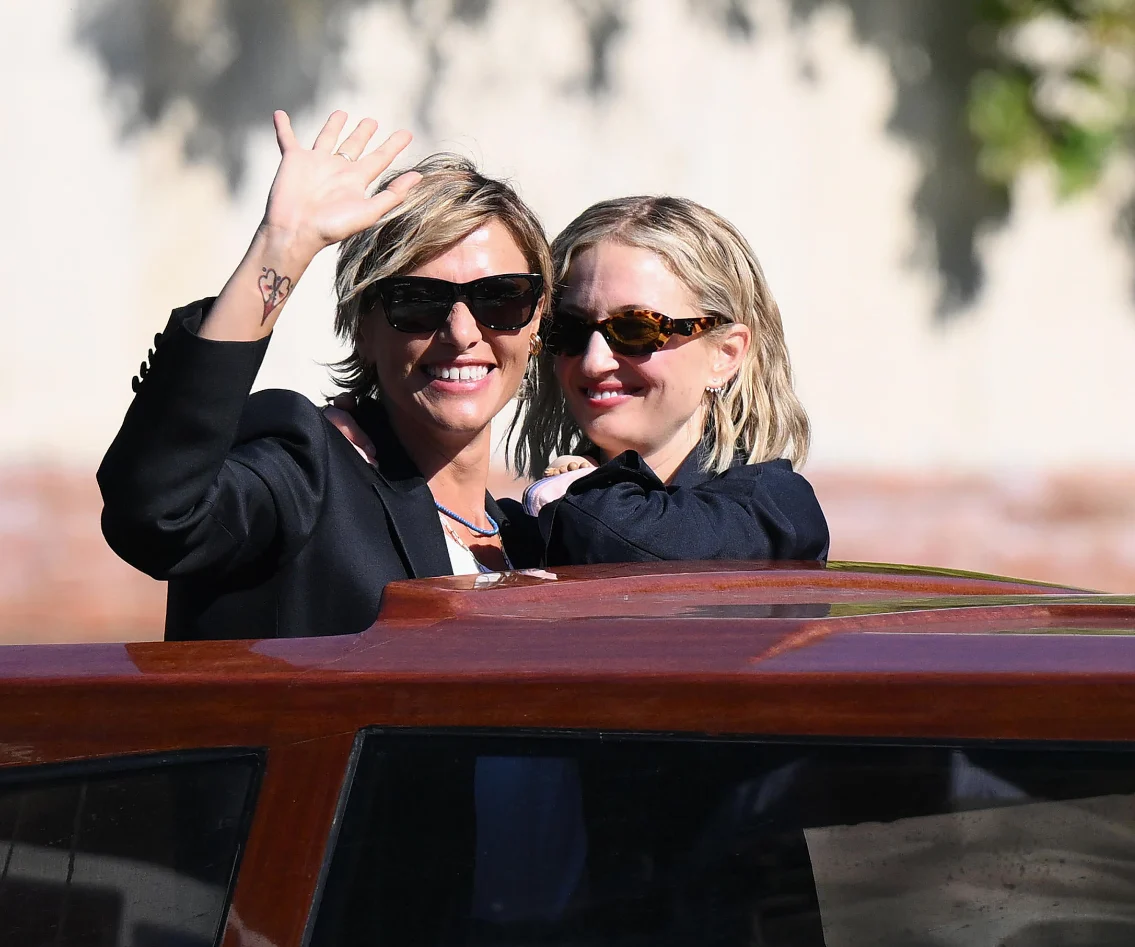
More than “the story of a husband, a wife, a daughter, I wanted to tell the idea of the world I am living in, a world so profoundly political, fast and consumerist, in which with constant scrolling (the scrolling of contents on a display, like the telephone, ed.) we free ourselves from responsibility for what we think, for what we feel”. This was the starting point, explains Anna Foglietta, of her first work as director «Una Storia», with Alba Rohrwacher and Guido Caprino, making its debut in the competition in the Orizzonti section at the Venice Film Festival and in theaters from 24 September with Bim Distribuzione.
The story, produced by Ht Film, Indigo Film, Tenderstories and Blu One Lab with Rai Cinema and the participation of HBO Max, (Valeria Golino is also among the producers) is set in the province: at the center are Erika (Rohrwacher), a cashier, and Mauro (Caprino), who works in his father’s renovation company and coaches a children’s football team. When their daughter Irene leaves home to go to study in another city, the couple’s balance, made up of routine, certainties, many silences, a polite but often superficial dialogue, gestures of care, seems to break down. Erika no longer understands the meaning of her choices, and Mauro, who doesn’t know how to help her, is also experiencing a work crisis.
By also resorting to the easy gratifications of digital «we are moving away from our self, from being human – says Foglietta –. A superstructure that in my opinion is the death of humanity.” So “I thought about how to talk about the need, on the part of two people, to look at their own core as the last bastion of hope to define themselves as truly alive”. This is how «Erika and Mauro were born, two people who love each other and who have a seemingly perfect life; they don’t lack anything, they aren’t sick, they don’t cheat on each other, they live a peaceful life. But they find themselves wondering, what do I want? Is my life all here? What do I dream? These are questions that concern us all and I hope they will also cross viewers’ minds if they agree to become familiar with this story.” Today «they are taking away our right to dream and thus taking away our dignity as thinking, critical, political agents: if I can’t build my dream, what else can I build? In this sense I hope that my film can also be understood as a political film.”
The script «immediately spoke to me and disturbed me more than I imagined – explains Alba Rohrwacher –. I felt that with Anna we could tell a character who, despite belonging to a very different life from mine and a different relationship from mine, concerned me.” For Caprino, Foglietta outlined his character “with great honesty and I was increasingly surprised by his love for him and his absolute lack of judgement”.
The film speaks above all, for Foglietta, of the rediscovery of self-love, «which can then spread into everyday life, into the world. Because if today there is a lack of empathy, compassion, indulgence even towards the pain of others, it is because we are no longer capable of reading ourselves. If today we are unable to be indignant, to suffer for the death of children, it means that we have truly lost our sense of being human.”
The filmmaker, answering questions, also comments on the limited presence of female directors competing at the Festival this year: «They don’t allow us to desire. Dreaming of becoming mathematicians, astronauts, directors is something that until recently was closed to our imagination. The exhibition is the tip of this iceberg but the problem, as everyone before me said, is systemic.” However, “you shouldn’t ask this question to us women, but to men because we are, in some way, those who “suffer” the problem and try to implement all the strategies to overcome it”.