

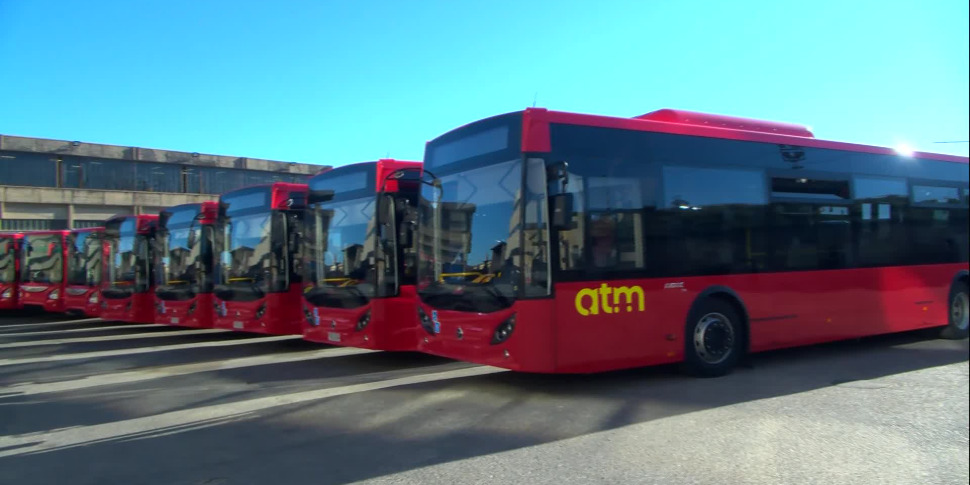
In Messina, on the front of sustainable mobility and the right to education, it was not possible to “overcome the borders”. The story is an old one and concerns Local Public Transport (LPT) and the management of discounts for school season tickets. The mechanism currently in force, in fact, imposes a singular rule: the bus pass is free for middle and high school students, as long as they do not attend an institution that falls in the same district in which they reside. An exception is made only for those who live in villages or peripheral districts.
A few years ago the issue ended up in the sights of the Fratelli d’Italia municipal councilor Dario Carbone and in recent days also in that of his party colleague Libero Gioveni.
“What regulates this ban – explains Gioveni – is the very old LR 24/73 and the subsequent LR 14/2002 and LR 4/2003 – clarifies the councilor – which however highlight two obvious inconsistencies. The 1973 law was designed exclusively for students from small municipalities who went to a school located in another municipality, but the changes introduced in 2002 and 2003 were were thought of (and this could have made sense) when there were 14 constituencies in Messina, therefore with a very low possibility for students to find their school in the same constituency of residence. With the reduction of constituencies from 14 to 6 (today 7) and therefore with much larger territories – highlights the FdI exponent – it is obvious that there are many cases in which season tickets are denied but that, precisely due to the significant distance between school and home, this geographical condition still generates discrimination”
In recent weeks, the issue has ended up at the center of resolution no. 21 approved last September 2, 2026 by the Council of the IV Municipality “Centro Storico”, above all because the result of the legislation represents a logical-territorial paradox. The districts of Messina are large and varied. It may happen that a student residing on the edge of a municipality has to travel kilometers every morning to reach his school within the same territory, but finds himself excluded from free access because his home and the institution are formally “in the same district”. Conversely, in border areas, two young people who live on the same landing or on opposite sides of the same street can suffer totally opposite treatment: one travels for free because it crosses the administrative border of the neighbourhood, the other pays the full season ticket.
Faced with these inconsistencies, on 29 July 2026 the president of the Fourth District, Renato Coletta, sent an official note to the Director of the competent Department and to the top management of ATM Spa to ask for a verification table and eliminate a clearly discriminatory criterion. The response from the offices of Palazzo Zanca or from the transport company? None.
The administration’s silence continued for over a month, ignoring the reports sent from the territory.
So the councilors of the IV Municipality took to the field and formally voted on the act. The request approved in the Council – with 7 votes in favor (councilors Bicchieri, Caliri, Carlo, Fabio, Lauro, Manganaro and Melita) and the abstention of president Coletta – aims to sweep away the barrier of the coincidence of residence and school.
The objective is to guarantee free public transport to all lower and upper secondary school students, regardless of the geographical grid of the districts.
A measure which, in addition to alleviating family budgets in view of the new school year, would represent a concrete incentive for reducing vehicular traffic and promoting sustainable mobility among younger people.
It remains to be seen whether, after the resolution officially transmitted to the leaders of the Municipality and ATM Spa, facts or a new silence arrive from the administration.