
Google Discover

Preferred Sources
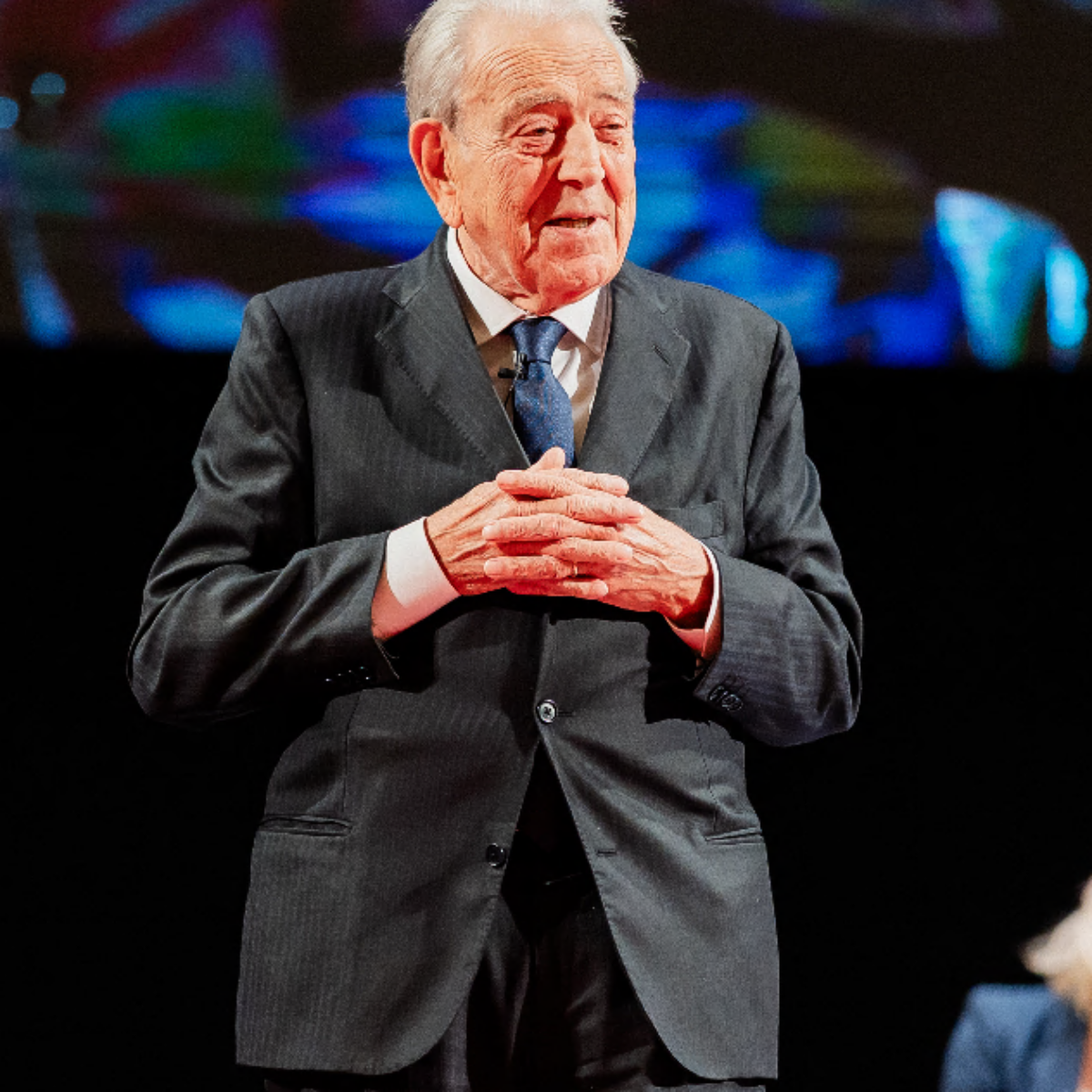
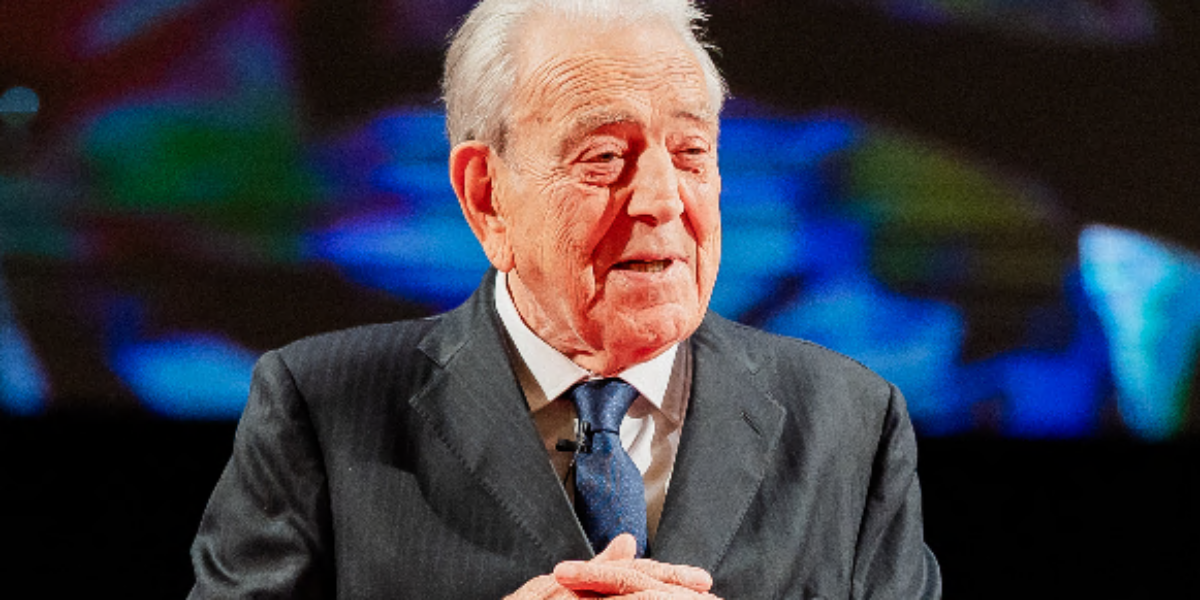
This is how yesterday morning’s chat with Professor Mario Bozzo, president and founder of the Prize for Mediterranean Culture, began: he had just read a book by Matteo Nucci, «Beautiful things are difficult», and had found in it a thought of his own, twenty years old. At the time he presided over the Carical Foundation and looked with perplexity at the very crowded panorama of Italian awards, where many awards evaporate the day after the ceremony. He decided to try a different path. The label of a literary prize seemed narrow to him, and he chose the Mediterranean, which also means Magna Graecia, the peoples who landed on the coasts of the South. Thus, the Prize for Mediterranean Culture has reached its twentieth edition. Bozzo, who taught for a long time at classical high school, keeps his teacher’s animus intact, and when faced with an image of the American president Pirandello comes to mind…
Twenty years ago the first edition awarded Tahar Ben Jelloun and Amos Oz together. Ben Jelloun returns to the Rendano stage on Friday…
«The two had never met and shook hands for the first time on that occasion. Writers have always said important things, which the powerful of the Earth would do well to listen to. Today those who govern the world often give in to the call of strength, wealth and excessive power. There is one in particular who believes he was sent by God to save entire continents. That handshake seemed and seems like a great lesson to me. Amos Oz left us, otherwise he would have come too.”
You taught for years at a classical high school. How much of this is there in the choice to entrust an entire section of the award to a jury of students?
«There is a conviction that I already had when I was teaching: reading is the great journey that a young person must undertake. Those who read also travel within themselves and learn to know themselves. He comes into contact with the world, enriches himself, learns Italian with greater awareness, in a time in which our language risks becoming foreign. Asking the kids to choose the winner of the debut novel seemed important to me. Let’s say it’s the old professor who deludes himself into thinking he’ll be young again…”.
The common thread of the 20th edition is artificial intelligence. What future do you imagine for the literary translator, now that software translates a novel in a few minutes?
«We ask ourselves this too, because there is the risk of rewarding a machine hidden behind the name of an intellectual we consider serious. Artificial intelligence is the new frontier of research and will help man to make very difficult calculations in just a few seconds. I fear a devastating risk: man reduced to a passive recipient of choices made where only wealth and the will to dominate count. The president of the United States released an image of himself created with AI, a gigantic body with a tiny man on his head. Without wanting to, he depicted the mountain that gives birth to the little mouse, because from the head, where the brain lives, a very small thing is born. I remembered Pirandello’s “Mountain Giants”, enormous in physique and dwarf in mind, whose servants kill the actress who came to act for them. We chose this theme to indicate the risks and ask for a technological humanism that puts the person at the centre. The school must review its system: prepare for work, of course, without throwing poetry among the things that don’t count.”
The international jury awarded a Special Prize to «My free heart» by the Palestinian journalist Majd al-Assar. How did this choice come about?
«From a beautiful book, halfway between a novel and an essay, a hymn to maternal love and at the same time the story of a mother’s desperation. The body can be scourged, imprisoned, forced to give up, the person becomes nomadic, homeless, and at dawn does not know how he will live the day. A mother’s heart remains free. It struck me personally and I reported it to the jury, who appreciated it. The publisher explained to us that the author cannot leave Gaza, and we wanted to remember her with a special award. His little girl lost a leg under a collapsed wall during a bombing. In the hospital, while the mother hears the screams of her daughter who was operated on without anesthesia, another mother arrives with two little girls in the same condition. Mothers have a heart that can generate giants.”
About twenty years ago, at Unical, you held a lesson for the Order of Journalists. The analysis of the etymology of two words, magister and minister, left an impression on me: the first from magis, the “most”, indicates one who leads; the second from minus, the “minus”, indicates one who serves a superior. I often think about it, because today it is the minister who directs culture, a prerogative that would belong to the teacher. Do you think that Mediterranean culture can help train teachers in a time that seems to prefer ministers?
«I really hope that we return to the central figure of the master, understood in a broad sense: someone who has something important to transmit to others, because he knows more. Before the Renaissance the two cultures clashed. To a doctor who despised poetry, Petrarch responded with the “Invective contra medicum”: do your mechanical job, he wrote to him, cure the body if you can, otherwise kill it and make yourself pay the price of your murder, and leave the care of the soul to us poets. The Renaissance overcame that contrast with a happy synthesis, and Leonardo was both an artist and a scientist. Today we need a new Renaissance, through technological humanism.”