

Google Discover

Preferred Sources
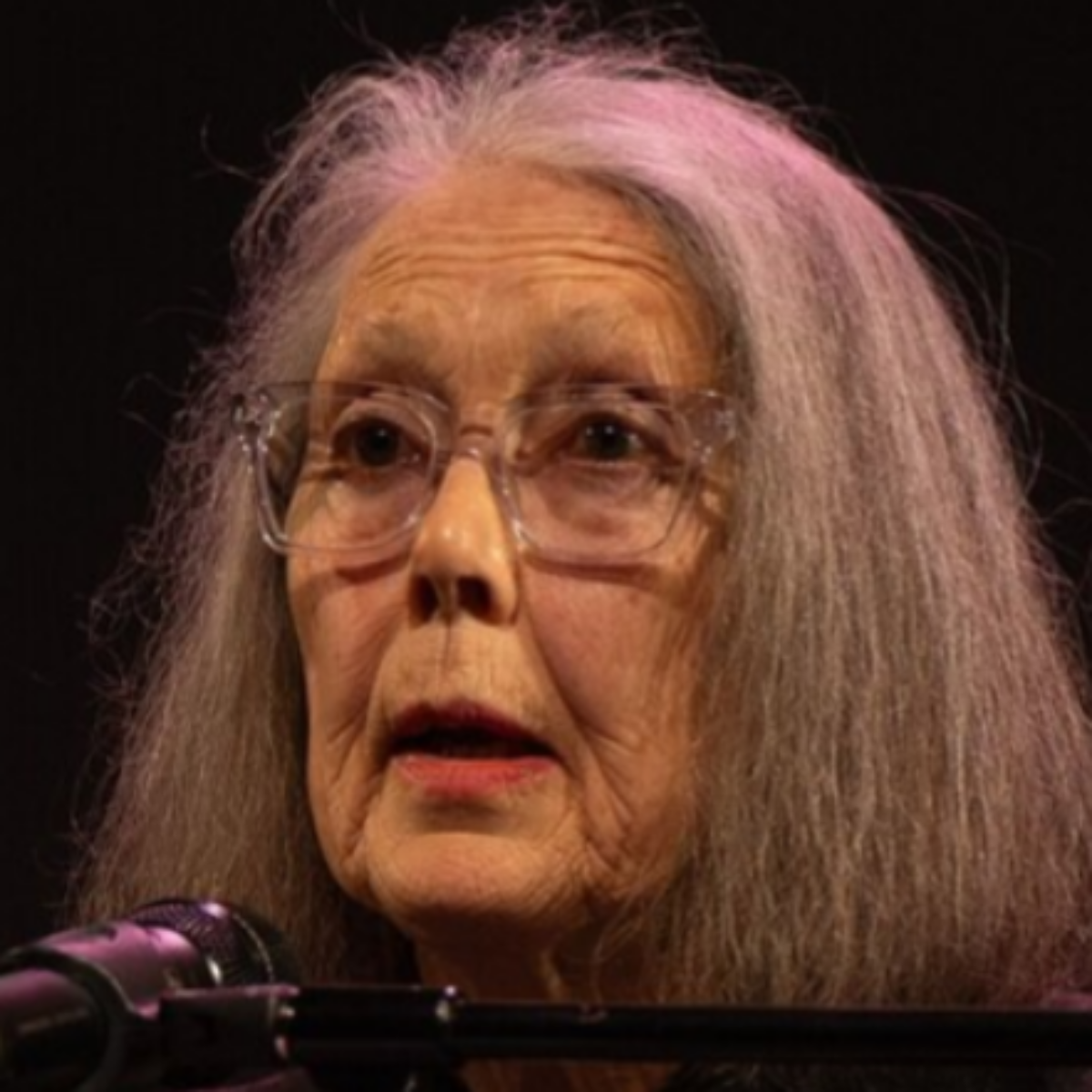
The Nobel Literature 2026 goes to Canadian Anne Carson “for her bold and creative work which, in a playful dialogue with the classical tradition, has given life to new forms for contemporary literature”. The motivation of the Swedish Academy explains this.
Famous classicist and refined interpreter of the human soul. Anne Carson is a well-known English-speaking author and considered among the most original and important voices in contemporary world literature. His is an erudite work in which mythological heroes, ancient and romantic authors are evoked within modern tales focused on love, desire and death.
Professor of history and ancient Greek, now seventy-six years old and suffering from Parkinson’s disease, she has taught at prestigious universities such as McGill in Montreal, Michigan and Princeton. Her fame crossed new boundaries in 2020, when she won the prestigious Spanish Princess of Asturias award for literature, with a jury praising her “exquisite” and “erudite” universe. “Love and all its enticements, satisfaction, trials, complex feelings, disillusions and all issues related to the spiritual and divine sphere constitute the most recurring themes of his poetry”, underlines Professor Linda Morra, a scholar of his work, in the Canadian Encyclopedia.
Anne Carson was the first woman to receive, in 2001, the prestigious British TS Eliot poetry prize for her work ‘The Beauty of the Husband: A Fictional Essay in 29 Tangos’, in which she deeply analyzes the torments of a woman obsessed with her husband’s extramarital affairs. In 2010 he also received the PEN prize for his translations of the Greek playwright Euripides (‘Grief Lessons: Four Plays by Euripides’, 2008), for his adaptation of the writings of the Greek poet Sappho in ‘If Not, Winter’ (2002) and for the work dedicated to Catullus – precursor of the Latin elegy – whose style he takes up in ‘Nox’ (2010), a song funeral dedicated to his deceased brother.
Born in Toronto on June 21, 1950, Anne Carson was introduced to the study of Greek by a Latin teacher who taught it to her during lunch breaks in high school. He dropped out of college twice before earning his doctorate in classics. His first publication, ‘Eros the Bittersweet: An Essay’ (1986), already contains the distinctive elements of his style: a modern adaptation of classical Greek literature. This book «at first amazed the Hellenists by its erudition; then it amazed intellectuals, as it inaugurated a return to essayists such as Seneca, Montaigne or Emerson. And finally, when it was republished in the 1990s as a ‘work of literature for an entirely new audience, it amazed poets,’ noted a Boston Review critic. However, it is with ‘Men in the Off Hours’ – a clever mix of genres that ranges from classical prose to television screenplays – that in 2000 Carson achieved consecration in the poetic world. Populated by heterogeneous characters such as Virginia Woolf, Thucydides or Catherine Deneuve, this collection of short poems, competing for various awards, finally won the prestigious Griffin Poetry Prize in Canada. Anne Carson is the author of around twenty works, including the essay «Glass, Irony, and God» (1992) and «Autobiography of Red: A Novel in Verse» (1998).
Over the years, critics and writers – from Harold Bloom to Susan Sontag – have praised his work. “When you read his work, you are faced with an extraordinary range of intellect, spirit and emotion, a combination rarely found in a single person,” wrote his compatriot, novelist and poet Michael Ondaatje. She is the nineteenth woman to win the prestigious award, compared to the 103 men who have received it in the past. Carson succeeds authors such as the Swedish Selma Lagerlof, the first to receive it in 1900, and the South Korean Han Kang, the last before her, in 2024.
Meanwhile, the Nobel Prize was awarded to his compatriot Alice Munro, in 2013; to the British writer Doris Lessing – the oldest winner of the Nobel Prize for Literature, who received it at 87 years old – or to the Chilean Gabriela Mistral, who in 1945 was the first, and so far only, woman to win the prize for a work in Spanish.
After Lagerlof, who received the Nobel Prize for Literature in its ninth edition, the prize was awarded to the Italian Grazia Deledda (1926), the Norwegian Sigrid Undset (1928), the American Pearl S. Buck (1938), the German Nelly Sachs (1966) and the South African Nadine Gordimer (1991). Furthermore, the American Toni Morrison (1993), the Polish Wislawa Szymborska (1996), the Austrian Elfriede Jelinek (2004), the Romanian-German Herta Muller (2009), the Belarusian Svetlana Alexièvich (2015), the Polish Olga Tokarczuk (2018), the American Louise Gluck were awarded (2020) and the French Annie Ernaux (2022).