

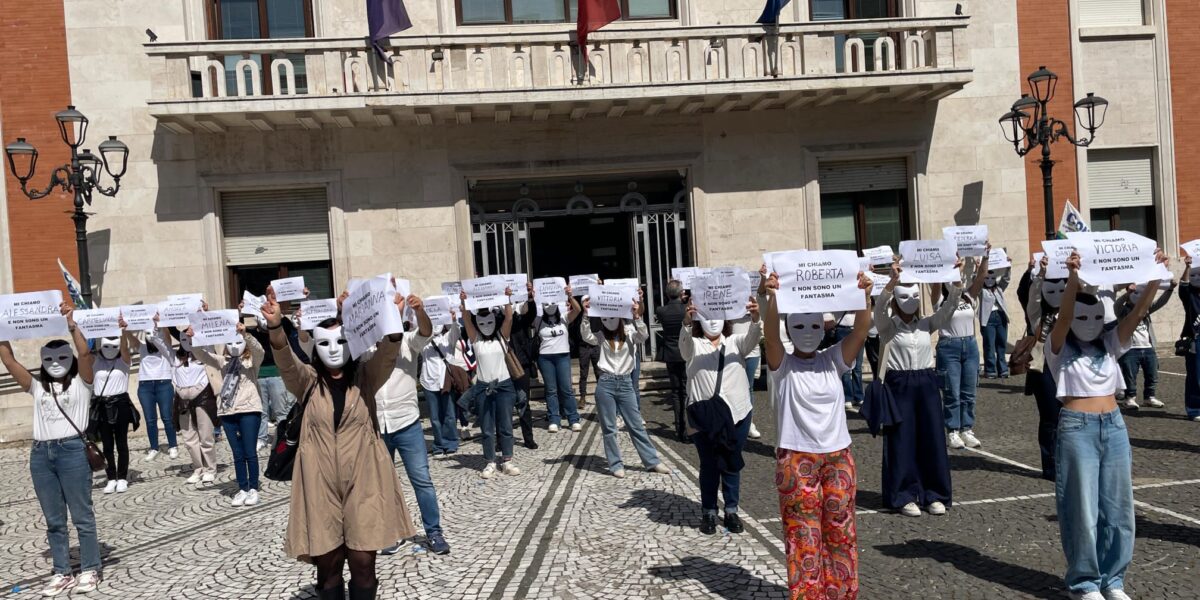
The meeting of the monitoring table on the Konecta dispute at the Ministry of Business and Made in Italy has been called for November 17th. This is what CGIL, CISL and UIL Calabria report in a joint note. «An expected result and the fruit of the work – explain the unions – carried out by the national secretariats of the trade union federations and by the ongoing and continuous discussions between the regional confederal secretariats of CGIL, CISL and UIL with their respective categories, SLC, Fistel and Uilfpc, and the president of the Calabria Region, Roberto Occhiuto». “Just in the last few days – it is explained in the note – the regional confederal secretariats had expressly asked President Occhiuto to take action to obtain the convening of the ministerial table, deeming it essential to bring the dispute back to the center of the institutional debate and verify the commitments undertaken to protect the workers involved”. «The call, which arrived very quickly, therefore represents a first significant result of united trade union action and institutional interlocution, which must now be translated into concrete answers on the employment future of the approximately 700 workers involved», underline the unions.
Konecta: the Honorable Boschi brings the dispute to Parliament. Conf.IAL: “Now the recovery plan is out”
“Let the city council of October 22nd be the moment of truth. Whoever signed the agreements should come and explain publicly what prospects exist for 728 workers”.
The Konecta R dispute, formerly Abramo Customer Care, also arrives in Parliament through a question by the Honorable Maria Elena Boschi, already filed and addressed to the Ministers of Labor and Business and of Made in Italy, to clarify the agreements signed, the use of public resources and the employment prospects of hundreds of Calabrian workers.
The initiative was born from complaints and requests from workers and CONF.IAL Calabria, contacted in recent days by the regional and national representatives of Italia Viva. These contacts were followed by a remote discussion, organized by Michele Laurenzano, regional deputy commissioner of Casa Riformista, between the Honorable Boschi, representatives of CONF.IAL Calabria and a delegation of workers.
“We wanted the direct participation of workers so that they could represent their own requests and know without intermediaries the commitments undertaken in institutional settings.
At the center of the parliamentary question is the company recovery plan referred to and attached to the ministerial minutes of 9 April 2026, which provided for extraordinary layoffs for a maximum of 654 workers until 31 December 2026, with an estimated public charge of 4.3 million euros.
That plan should contain new national initiatives, additional dematerialization activities and citizen support services. Yet, more than six months after the agreement, workers do not know its full content, the actual possibilities of implementation and the results achieved.
The parliamentary question aims to obtain the documentation relating to the agreements, to clarify which new activities have been started, which public resources have actually been disbursed and what checks have been carried out. Particular attention is also paid to the 74 workers whose contract expired on May 18, 2026, who have already remained without employment”.
“What makes the matter even more opaque – we read in the note signed by Fabio Tomaino of CONF.IAL – is the note dated 19 October 2026, with which SLC CGIL, FISTEL CISL, UIL FPC and UGL Telecommunications asked for the urgent activation of the ministerial table, recognizing that the numerous meetings with the Calabria Region and Konecta R have not provided certain elements of employment guarantee nor identified concrete and structural solutions.
A statement that raises precise questions, considering that the same organizations signed the agreement of 9 April, which recalls the company recovery and relaunch plan.
If a relaunch path was shared on 9 April, how can that commitment be reconciled with the declaration, six months later, of the absence of concrete solutions and employment guarantees?
What activities did that plan include? Which commitments have been respected? What results have been achieved?
We do not argue that the plan does not exist. We ask to know whether it contains a credible industrial perspective or whether the commitments have remained only on paper.
Whoever signed that agreement has the duty to explain what was shared and why today it is the signatory organizations themselves who denounce the absence of structural solutions.
Meanwhile, a new monitoring table was convened at MIMIT for 17 November, almost two years after the agreement of 19 December 2024.
We do not contest the call, but we ask what results the previous monitoring has produced and why it has not been possible to build a stable employment perspective.
We thank the Honorable Boschi for his availability, for having followed up on the commitments undertaken and for having made his parliamentary structure available. We also appreciate your willingness to request a meeting with the relevant ministries.
We are not fans of any political party. We are not interested in memberships, but in behaviors and results. We positively evaluate every initiative, from whatever side it comes from, when it translates into official acts and verifiable commitments.
THE MUNICIPAL COUNCIL OF 22 OCTOBER IS THE MOMENT OF TRUTH
We believe that the next extraordinary open municipal council of Crotone should represent the institutional venue in which to publicly illustrate any possible relaunch initiative, new activities, available resources and employment prospects, starting from the recovery plan referred to in the ministerial agreement of 9 April.
That plan must finally be made public, explained in its contents, implementation times and commitments undertaken.
We believe that the possible absence of those who signed that agreement and shared the recovery path would represent a serious lack of respect towards all the workers involved.
You cannot sign an agreement in a ministerial office and then avoid public discussion when workers ask for an account of the results.
In recent days we have learned of confidential meetings and reassurances on possible imminent solutions, without official documents or commitments having been made known.
If these solutions exist, let them be illustrated on October 22nd in front of the institutions, trade unions, citizens and above all workers.
The City Council cannot become the antechamber of another table, nor the opportunity to announce further meetings reserved for a few subjects. We don’t ask to know when the answers will arrive. We ask that the answers be given publicly in the city council chamber.
This request is also strengthened by the appeal spread by Konecta R/ex Abramo workers, who invite other trade union organizations to participate in the open municipal council, considering that we at CONF.IAL have always guaranteed support and participation.
The workers ask to know directly what any “good news” is expected in recent days and send an unequivocal message to the trade unions:
«It’s no longer time for remote communications. The workers want to look you in the eye.”
We fully agree with this request. It is not a question of fueling trade union conflicts, but of guaranteeing the right of workers to know the agreements and decisions that concern their future.
Our objective cannot only be a further extension of social safety nets, but the construction of a lasting industrial perspective, capable of transforming the project into a true digitalisation hub in Calabria, attracting new businesses and guaranteeing stable employment.
We prefer the politics of official documents to that of reassurances in reserved cafés and closed rooms. We prefer documents to promises and transparency to convenience.
Behind this dispute there are 728 workers and their families, of which 74 are already unemployed.
We do not ask for assistance. We ask for work, development and a future. And we ask that those who signed the agreements fully assume responsibility for respecting them.”