

Google Discover

Preferred Sources

With almost 42% of ballots counted, Prime Minister Benjamin Netanyahu’s bloc leads the opposition by 57 seats to 47; the remaining seats are held by Arab parties. The partial results published by the Central Electoral Commission assign 57 seats to the bloc supporting Netanyahu and 47 to the bloc against him, while the “Joint List” and the “Ràam” formation – both predominantly Arab – hold the remaining 16 seats overall. The parties currently below the threshold of 3.25% are: «Reservists» (2.7%), «People of Israel» (1.8%) and «Charedi Public» (0.3%). These are partial results, destined to change as the counting continues. Votes cast via “double envelope” – including those of the military – will be counted at a later stage.
Record turnout
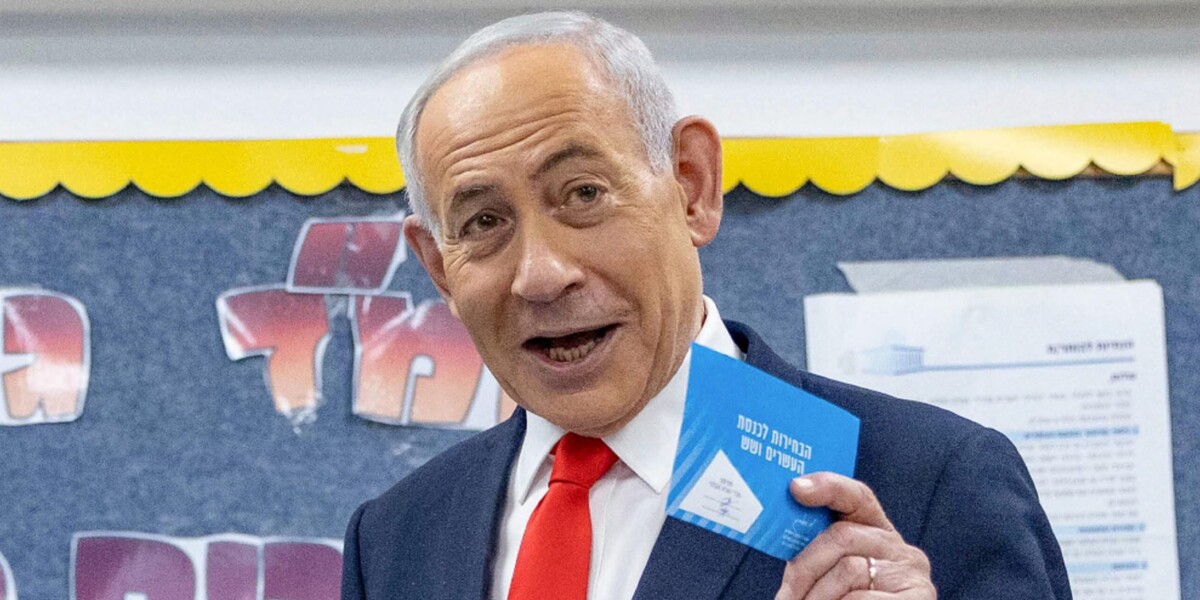
On this October 27th, as in a collective cathartic gesture, voters flocked to the polling stations en masse from seven in the morning to choose the future of Israel. Long queues, floods in the south, roads closed due to bad weather, lightning storms in the centre, heavy rain in Jerusalem have not slowed down the urgency of Israelis to move on. All the hope of emerging from a nightmare that has been going on for three years, entrusted to a small card placed in a blue cardboard box. Like magic.
From the first data on turnout, published by the Central Electoral Commission two hours after the polls opened, the impressive participation in the vote emerged. With measurements that every two hours marked the exceeding of the data of 1981, 1977, and 1973, the year in which the Commission began recording the data. The presence of Arab-Israelis at the polls is very high, representing 18% of the country’s electorate, with the Bedouin communities of the Negev recording a higher participation than in several other towns with a Jewish or ultra-Orthodox majority. On social media and on TV, hundreds of videos showed rows of women in black hijabs with ballots in hand, ready to vote. An unusual image, indeed absent in the rest of the Middle East. Where, out of 319 million inhabitants of Arab countries, the only ones with regular voting rights are Arab-Israelis.
Netanyahu’s appeals
Netanyahu had a field day by flooding social media with an avalanche of posts. Pulling out of the drawer a strategy already used in the 2022 elections, the outgoing prime minister raised the alarm: “They are trying to steal the elections from us.” «Higher-than-normal voter turnout in left-wing strongholds. It’s a choice between the right and Palestine. Right-wing voters, it’s an emergency! Go and vote for Likud now! In pressing the electorate he cited the arrest of three members of the Arab Ra’am party who had envelopes with cash to influence the vote. Then he published a video: «You have been warned: the turnout among Arab voters in the South is enormously higher than that of Jews, you must go and vote! Bring grandma, aunt, neighbor, no beach or barbecue today.”
Eisenkot to Nir Oz
Bibi’s dramatic tones, as a veteran accustomed to political dramas, almost clash in comparison to the measure of his opponent. Eisenkot, former army chief, with zero charisma, comfortable away from the spotlight, before going to the polls chose to visit the Nir Oz kibbutz, where on 7 October 2023 Gaza terrorists killed 47 people and took another 76 hostage. Accompanying him was Gadi Mozes, a farmer from the kibbutz who was dragged into the Strip by Hamas and was released after 482 days of captivity. “I pledge to do everything I can to ensure that we are worthy of the price you have paid,” Eisenkot said. Then, before voting, he reached the Herzliya military cemetery, where his son Gal, killed in the war in Gaza, is buried.
The no to the extension of the vote
The Election Commission met briefly around 7pm to respond to the Likud’s petition calling for an extension of voting hours. The request was rejected.
On Tuesday, Tel Aviv’s bars, the ones that usually close their doors at 6pm, remained open until late at night. Embracing the words of President Herzog: «Elections are a true celebration for democracy».