

Google Discover

Preferred Sources
“The need to tell stories by singing, playing, acting made its way inside me. And as always… I followed my instinct”. It is the artistic story of Carla Regina, mezzo-soprano in opera and storyteller in the soul, protagonist and creator of the show “The sound of water and earth”, a poetic musical journey into the cultures of the Mediterranean, in migrations, in escapes, in the sufferings and events of Southern women. A universe in which Calabria occupies a place particular, also through the reference to the Arbëreshë communities, living testimony to a history of migrations and encounters between peoples that spans the centuries.
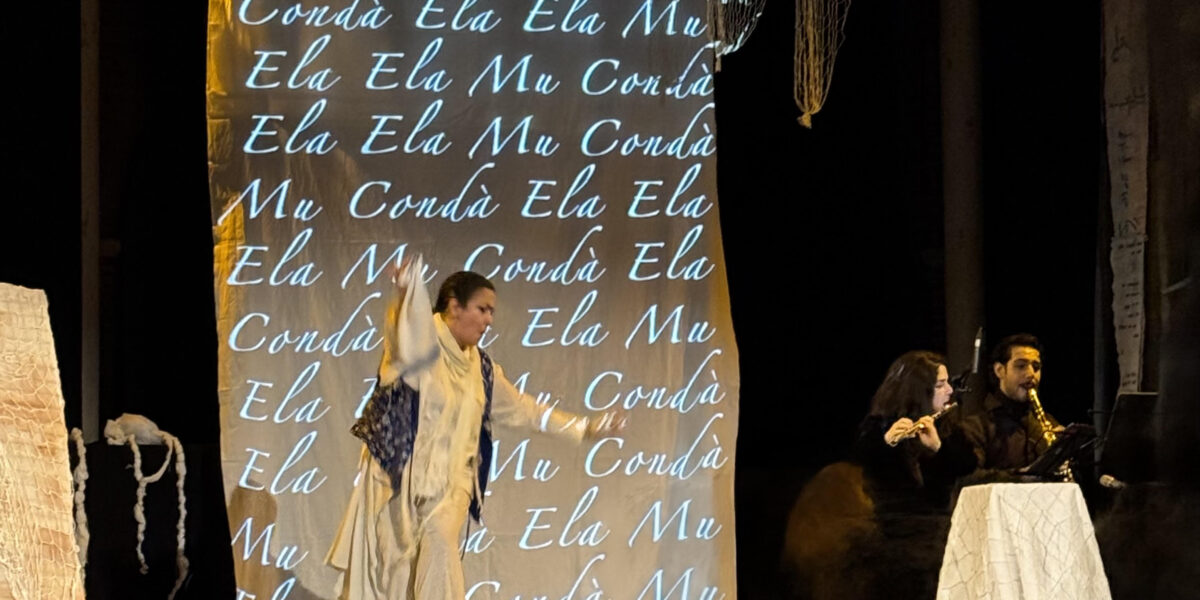
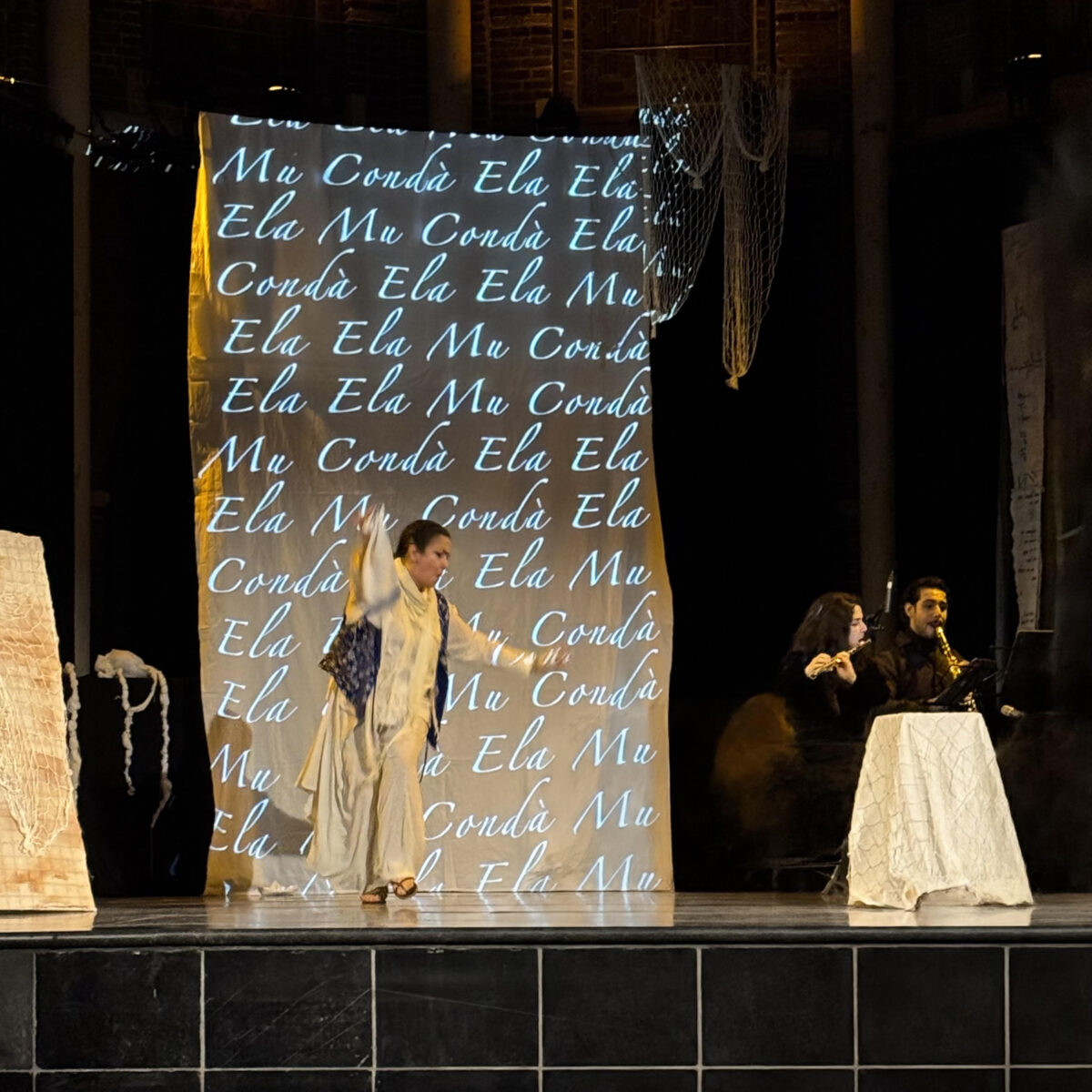
Vibrant like a sacred representation, the “premiere” of the show took place in Amsterdam, in the space created in the apse of the splendid Posthoornkerk, with seven musicians, live visuals, singing, poetry and popular music from Southern Italy and the Mediterranean area. More than a simple concert or theatrical performance, a great cultural fresco that Carla Regina created inspired by the theme of emigration, when “the water carries the voices of those who have left and the earth guards the steps of those who have remained”.
Produced by the Voice Actually Foundation, “The sound of water and earth” was created with the support of the Italian Cultural Institute of Amsterdam, directed by Veronica Manson, and the contribution of the Amsterdam Fund for the Arts. Among those involved there are also Opera Viva Festival and the Dante Alighieri Society of Eindhoven. Preceded by an introduction by Claartje America, this intense musical fresco gives voice to women forced to experience the pain of escape, the vexations of backwardness and the weight of subordination. A condition that takes on universal dimensions and that many Mediterranean “migrants” have experienced, yesterday as today, leaving their places of origin.
Carla Regina lends her powerful voice to stories of refugees, matriarchs and tarantate, figures of a popular world marked by suffering, but also the expression of a universe in which different cultures meet and contaminate each other. It is precisely from the other side of the Adriatic that one of the central figures of his story arrives: Lule, a young Albanian who leaves her homeland and lands in Southern Italy, evoking those migrations that gave rise to the arbëreshë communities, still deeply rooted today. In fact, in around 35 Calabrian municipalities the Albanian language and traditions survive which constitute a precious and distinctive heritage of the region. A historical bond that makes the journey of the show particularly significant, destined to reach Calabria next summer, as part of a tour that will also touch Puglia.
A Mediterranean, therefore, which from the coasts of Calabria, Sicily and Puglia crosses the Adriatic, meets Albania and Greece and is recomposed in a mosaic of languages, music, rites and memories. A tight carousel, punctuated by symbolic and minimalist changes of clothes on the stage. Not a musical, but a song without barriers which is transformed, as the author says, «into an artistic and human journey of epic dimensions, where music, history and legends, personal baggage, DNA and a painful personal growth have intertwined, adding a new piece to this mosaic called life».
A work dedicated to his father, “a sad exile far from his land, crushed between the sweetness of the past and the tragedy of the present, drowned with his demons in the pain of living”, in the hope that “he may, wherever he is, have found peace”. South and cultural identity speak through the metamorphoses of the author and interpreter who impersonates emblematic figures. The matriarch, the masciara, the tarantolata who dances to free herself from the spider disease restore the complexity of a dimension in which memory, beliefs, rituals and female resistance are intertwined.
The music connects and exalts the memory of the vanquished, while a white sheet is the backdrop to a pressing mix of escape from the invaders, children’s pain, faith and rhythm, rendered by Carla Regina’s voice, engaging and versatile, intense and inspired. And the memory carried by the flows of people slips into the bitter sweetness of a lullaby of poverty, while the women who remove the evil eye bring to mind the slogan “the witches are back” of the barricadero feminism of the seventies. A journey that from the Amsterdam scene looks to Southern Europe, finding in Calabria and its arbëreshë heritage one of the most significant expressions of that borderless Mediterranean that the show intends to tell.